The 17 UNESCO World Heritage Sites in Portugal
Edited on

Sintra, Portugal
This post may contain affiliate links, which means I may receive a commission, at no extra cost to you, if you make a purchase through a link. This helps me keep the Sick Girl Travels blog running while providing you with high-quality product recommendations and great travel deals. Please see my full disclosure for further information. Thanks for your support!
Guest Post by Sara of Big Adventures With Little Feet
Did You Know There Are 17 UNESCO World Heritage Sites In Portugal?
When we visited Portugal on our month-long road trip, we discovered that there are 17 UNESCO sites. They vary from beautiful landscapes such as the Douro Valley to the stunning palaces of Sintra, to prehistoric art in Siega Verde.
Some are on the mainland of Portugal whilst others are on the islands in the Atlantic Ocean. In this post, we’re going to talk more about what a UNESCO World Heritage Site is, and then touch on each of the 17 sites in Portugal. If you’re looking to see as many of the sites as possible, think about planning a 10-day itinerary.

Porto, Portugal
What Is A UNESCO World Heritage Site?
A World Heritage site is an area or object listed on the UNESCO World Heritage List. The sites are designated as having “outstanding universal value” under the Convention Concerning the Protection of the World Cultural and Natural Heritage.
There are three types of sites: cultural, natural, and mixed.
Cultural – include historic buildings and town sites, as well as important archaeological sites, and works of sculpture or painting.
Natural – are restricted to those natural areas that either 1) relate to the earth’s geological history or 2) provide excellent examples of ongoing ecological and biological evolutionary processes. Or, 3) contain natural phenomena that are rare, unique, superlative, or of outstanding beauty, or 4) are habitats for endangered animals or plants or are sites of exceptional biodiversity.
Mixed – a World Heritage Centre containing elements of both natural and cultural significance
The ratio of cultural to natural sites on the World Heritage List is roughly 3 to 1.

UNESCO World Heritage Sites in Portugal

“Wine has been produced by traditional landholders in the Alto Douro Region for some 2,000 years. A world commodity, Port wine, a wine of a quality defined and regulated since 1756, is produced here.” UNESCO
The Douro Region is stunning and is easily reached by day trip from Porto by train. The train journey itself is exceptional as you pass along the river and into the valley. Once you get to the small town of Pinhão, you can enjoy a boat tour along the river through the valley with a chance to admire the beautiful vineyards on either side.
What is incredible is how the wine production has had such an impact on the structure of the valley, with the vine terraces seemingly rolling down the sides of the hills into the river. And, when you visit, you must, of course, take a tour of a local vineyard and enjoy a tasting of local wine.

2. Angra do Heroísmo in the Azores
The Azores Islands are a Portuguese archipelago in the North Atlantic Ocean made up of nine islands. During the 16th and 17th centuries, the Azores archipelago was one of the main trade centres between Europe, America, and India. Its ports became key locations for sheltering and servicing galleons loaded with treasures.
Angra do Heroísmo is situated on one of the islands of the Azores archipelago and was an obligatory port of call from the 15th century until the 19th century, with the advent of the steamship. The 400-year-old San João Baptista and San Sebastião fortifications are unique examples of military design. They were damaged in an earthquake in 1980 and are still being restored.
Even today, the Azores are a key stopping point for many yachts that cross the Atlantic Ocean towards the Caribbean. My boyfriend, being a yacht captain, regularly makes this journey.

3. Convent of Christ in Tomar
Built over the span of five centuries, the Convent of Christ in Tomar was originally founded in 1160 by Gualdim Pais, grand master of the Knights Templar. It was then gifted in 1344 to the Knights of the Order of Christ.
If you have an interest in architecture and the history of the secretive Knights Templar, then a visit to Tomar is a must-see place for your itinerary. Interestingly, in the first fortnight of March, the annual meeting of the Order of the Knights Templar still takes place at the Convent.

4. Sintra
Sintra is included on the UNESCO World Heritage list because, in the 19th century, it became the first centre of European Romantic architecture. This is because Ferdinand II turned a ruined monastery into a castle using Gothic, Egyptian, Moorish, and Renaissance elements and created a park blending local and exotic species of trees. Along with other buildings such as castles and palaces, it has created a unique combination of parks and gardens within the area. This has influenced the development of landscape architecture throughout Europe.
Filled with intangible cultural heritage, it is one of the most popular day trips from Lisbon, and for good reason, as the town is beautiful and the castles and palaces are impressive. However, it can get busy, so if you decide to visit, I’d highly recommend booking your tickets and times in advance to avoid long queues.


5. The Town of Elvas and its Fortifications
Built between the 15th and 17th centuries, its walls contain barracks and other military buildings as well as churches and monasteries. There is also the Amoreira aqueduct, built to enable the stronghold to withstand lengthy sieges.
You can easily spend a half day exploring the town and also enjoying the scenic view from the fortifications. The garrison border town of Elvas is just a short 2-hour journey from Lisbon and can be combined with a visit to Évora. There are also some vineyards nearby to visit for a wine tasting called Azamor.
You can find an accessible route to explore Elvas on the Visit Portugal website.

6. Historic Centre of Évora
This beautiful city has roots that go back to Roman times. It reached its golden age in the 15th century, when it became the residence of the Portuguese kings. Its unique beauty stems from the whitewashed houses decorated with azulejos, which are the colourful tiles you see throughout Portugal. Its monuments had a profound influence on Portuguese architecture in Brazil.
Évora was fortunate that it remained mainly undamaged by the great earthquake of 1755, which destroyed many towns in Portugal, including Lisbon.
It’s fantastic to be able to stop there on the way to Elvas.
7. Historic Centre of Guimarães
The historic town of Guimarães is famous as the place where the Portuguese national identity emerged in the 12th century. This makes it one of the most important historical cities in Portugal. What makes the construction of Guimarães unique is that it is an exceptionally well-preserved and authentic example of the evolution of a medieval settlement into a modern town.
It’s a fantastic day trip from Porto, and that can be combined with a visit to Braga or Peneda-Gerês National Park.
Check the Visit Portugal website for a wheelchair-accessible guide to Guimarães.

8. Porto, Luiz I Bridge & Monastery of Serra do Pilar
I’ve been to Porto many times, and I always enjoy exploring it. I love the combination of the historical and the modern, such as the old waterfront with the Gaia cable car. There are just so many cool things to see and do in Porto.
It is on the UNESCO list because it is an outstanding urban landscape with over 2,000 years of history. Its continuous growth is linked to the sea, such as with the arrival of the Romans, who gave it the name Portus, or port.
The history itself can be seen in the many varied monuments, from the cathedral with its Romanesque choir to the neoclassical Stock Exchange and the typically Portuguese Manueline-style Church of Santa Clara.

9. Pico Island Vineyards
Pico is the second largest island in the Azores archipelago. Following a bit of a common theme for Portugal, Pico is on the UNESCO list as it has a history of wine production dating back to the 15th century.
It is the extraordinarily beautiful human-made landscape of small, stone-walled fields, which are a testimony to generations of small-scale farmers, that makes Pico so wonderful. These are the farmers who, in a hostile environment, created a sustainable living and much-valued wine. Experience the island vineyard culture at Pico Island Vineyards.
Unfortunately, there are no wheelchair-accessible wine tours on Pico Island.

10. Monastery of Alcobaça
The Monastery of Santa Maria d’Alcobaça is located just north of Lisbon. It was founded in 1139 by King Alfonso I when he started his reconquest there with the Crusaders.
The monastery itself was built in the 13th century. The size and purity of its architectural style, the beauty of the materials, and the care with which it was built are what really make it a masterpiece of Cistercian Gothic art.
The Monastery has access ramps to the ground floor for persons with reduced mobility, enabling them to visit the Monks’ Room, King Dinis’ cloister, Chapter House, Refectory, Kitchen, and Church. Access to the Monastery for people in wheelchairs is made through a side door at Praça Afonso Henriques, which provides direct access to the Monks’ Room.

11. Monastery of Batalha
The Monastery of the Dominicans of Batalha was built in 1385 to commemorate the victory of the Portuguese over the Castilians at the battle of Aljubarrota. For the next two centuries, it was the Portuguese monarchy’s main building project. A highly original, national Gothic style evolved, profoundly influenced by Manueline art, which is demonstrated by its masterpiece, the “Royal Cloister”.
The Chapter House has had a permanent guard of honour since 9 April 1921 and is lit by a lamp that symbolizes the homeland flame in homage to the Unknown Soldier. It is protected by the mutilated “Christ of the Trenches”.

12. Monastery of the Hieronymites and Tower of Belém in Lisbon
Does your Portugal itinerary include at least 1 day in Lisbon? It should, because Lisbon, the capital of Portugal, is on the UNESCO list with two sites in Belém. The Monastery of the Hieronymites was constructed in the 15th century. It was built in homage to Prince Henry the Navigator and also so that the monks would give spiritual assistance to seafarers who left the shores of Lisbon in quest of the new world.
In 1514, the Tower of Belém was built to celebrate the expedition of Vasco da Gama and also served to defend the port of Lisbon. The complex of Belém is one of the best examples of Portuguese power during the Age of Discoveries.
If you plan to visit the Monastery of the Hieronymites, you should book your tickets in advance. Otherwise, you’ll arrive to find a very long queue of people, come rain or shine, waiting to get in.
The tower is only partially wheelchair accessible; those with limited mobility will only be able to explore the exterior and the lower battery.
The monastery is accessible for wheelchair users with ramps and elevators available.

13. Prehistoric Rock Art in the Côa Valley
The Prehistoric Rock Art Site in the Côa Valley documents the continuous human occupation from the end of the Paleolithic Age. Hundreds of panels with around 5,000 animal figures were carved over several millennia. These represent the most remarkable open-air ensemble of Paleolithic art on the Iberian Peninsula.
Côa Valley has the best Paleolithic rock art and uses the same expression in caves and in the open air. This has led to a greater understanding of this artistic phenomenon.
Unfortunately, given the outdoor terrain, the tours available are not wheelchair accessible.

14. Royal Building of Mafra
We made a stop here on our way from Lisbon to Ericeira on a day trip. The Mafra Palace is such a large and imposing building within the town.
The plans for the royal building in Mafra were first decided by King João V in the 18th century in 1711, and construction commenced in 1717. Originally, the plan was for a relatively small friary of 13 friars, who were to observe strict poverty to celebrate the birth of his first daughter. However, when the flow of diamonds and gold started to arrive from the Portuguese colony of Brazil, the king changed his plans. And he announced the construction of a sumptuous palace along with a much-enlarged friary, which is what you see there today.

15. Sanctuary of Bom Jesus do Monte in Braga
Located on the slopes of Mount Espinho, the sanctuary was developed over a period of more than 600 years. The European tradition of creating Sacri Monti (sacred mountains) was promoted by the Catholic Church.
The Bom Jesus ensemble is centred on a Via Crucis that leads up the western slope of the mountain. It includes a series of chapels that house sculptures evoking the Passion of Christ, as well as fountains, allegorical sculptures, and formal gardens. The Via Crucis culminates at the church, which was built between 1784 and 1811.
Unfortunately, the Sanctuary of Bom Jesus do Monte in Braga is not suitable for wheelchair users or those with mobility impairments. You can kind of tell from the photo above that the entire hillside is stairs. It’s reached via its 577-step granite staircase with 17 landings adorned with fountains and statues.

16. University of Coimbra – Alta and Sofia
The University of Coimbra is situated on a hill overlooking the city. Its colleges grew and evolved over more than seven centuries within the old town. Some of the most important university buildings include the 12th-century Cathedral of Santa Cruz and a number of 16th-century colleges.
From a learning perspective, it has played an important part at the centre of the production of literature and thought in the Portuguese language.
Unfortunately, there are no wheelchair-accessible tours offered for the University of Coimbra. If you would like to tour on your own, it is possible. Check out Visit Portugal’s wheelchair-accessible guide to the University of Coimbra for more information.

17. Laurisilva of Madeira
Madeira is an archipelago that includes the islands of Madeira, Porto Santo, and the Desertas in the Atlantic Ocean.
The Laurisilva of Madeira is an outstanding reminder of a previously widespread laurel forest. It is the largest surviving area of laurel forest in Europe and is believed to be 90% primary forest. It’s also celebrated for containing a unique collection of plants and animals that live there, including some endemic species such as the Madeiran long-toed pigeon.
For accessibility information for Laurisilva of Madeira, check out Madeira Belongs To All.
The Jeep tour I’m linking to below is not suitable for guests with back issues but does eliminate much of the walking and hiking that most Madeira tours consist of.


Sintra, Portugal
Final Thoughts
I hope you’ve enjoyed this guide to the 17 UNESCO World Heritage Sites in Portugal and get to explore the rich cultural landscape of Portugal in person. If you’re looking for more information on accessibility, Visit Portugal is an excellent resource.
Have you been to any of these amazing Portugal sites? I’d love to hear from you. Let us know how accessible it was and what you loved about it.
Frequently Asked Questions About Portugal’s UNESCO World Heritage Sites
How many UNESCO World Heritage Sites are in Portugal?
Portugal currently has 17 properties on the UNESCO World Heritage List. Sixteen are classified as cultural sites, while the Laurisilva of Madeira is the country’s only natural World Heritage Site. The complete list is available on UNESCO’s official Portugal page.
What is a UNESCO World Heritage Site?
A UNESCO World Heritage Site is a place recognized as having outstanding universal value to humanity. Sites may be cultural, natural, or a combination of both. Inclusion does not mean that UNESCO owns the property; the country remains responsible for protecting and managing it.
What are the 17 UNESCO World Heritage Sites in Portugal?
Portugal’s sites include the Alto Douro Wine Region, Angra do Heroísmo, the Convent of Christ, Sintra, Elvas, Évora, Guimarães, Porto, the Côa Valley rock-art sites, the Laurisilva of Madeira, the monasteries of Alcobaça and Batalha, Jerónimos Monastery and Belém Tower, the Pico Island Vineyard Culture, the University of Coimbra, the Royal Building of Mafra and Bom Jesus do Monte.
Which Portuguese UNESCO site was added most recently?
The Sanctuary of Bom Jesus do Monte in Braga became Portugal’s newest World Heritage property in 2019. UNESCO later approved an extension of the Historic Centre of Guimarães property to include the Couros Zone in 2023, but this expanded an existing listing rather than creating an eighteenth site.
What is Portugal’s only natural UNESCO World Heritage Site?
The Laurisilva of Madeira is Portugal’s only natural World Heritage Site. This ancient laurel forest contains walking trails and remarkable biodiversity, but the terrain can be steep, wet and uneven. Wheelchair users and travelers with limited stamina should research individual viewpoints and trails before visiting.
Which UNESCO sites are located on Portugal’s islands?
Three are found on the Portuguese islands: Angra do Heroísmo and the Landscape of the Pico Island Vineyard Culture in the Azores, plus the Laurisilva forest in Madeira. Visiting all three requires additional flights or ferry journeys, so they are difficult to include in a short mainland itinerary.
Is the Côa Valley World Heritage Site entirely in Portugal?
No. The official property combines Portugal’s prehistoric rock-art sites in the Côa Valley with Siega Verde in Spain. The Portuguese section can be visited from the Côa Museum and designated archaeological locations, some of which require advance reservations and guided transportation.
Which UNESCO sites can I visit from Lisbon?
The easiest choices include Jerónimos Monastery and Belém Tower within Lisbon, along with Sintra and the Royal Building of Mafra. Évora, Tomar, Batalha and Alcobaça are also possible as day trips, although combining several in one day creates an itinerary better suited to competitive sightseeing than an actual vacation.
Which UNESCO sites can I visit from Porto?
Porto’s historic center is itself a World Heritage Site. Guimarães, Bom Jesus do Monte in Braga and the Alto Douro Wine Region are convenient additions to a northern Portugal itinerary. Coimbra can also be reached from Porto, although it deserves enough time for more than a hurried photograph of the university.
How many days do I need to visit all 17 sites?
Allow at least three weeks if you genuinely want to experience every site, particularly because three are on Madeira or the Azores. A ten-day mainland road trip can cover several highlights, but including all 17 would require rushed visits and complicated island connections. Choose quality over quantity unless UNESCO site collecting is your preferred endurance sport.
Which UNESCO sites should first-time visitors prioritize?
Jerónimos Monastery and Belém Tower, Sintra, Porto, Évora and the Alto Douro Wine Region provide an excellent introduction. Together, they showcase Portuguese architecture, maritime history, historic cities and cultural landscapes. Add Coimbra or the Convent of Christ if your itinerary allows another full day.
What is the best UNESCO site in Portugal?
Sintra is the most visually dramatic choice for palaces, gardens and Romantic architecture, while Porto offers the greatest combination of heritage, food and city life. The Douro Valley is ideal for scenery and wine, and the Convent of Christ is especially rewarding for travelers interested in the Knights Templar. “Best” ultimately depends on whether your heart prefers castles, cities, vineyards, or extremely old rocks.
Are Portugal’s UNESCO World Heritage Sites free to visit?
Some designated historic centers and cultural landscapes can be explored without an admission fee, including parts of Porto, Évora, Guimarães, Elvas and Angra do Heroísmo. Individual monasteries, palaces, museums and archaeological tours generally charge admission. Prices and free-entry policies can change, so check official websites before visiting.
Do I need to reserve tickets in advance?
Advance reservations are strongly recommended for popular attractions in Sintra and for guided visits to the Côa Valley rock-art sites. Booking ahead is also sensible for major Lisbon monuments during summer, weekends and holidays. Leave time between reservations because hills, queues and Portuguese pastries have all been known to interfere with schedules.
What is the best time of year to visit Portugal’s UNESCO sites?
Spring and fall usually provide comfortable temperatures and smaller crowds than midsummer. July and August can be extremely hot at inland destinations such as Évora, Elvas and the Douro Valley. Winter is quieter, but rain, shorter days and reduced schedules may affect outdoor sites and island travel.
Are Portugal’s UNESCO World Heritage Sites wheelchair accessible?
Accessibility varies considerably. Some monuments have ramps, lifts and adapted entrances, while others contain cobblestones, steep slopes, narrow passages and protected architectural features that cannot easily be altered. UNESCO status recognizes heritage value; unfortunately, it does not cause medieval staircases to disappear.
Which UNESCO sites in Portugal are most accessible?
Urban sites such as Coimbra, Évora, Guimarães and parts of Lisbon may be easier to plan because accessible routes and transportation are available. However, historic paving, hills, and individual building entrances can still create barriers. Portugal’s official tourism website provides accessible itineraries for destinations including Coimbra, Évora and Tomar.
Is Sintra wheelchair accessible?
Parts of Sintra’s historic center and several major attractions provide accessibility features, but steep roads, crowds and uneven surfaces make the complete cultural landscape challenging. Accessible entrances and routes differ between palaces and gardens. Review the official accessible Sintra itinerary and contact each attraction before booking.
Is the Douro Valley accessible to visitors with limited mobility?
The Douro Valley can be enjoyed by train, car, or river cruise, reducing the need to walk long distances. Accessibility at vineyards varies because many properties occupy steep terraced hills and historic buildings. Confirm the boat boarding method, vehicle type, restroom access, and vineyard surfaces before reserving a tour.
Are the monasteries of Batalha and Alcobaça wheelchair accessible?
Both monasteries provide access to portions of their complexes, but not every historic area may be step-free. Changes in floor level, stone surfaces and narrow architectural spaces can restrict some routes. Contact the monuments directly to confirm the accessible entrance, available toilets and which chapels or cloisters can be reached.
Can I explore the UNESCO sites without a car?
Yes. Lisbon, Porto, Sintra, Coimbra, Guimarães and Braga have useful train or bus connections. A car or organized tour offers more flexibility for Elvas, the Douro Valley, Mafra and some archaeological or rural locations. Drivers should research parking because many historic centers restrict vehicle access.
Are guided tours worthwhile?
A good guide can explain the architecture, political history and cultural significance that visitors might otherwise walk past while concentrating on cobblestones. Guided transportation is especially useful in the Douro Valley, Sintra and the Côa Valley. Travelers with disabilities should confirm accessibility directly with the operator rather than relying on a generic “suitable for everyone” description.
How can I visit these sites with a chronic illness?
Schedule one major monument or historic district per half-day and plan regular opportunities to sit, eat, and cool down. Arrange transportation for steep destinations, avoid the hottest afternoon hours, and identify optional sections that can be skipped during a flare. Seeing part of a World Heritage Site comfortably is better than seeing all of it shortly before requiring your own archaeological excavation.
What should wheelchair users confirm before visiting?
Ask about the accessible entrance, parking, elevators, platform lifts, cobblestone surfaces, accessible toilets, and whether a companion is required on any route. Historic monuments occasionally use a separate step-free entrance that must be unlocked by staff. Confirm these details shortly before your visit because lifts and restoration projects can temporarily change access.
Can families visit Portugal’s UNESCO sites?
Yes, although younger children may enjoy castles, gardens, towers and boat trips more than consecutive monastery interiors. Sintra, the Douro Valley and the historic centers of Porto and Guimarães offer enough variety to keep a family day interesting. Check stroller access because the same cobblestones that challenge wheelchairs can also turn a peaceful nap into off-road training.
Can I take photographs at the UNESCO sites?
Outdoor photography is generally permitted, but individual monuments may restrict flash, tripods, drones or photography inside particular rooms. Signs and staff instructions take priority over general assumptions. Drone use is regulated separately and may require authorization, especially near monuments, cities, airports and protected landscapes.
How can I help protect Portugal’s World Heritage Sites?
Stay on designated paths, follow photography rules and never touch carvings, paintings or prehistoric rock art. Use local guides and businesses, carry reusable items and avoid contributing to congestion in fragile historic centers. World Heritage status helps protect these places, but thoughtful visitors are still part of the conservation plan.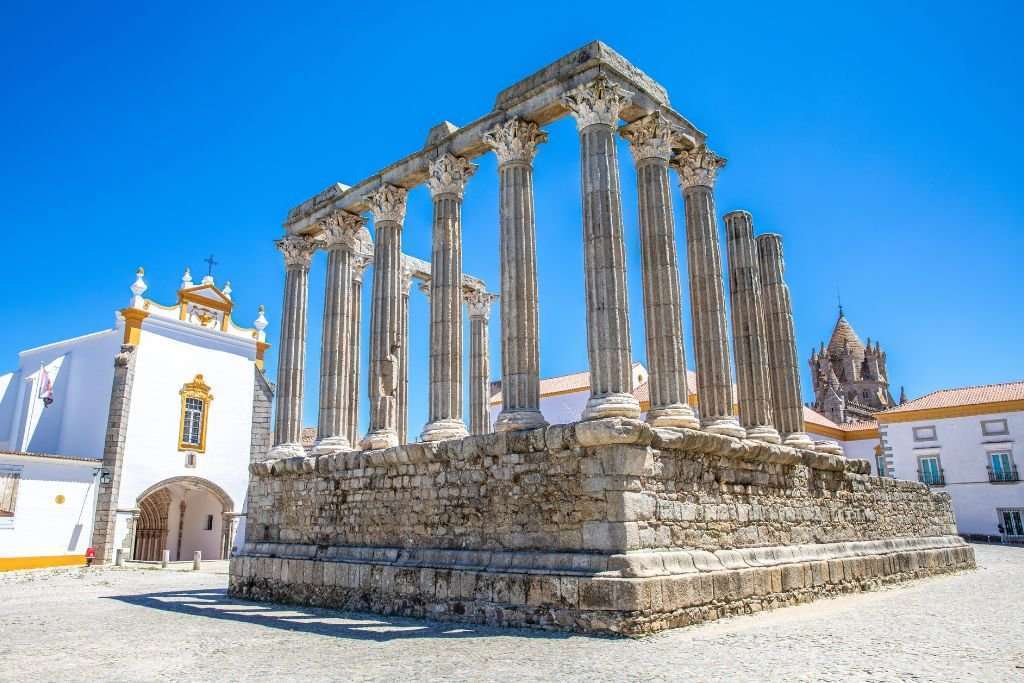


Jenn Lloyd is a disabled travel blogger and television writer based in Los Angeles. After a successful career writing for shows like KC Undercover and The Thundermans, she launched Sick Girl Travels to share her experiences navigating the world with Ehlers-Danlos Syndrome, POTS, and fibromyalgia. Having visited 40 U.S. states, 39 countries, and all 7 continents, Jenn offers inclusive travel guides with accessibility tips for those with mobility challenges. Her work has been featured on CNN, Huffington Post, and Consumer Reports. When not traveling, she enjoys fostering dogs, photographing street art, and spending time with her French bulldog, Miss Madelyn Pew.
Sign Up for Our Newsletter
Sign up with your email address to receive travel news and updates.