Things To Do In Chiang Mai Thailand
Edited on

Temple in Chiang Mai, Thailand
This post comes to us from Josh of A Backpacker’s World. Josh is an expert in helping people travel more while spending less. He’s also incredibly knowledgeable about Thailand travel. This is why I turned to him to find some amazing and accessible sites and activities in beautiful Chiang Mai, Thailand.
This post may contain affiliate links, which means I may receive a commission, at no extra cost to you, if you make a purchase through a link. This helps me keep the Sick Girl Travels blog running while providing you with high-quality product recommendations and great travel deals. Please see my full disclosure for further information. Thanks for your support!
Things To Do In Chiang Mai
Chiang Mai is one of the most popular cities to visit in Thailand and for good reason – it’s an incredible place, and it should definitely be on your Thailand itinerary.
There are so many things to do when visiting Chiang Mai, and you could easily stay here for months and never run out of things to do.
The city is also very flat, which is good news when it comes to accessibility. Although the city is surrounded by mountains, the Old City is as flat as a city can be.
Where To Stay In Chiang Mai
If you’re looking for where to stay in Chiang Mai, I recommend a few areas of the city. If it’s your first time in Chiang Mai, the Old City is an excellent choice. Looking for exciting nightlife? Check out Nimmanhaemin. If you’re looking for luxury hotels and/or you’re traveling with your family, head to Riverside.

Getting Around Chiang Mai
To get around Chiang Mai, there are several convenient transportation options available for visitors. One of the most popular modes of transportation is the red songthaews, which are shared red trucks that operate on specific routes around the city. These songthaews are an affordable way to travel short distances and are easily recognizable by their red color. Alternatively, visitors can also opt for tuk-tuks, which are three-wheeled motorized vehicles commonly found throughout the city. Tuk-tuks are a bit more expensive than songthaews but offer a more personalized and flexible mode of transport.
Additionally, visitors can also use the Grab app to book rides with local drivers, similar to services like Uber or Lyft. Renting a motorbike in Chiang Mai is another popular option for those looking for more independence and flexibility in their travels around the city. However, it’s essential to exercise caution when driving in the city, as traffic can be chaotic at times.

Temple in Chiang Mai, Thailand
13 Things To Do In Chiang Mai
As said in the introduction, there are so many things to do in Chiang Mai. It’s the perfect place to slow down while travelling in Thailand, as most people only stay for around 3 or 4 days, but there’s enough to do to justify at least one week. It gets tiring if you’re on the move every couple of days, right?

Elephant in Elephant Nature Park
Most people consider visiting an elephant sanctuary a “must-do” on any Thailand itinerary.
The sad reality is that most elephant “sanctuaries” in Thailand are exploiting the animals and committing animal abuse in blatant daylight. It’s extremely upsetting to see, and if you visit one of these unethical sanctuaries, you are only contributing to the problem.
You should never ride elephants – it is the biggest “no-go”. And you really shouldn’t bathe them either or take a mud spa with them. The gentle giants are being forced into these situations and have no free roaming.
Thankfully, just outside of Chiang Mai City is the famous Elephant Nature Park, which is considered one of, if not the, most ethical elephant sanctuaries in Thailand. It’s been featured across mainstream media quite a lot due to its rehabilitation efforts and is the number one thing to do in Chiang Mai.
The elephants are all rescued from situations of abuse, and in their new homes, they are allowed to roam freely and are well looked after. It’s the most ethical way to have an elephant experience in Thailand, and the good news is that a visit to an elephant sanctuary is accessible for wheelchair users too.
The grounds are hard-packed dirt and easy to navigate without much trouble. There are also ramps leading in and out of the buildings. Guests using wheelchairs can access most areas of the sanctuary, including the area for feeding the elephants.

Wat Chedi Luang In Chiang Mai
2. Visit The Temples
Chiang Mai is absolutely filled with temples like Wat Phra Singh, Wat Pha Lat, Wat Chedi Luang, and more. There are more than 300 “Wats” (temples) in and around Chiang Mai, not even including neighboring Chang Rai, which is quite mind-blowing, to be honest.
Chiang Mai has the most Buddhist temples out of any city in Thailand, and when you’re exploring the city, you’ll find a new one around every corner – quite literally. Chiang Mai is a safe city so you can make your own way around without any safety concerns. Just be warned that the sidewalks can be tricky for wheelchair users and those with mobility issues, given the cracks and potholes.
Unfortunately, it’s impossible to visit all of the temples in a short time frame, but there are a few temples that are considered must-visits while in Chiang Mai, and these are Wat Chedi Luang, Wat Chiang Man, and Wat Suan Dok.


Chiang Mai Sunday Night Market
3. Chiang Mai Sunday Night Market
If you can plan to be in Chiang Mai over a Sunday, I highly recommend a bit of rearranging of your itinerary to visit this incredible Chiang Mai night bazaar.
The main street, Ratchadamnoen Road, which runs horizontally straight through the middle of the Old City, turns into a pedestrian street every Sunday evening and transforms into a night market with all sorts of delicious street food, souvenirs, and more. It has quite the atmosphere.
You can easily spend a good few hours simply going up and down the street and seeing what you can find – and you can find pretty much anything you can think of.
Word of warning: the stalls are all on the pavement, and there are steep curb ramps to get on. At many places, the passage is very narrow and may be difficult to navigate. There may also be a step or two at some places. It’s doable in a wheelchair, but like much of Thailand, it can be challenging.

Doi Suthep Temple
4. Doi Suthep Temple
Doi Suthep is probably the most famous temple in Chiang Mai, as it features on most of the postcards, and it will be one of the first images that come up on Google.
It’s just outside of the Old City on top of a mountain, and the views are incredible. The temple is wheelchair accessible with an elevator from road level to the top of the temple (it’s several hundred steps from the road to the temple should you decide to walk). There are also ramps into the temple, but be warned the ramps are steep, so you will likely need assistance.
In the nearby area, there is also a chance to visit a waterfall and a local Hmong village, as you can get a shared taxi between the three destinations for a really low price.

Local northern food in Chiang Mai, Thailand
5. Take A Cooking Class
While a cooking class is an amazing thing to do anywhere in Thailand, cooking classes in Chiang Mai are simply on another level. There are so many reasons to visit Chiang Mai, and the food is definitely one of the best reasons.
For a start, the cuisine in the north of Thailand is the tastiest in the whole country, and there are lots of dishes which are exclusive to the region.
And secondly, it’s cheaper too. A wheelchair-accessible Thai cooking class in Chiang Mai will be around $25, whereas you can expect around $40 in the south of Thailand. Lower price for better food? It’s a no-brainer.
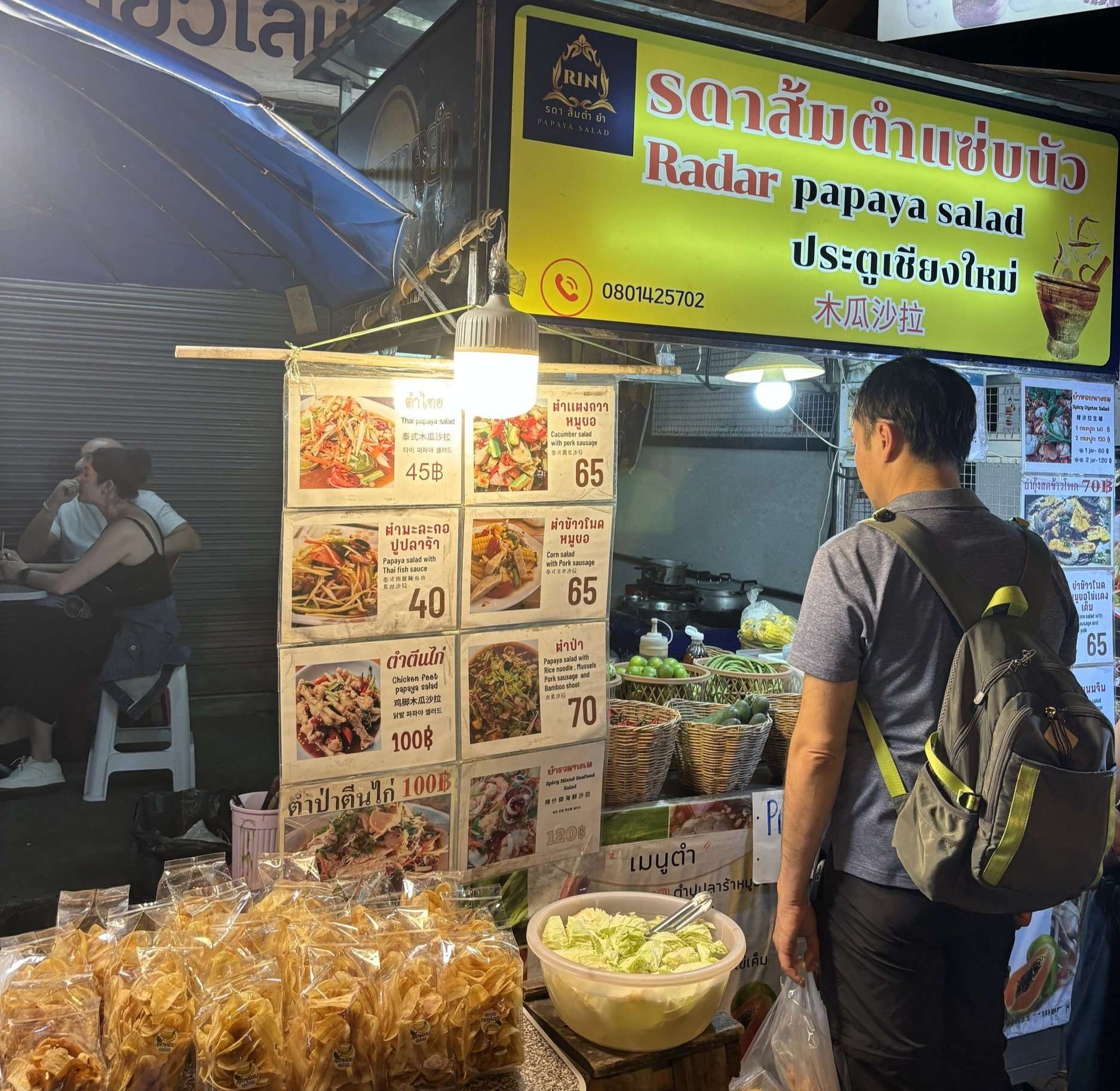
Chiang Mai Night Market
6. Try Some Local Dishes
Continuing on with the theme of food, there are lots of local dishes to try. The most famous is Khao Soi, which is a curry soup dish with both “wet” and “dry” noodles. It’s really unique and tastes delicious.
It’s typically served with beef, chicken, or pork (beef is the most popular), but you can find vegetarian options too.
Other must-try dishes include the Chiang Mai Sausage and Lanna-style Larb.
The best way to experience food in Chiang Mai is by eating street food. Contrary to rumors, it’s not guaranteed to give you food poisoning – but it is cheaper and also usually more authentic than food in restaurants.

Landmark Pagoda in Doi Inthanon National Park
7. Doi Inthanon National Park
One of the biggest reasons people visit Thailand is for its natural beauty – probably you included. This is why one of the best things to do in Chiang Mai is just a few hours from the city: Doi Inthanon National Park, which is one of the best NPs in the country.
It’s home to the tallest mountain in Thailand, and the whole area is exceptionally stunning. Its views straight out of a dream.
At the top of the mountain, there’s another temple located within the park, which is also famous and, like Doi Suthep, is on many of the postcards.
There are 2 wheelchair-accessible routes in the park, including one trail that leads you to the top to enjoy the best views possible. These trails receive 4.7 out of 5 stars from the AllTrails community. This is one of the most accessible places in Chiang Mai and definitely well worth a visit.

Muay Thai boxer getting a mouth guard
8. Watch A Muay Thai Boxing Night
You can catch a Muay Thai fight pretty much anywhere in Thailand – it’s a big part of Thai culture and kids are taught how to fight from as young as 4 or 5 years old.
Even though you can watch it anywhere, Chiang Mai is without a doubt one of the best places. Since it is a popular place for expats, you can watch both Thai fighters and international fighters, so you get the best of both worlds.
Plus, tickets are really cheap compared to other spots in Thailand. You can find tickets for as low as 600 baht, whereas in the likes of Phuket, you won’t find anything for less than 1500.


9. Visit Chiang Mai National Museum
There are actually quite a lot of museums in Chiang Mai to check out – which is unusual in Asia as museums aren’t as popular as in the West.
One of the most popular is the National Museum, which gives a lot of information about when Chiang Mai used to be the capital of the Lanna Kingdom (Thailand before it became known as “Thailand ”)
If you are interested in history, it’s a fascinating museum and has enough information to spend a few hours here at least.
10. Nong Buak Haad Public Park
Parks are usually welcomed as something to do during a city trip to escape the mayhem of city life – this is definitely the case in Bangkok. But in Chiang Mai, the Old City is already pretty chill and relaxed.
That being said, Nong Buak Haad Public Park is still a really nice place to chill out and take a break from a busy schedule of things to do in Chiang Mai. It’s really pretty.
The park is also significant for locals as it is where the Chiang Mai Flower Festival is held, which is one of the main three festivals for people in Chiang Mai. (alongside the Festival of Lights and the Thai New Year).

Three Kings Monument
11. Three Kings Monument
Chiang Mai is more of a “things to do” city than a “things to see” city – it’s not got a lot of sightseeing – but the Three Kings Monument is one thing you have to see during your trip.
It represents everything Chiang Mai is, as the statue is of the three founders of the city, and it holds a lot of significance with the locals.
There are several stairs leading up to the base of the monument, but you can clearly observe it from the level pavement several feet away.

Mae Sa Waterfall
12. Sticky Waterfalls
A bit outside of Chiang Mai are the Sticky Waterfalls – another amazing example of the natural beauty in the area around Chiang Mai.
They’re famous for being able to climb up them due to the high levels of calcium carbonate in the water – but don’t worry – they are still stunning to look at.
There are lots of viewpoints that are wheelchair accessible and offer incredible views over the waterfalls and jungle. While wheelchair users may not participate in the climbing portion of the tour, there is still a wheelchair-accessible tour of Sticky Waterfalls where they can appreciate the many views.

Tha Phae Gate
13. Tha Phae Gate
As mentioned earlier in the article, Chiang Mai used to be the capital city of the Lanna Kingdom. To help protect the city, there was a big wall and moat around it, and parts remain to this day.
If you look at Chiang Mai on a map, you will see a big square in the middle. This is the Old City as it still has the moat around the outside.
There are some parts of the wall too, not as much as Dubrovnik, but still enough to feel like you’re in a walled city.
The most significant place along the wall is the Tha Phae Gate, which was the old entrance to the Old City. It’s on the east side of the walls.
The areas surrounding the gate are wheelchair accessible.

Chiang Mai Wat Phra That Doi Suthep Temple
Conclusion
And there you have it, a complete guide and list of all the best things to do in Chiang Mai.
Everything on this list is just a glimpse of what the city has to offer – there’s a reason that it’s so popular for expats, and that’s because there are an endless number of things to see in Chiang Mai.
Enjoy your trip to Chiang Mai – you’ll be sure to have an unforgettable time.
Frequently Asked Questions About Things to Do in Chiang Mai, Thailand
What are the best things to do in Chiang Mai?
First-time visitors should explore the Old City’s temples, visit an ethical elephant sanctuary, eat khao soi, browse a night market, and take a trip to Doi Suthep. Cooking classes, Doi Inthanon National Park, Muay Thai matches and the Sticky Waterfalls provide additional options. Chiang Mai contains enough activities to fill a week without requiring Bangkok’s competitive level of urban survival.
How many days do you need in Chiang Mai?
Allow at least three or four days to experience the Old City, temples, markets, and one excursion outside Chiang Mai. Five to seven days provides a more comfortable pace and leaves time for an elephant sanctuary, cooking class, and national park. Travelers with chronic illnesses or limited stamina should avoid scheduling consecutive full-day tours.
Is Chiang Mai worth visiting?
Yes. Chiang Mai offers historic temples, excellent Northern Thai food, beautiful mountain scenery, and a more relaxed atmosphere than Bangkok. It is particularly appealing to travelers interested in culture, nature, wellness, and affordable food experiences.
What is the best time of year to visit Chiang Mai?
November through January generally offers cooler temperatures and lower rainfall, making it a popular time for sightseeing. February can still be pleasant, but seasonal smoke may begin affecting air quality. The rainy season brings humidity and frequent showers, although the surrounding landscape becomes beautifully green.
When is Chiang Mai’s burning season?
Seasonal haze usually affects Northern Thailand between approximately February and April, although its timing and severity change each year. March is frequently one of the worst months for air pollution and reduced mountain visibility. Travelers with asthma, respiratory problems, or sensitivity to smoke should check current air-quality readings before booking and again throughout their visit.
Is Chiang Mai wheelchair accessible?
Chiang Mai is partially accessible but presents substantial obstacles. Visitors will find step-free attractions and accommodating tour operators, but cracked sidewalks, missing curb cuts, traffic, entrance steps, and inaccessible vehicles are common. Confirm the complete route to each attraction rather than assuming that an accessible destination automatically comes with accessible transportation.
What is the most accessible way to get around Chiang Mai?
A private car or accessible van arranged through a reputable operator generally provides the most dependable transportation. Traditional songthaews and tuk-tuks usually require transfers and may not accommodate wheelchairs. Grab and other car services can be useful for ambulatory travelers, although vehicle size and the driver’s ability to transport a mobility device vary.
Is Chiang Mai’s Old City wheelchair accessible?
The Old City is mostly flat, but its sidewalks are inconsistent and sometimes blocked by signs, parked motorbikes, utility poles, or enthusiastic collections of street furniture. Wheelchair users may occasionally need to travel along the road, which requires considerable caution. A private driver can reduce the distance between temples and other attractions.
Which temples should I visit in Chiang Mai?
Wat Chedi Luang, Wat Chiang Man and Wat Phra Singh are among the most important temples within the Old City. Wat Suan Dok is another interesting choice, while Wat Phra That Doi Suthep offers mountain views and one of the region’s most famous temple complexes. Choose two or three rather than attempting every temple in a single day.
What should I wear when visiting temples in Chiang Mai?
Cover your shoulders and knees, remove your shoes before entering temple buildings, and wear clothing that is respectful rather than revealing. Lightweight clothing or a wrap can help you remain comfortable in the heat. Avoid pointing your feet toward Buddha images or monks, and follow any instructions posted at the entrance.
Is Doi Suthep worth visiting?
Yes. Wat Phra That Doi Suthep is one of Chiang Mai’s most recognizable landmarks and provides impressive views when the air is clear. Reaching the temple traditionally involves a long staircase, but alternative access may be available. Travelers with mobility limitations should confirm the elevator or funicular’s current operation and the remaining step-free route before visiting.
Is Doi Inthanon National Park wheelchair accessible?
Accessibility is limited and varies considerably between viewpoints, waterfalls, gardens and nature trails. Some major viewpoints and paved areas may be manageable with assistance, while many trails contain steps, roots, steep slopes or uneven surfaces. Ask the tour operator for photographs and a stop-by-stop description before booking an excursion advertised as accessible.
Can wheelchair users visit the Sticky Waterfalls?
Wheelchair users cannot climb the waterfall, but some surrounding areas and viewpoints may still be visitable depending on current path conditions. Surfaces can be wet, steep, and slippery, and accessible toilets or transportation should not be assumed. Confirm precisely where the vehicle stops and what can be viewed without using stairs.
Is Elephant Nature Park worth visiting?
Elephant Nature Park is a rescue and rehabilitation sanctuary where visitors can learn about elephants and observe them behaving more naturally. Current experiences include half-day, full-day, and overnight programs. Reservations should be made through the official Elephant Nature Park website because programs, prices and activities can change.
How do I choose an ethical elephant sanctuary?
Look for a sanctuary that does not offer elephant riding, tricks, performances or forced interactions. Responsible programs allow elephants to roam, forage and socialize while visitors observe at a respectful distance. Be suspicious of any attraction that describes itself as a sanctuary while inviting you to ride an elephant immediately after lunch.
Is Elephant Nature Park wheelchair accessible?
Elephant Nature Park states that its half-day programs can accommodate wheelchair users, but visitors with access requirements must contact the sanctuary before booking. The park does not provide wheelchairs, and other programs may involve forest walks or more difficult terrain. Obtain confirmation about transportation, ramps, restrooms, surfaces, and the portions of the experience you can join.
Which Chiang Mai night market should I visit?
The Sunday Walking Street Market is one of the best choices for food, crafts and atmosphere. It stretches along Ratchadamnoen Road through the Old City and can become extremely crowded. If you are not in Chiang Mai on Sunday, the Night Bazaar and other evening markets provide alternative shopping and street-food experiences.
Are Chiang Mai’s night markets wheelchair accessible?
The streets may be relatively flat, but crowds, uneven pavement, food stalls, and limited maneuvering space can make navigation difficult. Visit near opening time before the largest crowds arrive and identify a meeting point in case your group becomes separated. Accessible public restrooms may be difficult to locate, so plan accordingly.
What foods should I try in Chiang Mai?
Khao soi is Chiang Mai’s signature dish—a rich curry noodle soup topped with crispy noodles. Other regional specialties include sai ua sausage, nam prik ong, nam prik noom, and Northern Thai-style larb. Vegetarian versions are widely available, although ingredients such as fish sauce or shrimp paste should be confirmed.
Are cooking classes in Chiang Mai worth it?
Yes. Cooking classes offer an enjoyable introduction to Thai ingredients, local markets, and dishes such as curry, stir-fries, and mango sticky rice. Many classes allow participants to select individual dishes and can accommodate vegetarian diets. Verify counter height, seating, transportation, and restroom access if you have mobility or stamina limitations.
Is street food safe in Chiang Mai?
Street food can be safe, but no stall or restaurant can guarantee that you will avoid illness. Choose busy vendors that cook food thoroughly in front of you, avoid ingredients that have been sitting in the heat, and use bottled or properly filtered water. Travelers with serious food allergies should carry translated allergy information and understand that cross-contact may be difficult to prevent.
Is watching Muay Thai in Chiang Mai worth it?
A Muay Thai event provides an energetic introduction to one of Thailand’s most important sports. Confirm that the event is a legitimate competition rather than a tourist demonstration, and check seating, ventilation and accessibility before buying tickets. Arenas can be crowded, hot and loud, so noise protection may be useful.
What are the best free things to do in Chiang Mai?
Many temples in the Old City are free or request only a small donation. Tha Phae Gate, the Three Kings Monument and Nong Buak Haad Public Park can also be visited without a significant admission charge. Walking through local markets is technically free until the smell of grilled food begins making financial decisions for you.
What can you do in Chiang Mai when it rains?
Visit the Chiang Mai National Museum, take a cooking class, enjoy a café, or explore temples during breaks in the weather. Rain is often intense but temporary rather than continuous throughout the day. Carry a lightweight rain jacket and protect medication, electronics, and mobility-device controls from water.
Is Chiang Mai safe for solo travelers?
Chiang Mai is generally considered welcoming to solo travelers, but normal precautions remain necessary. Watch for traffic, protect valuables in markets, use reputable transportation and avoid isolated areas late at night. Do not assume that feeling relaxed makes scooters, uneven sidewalks or travel scams disappear.
Is Chiang Mai suitable for families?
Yes. Families may enjoy cooking classes, parks, markets and responsible elephant-watching experiences. Check age restrictions, transportation times and the amount of walking before booking a full-day excursion. Young children should be supervised particularly carefully around traffic, animals and waterfalls.
What is the best day trip from Chiang Mai?
Doi Inthanon National Park is an excellent choice for mountain scenery, waterfalls and Thailand’s highest peak. Doi Suthep can be combined with nearby attractions on a shorter excursion, while the Sticky Waterfalls offer a more active experience. Chiang Rai is possible as a long day trip, but staying overnight produces a much less exhausting visit.
Should Chiang Mai tours be booked in advance?
Reserve Elephant Nature Park, accessible private tours and popular cooking classes in advance. Tours and hotels also fill quickly during festivals such as Yi Peng and Songkran. Markets, temples and central attractions usually require less planning, but their hours and access conditions should still be checked.
How can I visit Chiang Mai with a chronic illness?
Plan no more than one major excursion per day and protect time for meals, medication and recovery. Heat, humidity, air pollution, vehicle transfers and uneven walking surfaces can consume more energy than the attraction itself. A quiet afternoon beside a hotel pool is still a valid Chiang Mai activity, particularly when your nervous system has declined further cultural enrichment.
What should I pack for Chiang Mai?
Bring lightweight temple-appropriate clothing, supportive shoes, sunscreen, insect repellent, and a refillable water bottle. Add a rain jacket during the wet season and a well-fitting protective mask when air quality may be poor. Keep essential medication in its original packaging and bring more than you expect to need.
Is Chiang Mai expensive?
Chiang Mai is generally more affordable than Bangkok, Phuket, and many international destinations. Street food, local transportation, and casual attractions can be inexpensive, while private accessible transportation and specialized tours cost considerably more. Budget for the services that make the trip physically manageable rather than choosing the cheapest option at the expense of your health.







Jenn Lloyd is a disabled travel blogger and television writer based in Los Angeles. After a successful career writing for shows like KC Undercover and The Thundermans, she launched Sick Girl Travels to share her experiences navigating the world with Ehlers-Danlos Syndrome, POTS, and fibromyalgia. Having visited 40 U.S. states, 39 countries, and all 7 continents, Jenn offers inclusive travel guides with accessibility tips for those with mobility challenges. Her work has been featured on CNN, Huffington Post, and Consumer Reports. When not traveling, she enjoys fostering dogs, photographing street art, and spending time with her French bulldog, Miss Madelyn Pew.
Sign Up for Our Newsletter
Sign up with your email address to receive travel news and updates.