Street Art Toronto: Graffiti Alley And More!
Edited on

Mural of David Suzuki, science broadcaster and the host of CBC Television’s science program The Nature of Things. Artist unknown
This post may contain affiliate links, which means I may receive a small commission, at no extra cost to you, if you make a purchase through a link. This helps me keep the Sick Girl Travels blog running while providing you with high-quality product recommendations and great travel deals. Please see my full disclosure for further information. Thanks for your support!
Toronto Street Art
If you’re looking for cities with a high concentration of Street Art, Toronto is hard to beat. Toronto, Ontario, Canada has one of the most vibrant street art scenes I have ever seen. It even boasts a whole half-mile area covered in urban art called Graffiti Alley. But it wasn’t always this way. In fact, Toronto has a history of hating street art.
Under Mayor Rob Ford, there was a massive graffiti crackdown. Many of the city’s murals were removed for being supposed eyesores. There were huge fines imposed for graffiti and murals, and it was difficult for any artwork to last very long. But that all changed in 2012 with the adoption of the StreetARToronto program.
StreetARToronto (StART) is a program started by the City of Toronto in 2012 as a way to reduce graffiti vandalism by replacing it with creative murals and street art that engage the community and make a positive impact on the city. The program has helped immensely in shifting the city’s perspective of what graffiti can be. The program even works with kids to help get them involved with art and stay out of trouble by painting murals in Toronto. Needless to say, places around the city have become a lot more colorful.

Art by Skam 2
Where To Find Murals And Graffiti Art In Toronto, Canada
It’s pretty easy to find street art in Toronto’s neighborhoods. You can find a bevy of murals and graffiti surrounding Queen Street West, Kensington Market, Graffiti Alley, The Ossington Laneway, Underpass Park, and The Annex. To get the most bang for your buck, concentrate on Queen Street West and Graffiti Alley in downtown Toronto. This area has the highest concentration of street art as well as some of the best street art in Toronto. This saves you some time and stops you from making multiple trips around the city.

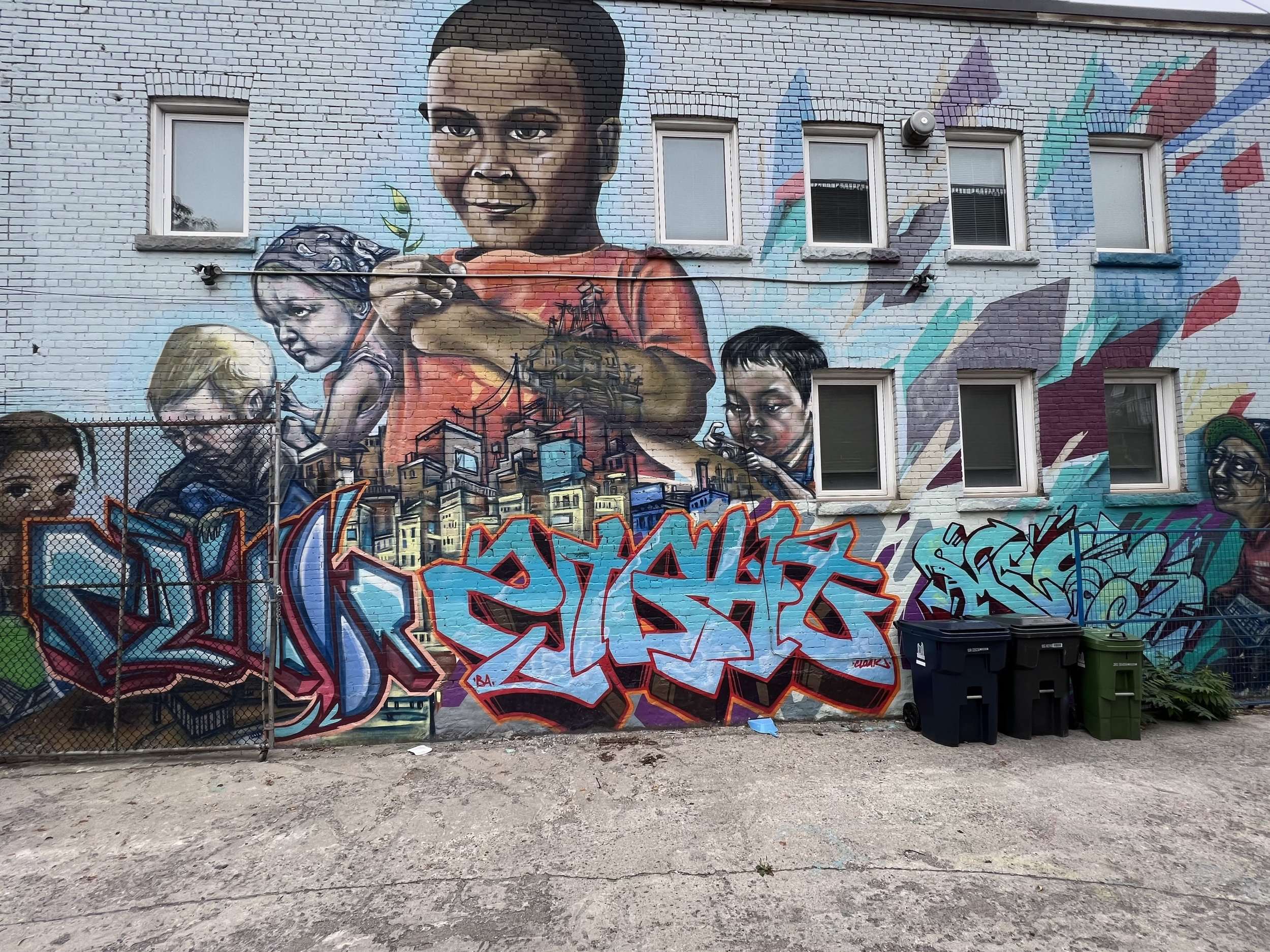
Art by Elicser Elliot
Should You Book A Street Art Tour Of Toronto Murals?
Sure, you could take a stroll through the Queen West area and Graffiti Alley yourself, but it’s well worth taking a guided tour. For just $6, plus tip, you can take this amazing Toronto Street Art Tour with The Tour Guys. The tour is on level ground with no hills and is easily wheelchair accessible. What’s so great about it? You’ll get an experienced guide who can tell you all about the artists and the area.
My guide was fantastic. I’ve taken many street art tours around the world, but this tour gave me a better insight into street art styles, the artists’ histories, and the political and social contexts of some of the works.
The small group tour (there were only 2 people on my tour) lasts about 90 minutes. You’ll have plenty of time to take great photos and ask questions. You may even win a nice prize for answering a street art quiz.

Artist unknown

408 Queen St. W. Art by Tom Dean

Artist unknown
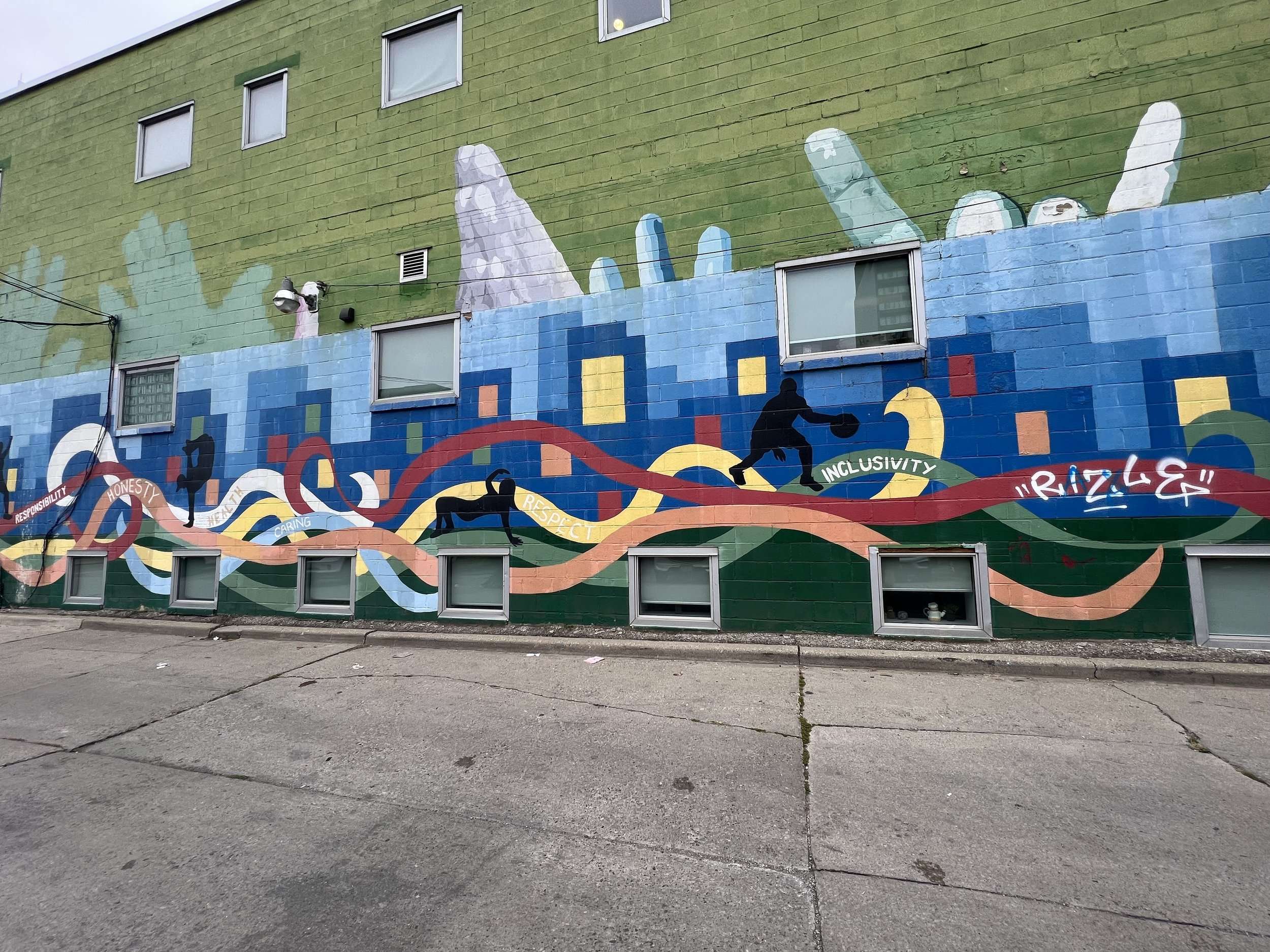
Art by kids as part of the StART program.

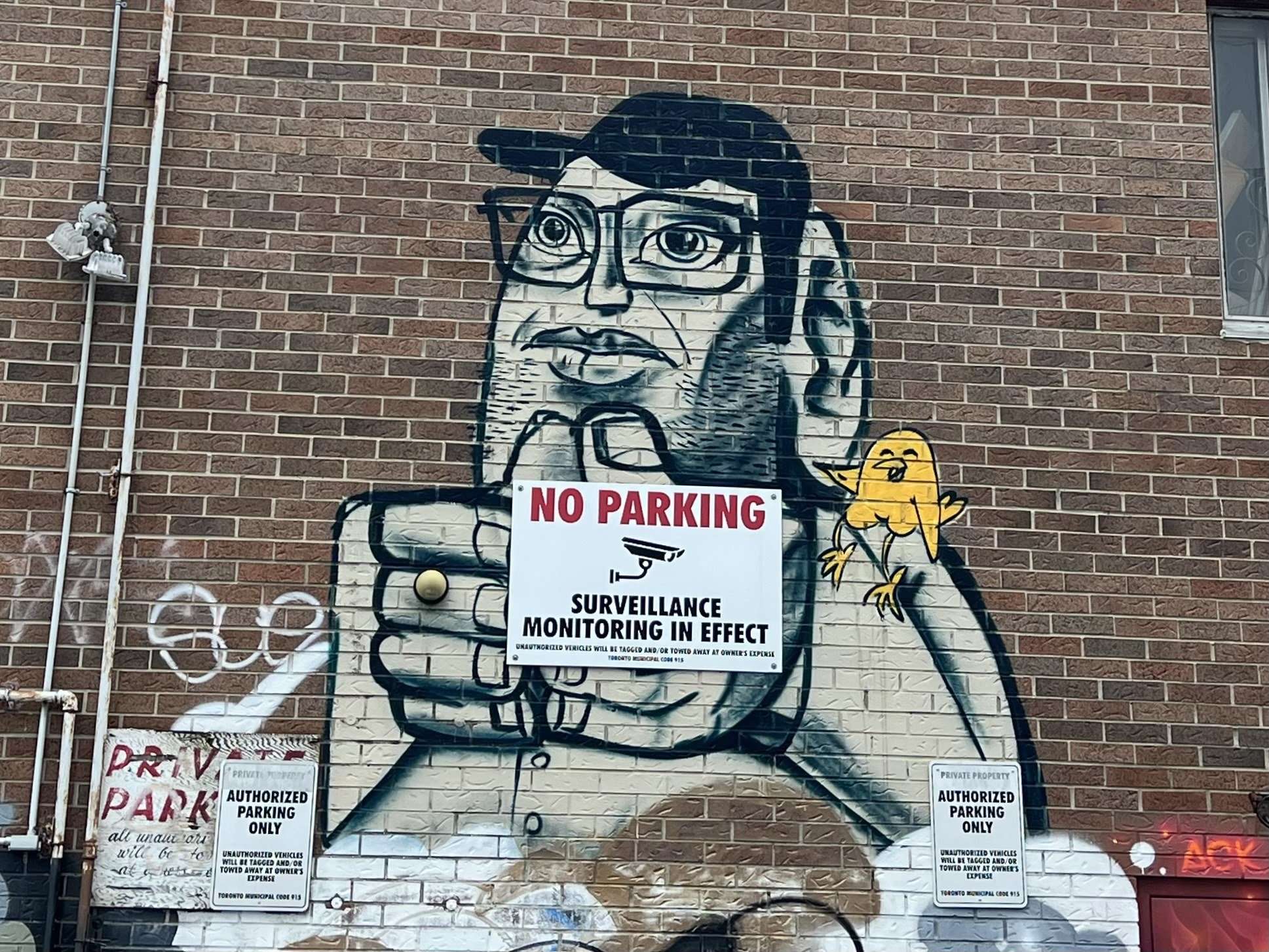
Art by Uber5000
Famous Canadian Graffiti Artists
Uber5000 paints iconic yellow birds all over the city as well as massive, colorful murals. He’s also responsible for the “most Toronto mural ever,” or what he calls Toronto Tribute. Painted in 2017, it includes a ton of famous Toronto characters—Drake, former mayor Rob Ford (whom you may remember for being in the news for his crack problem), music icon Gord Downie, and the Ikea Monkey.
Elicser Elliot paints some of the city’s best cultural and political art. He captured the mood of 2020 with a powerful mural depicting police brutality against Black men. His work draws attention to allies, bystanders, and anxieties of the Black Lives Matter protests around the world.
Poser is a Toronto-based graffiti artist and large-scale muralist. He’s been a full-time graffiti artist, working with the City of Toronto to organize and produce large-scale works. He’s known for creating impactful work through large-scale productions and trains. Poser is also known for his iconic bunny character, which can be spotted throughout Toronto.

Artist unknown

Art by Elicser Elliot

Art by Elicser Elliot

Artist unknown

Artist unknown

Artist unknown


Art by Greg Mike

Art by the StART program
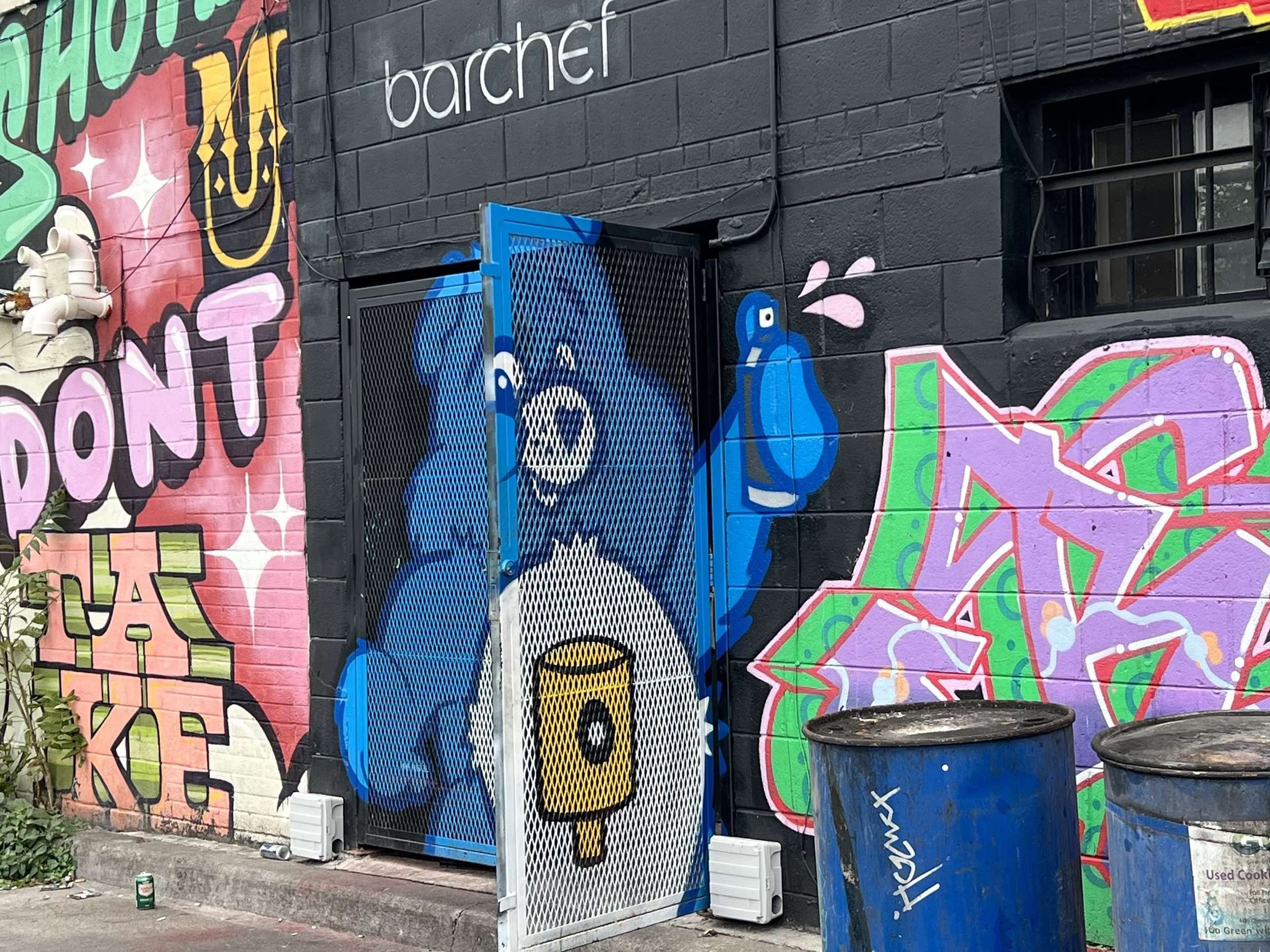
Artist unknown

Artist unknown

Art by Smug

Artist unknown

Art by @Onedaycreates and @Mostlyletters, 482 Queen St. West, Toronto, ON
Queen West And Queen Street Art
The West Queen West neighborhood has a high concentration of Toronto street art and murals. If you walk down Queen Street West between Gladstone Avenue and Spadina Avenue, you’ll see lots of graffiti art right on Queen Street and on the side streets. A lot of the photos above were taken in this area. Best of all, it’s close to Graffiti Alley, so when you finish your walk through Queen West, you can pop into Graffiti Alley Toronto.


Artist unknown

Artist unknown

Artist unknown
Toronto Graffiti Alley
Covering over half a mile of space south of Queen Street West between Spadina Avenue and Portland Street, the alley is filled with amazing murals, graffiti, and yarn bombs from artists such as Uber5000, Skam, and Poser. Best of all, admission is free, and the area is safe to explore. It’s also wheelchair accessible.

Art by Steep Daniels
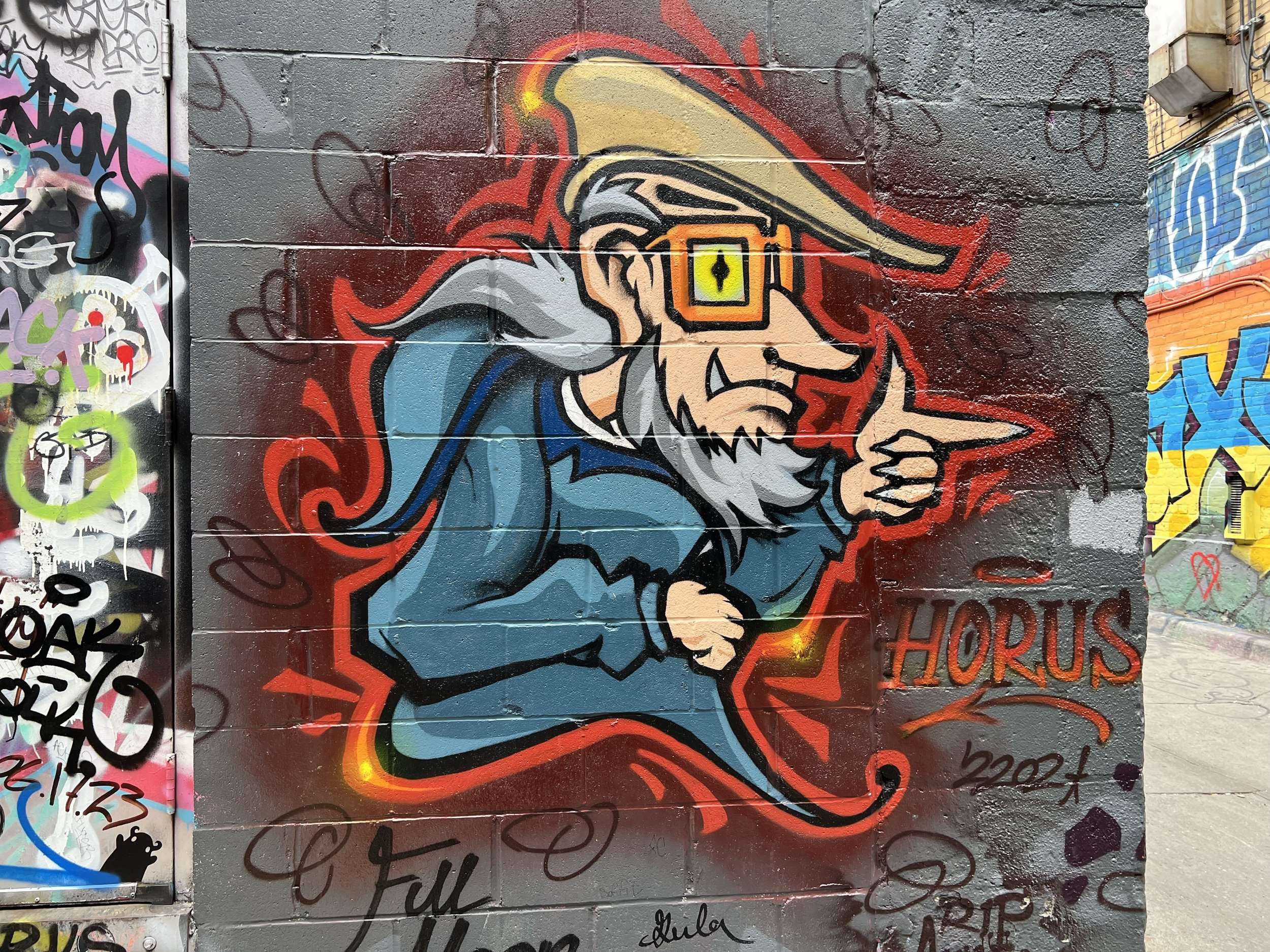
Art by Horus
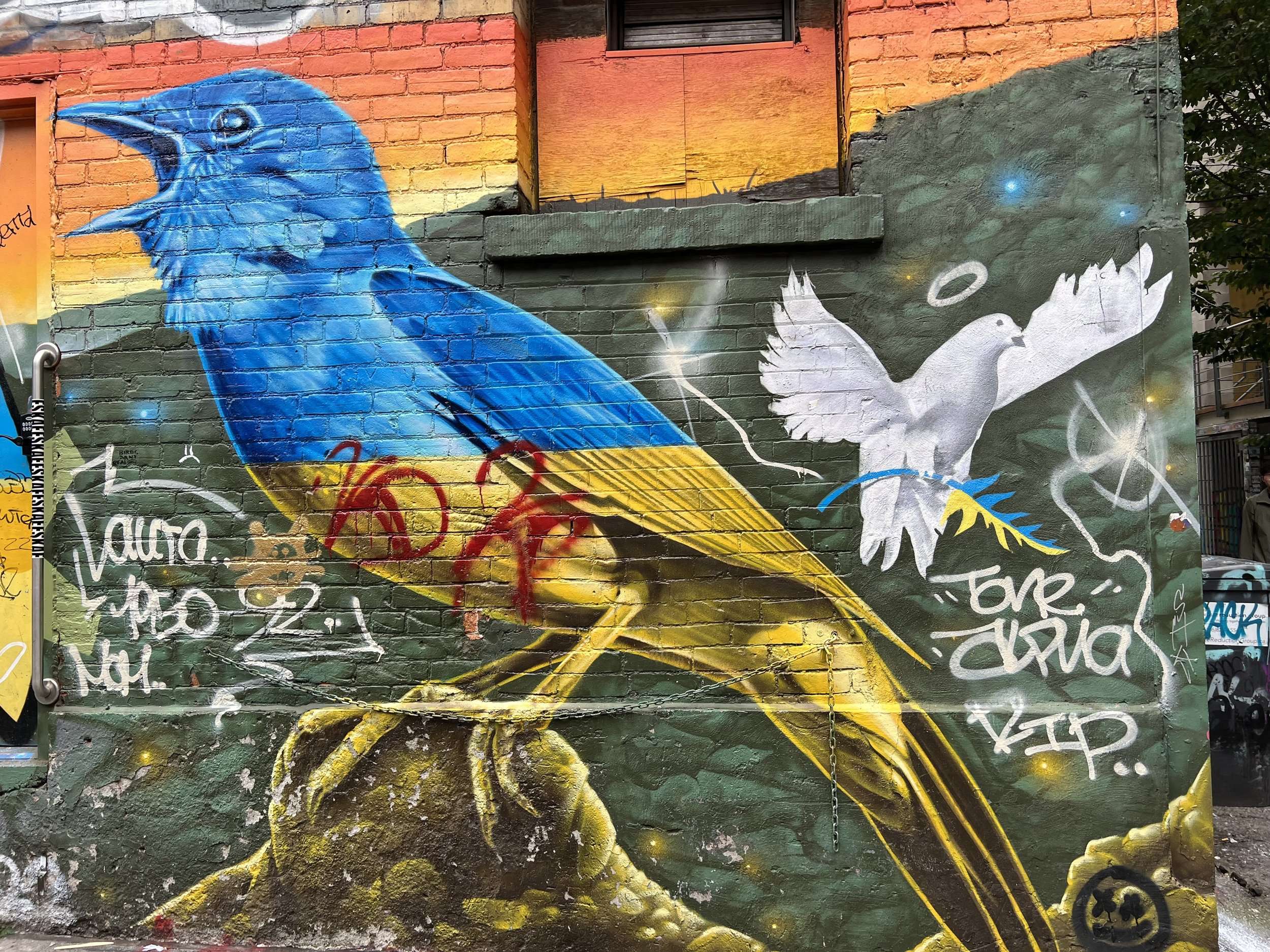
Artist unknown
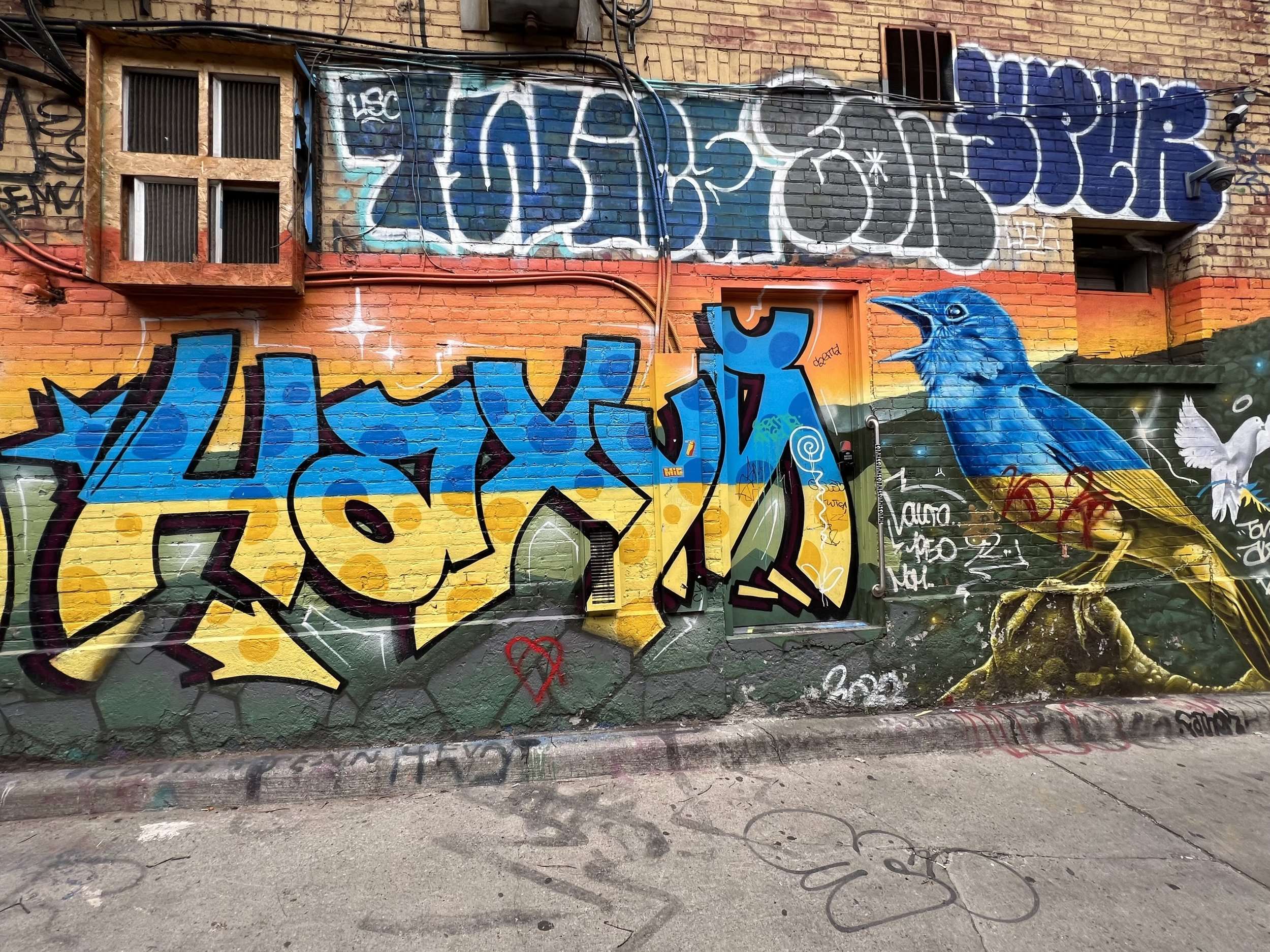
Artist unknown

Artist unknown

Artist unknown

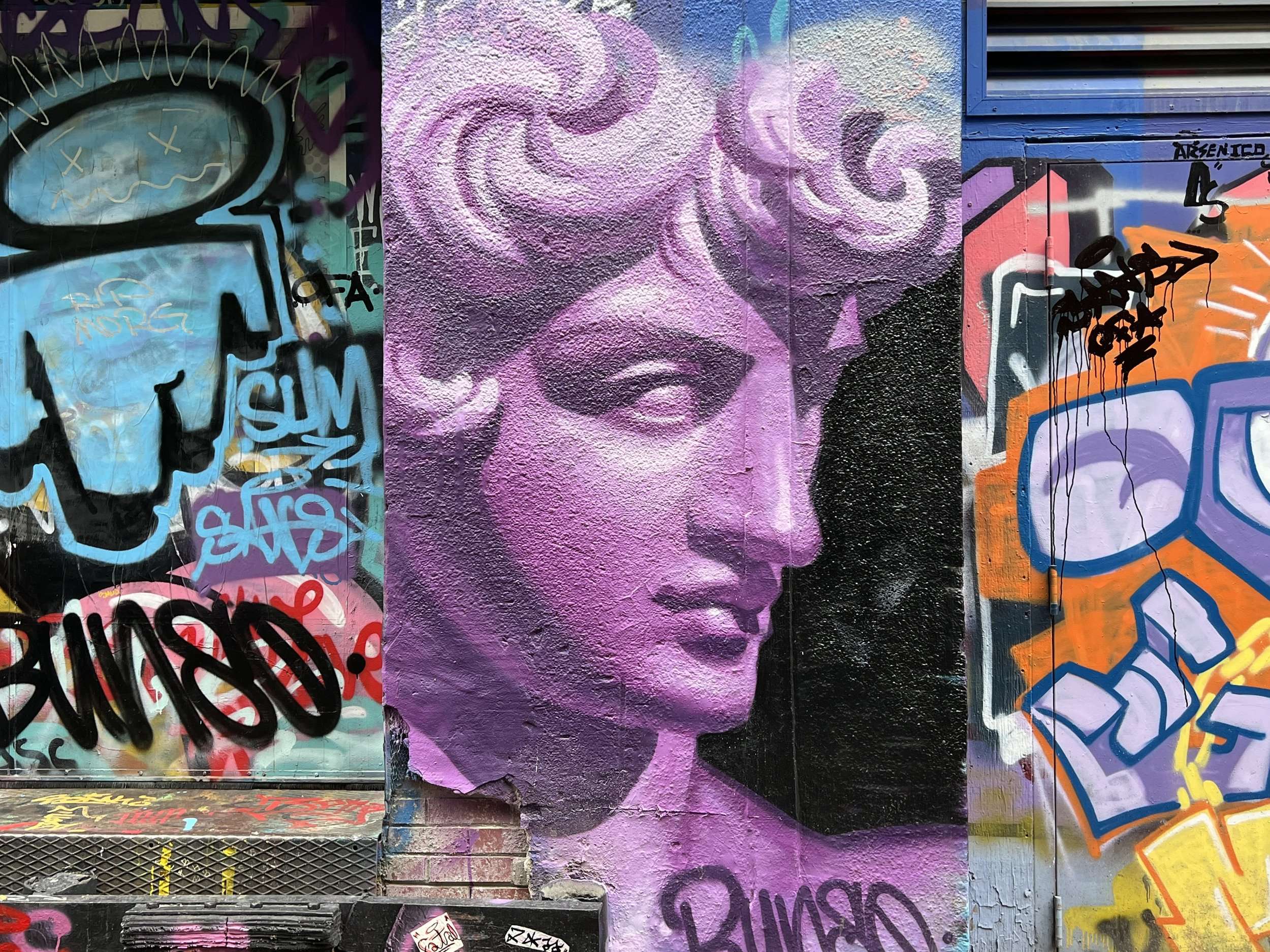
Art by Bunso

Artist unknown

Artist unknown

Art by Bunso

Artist unknown
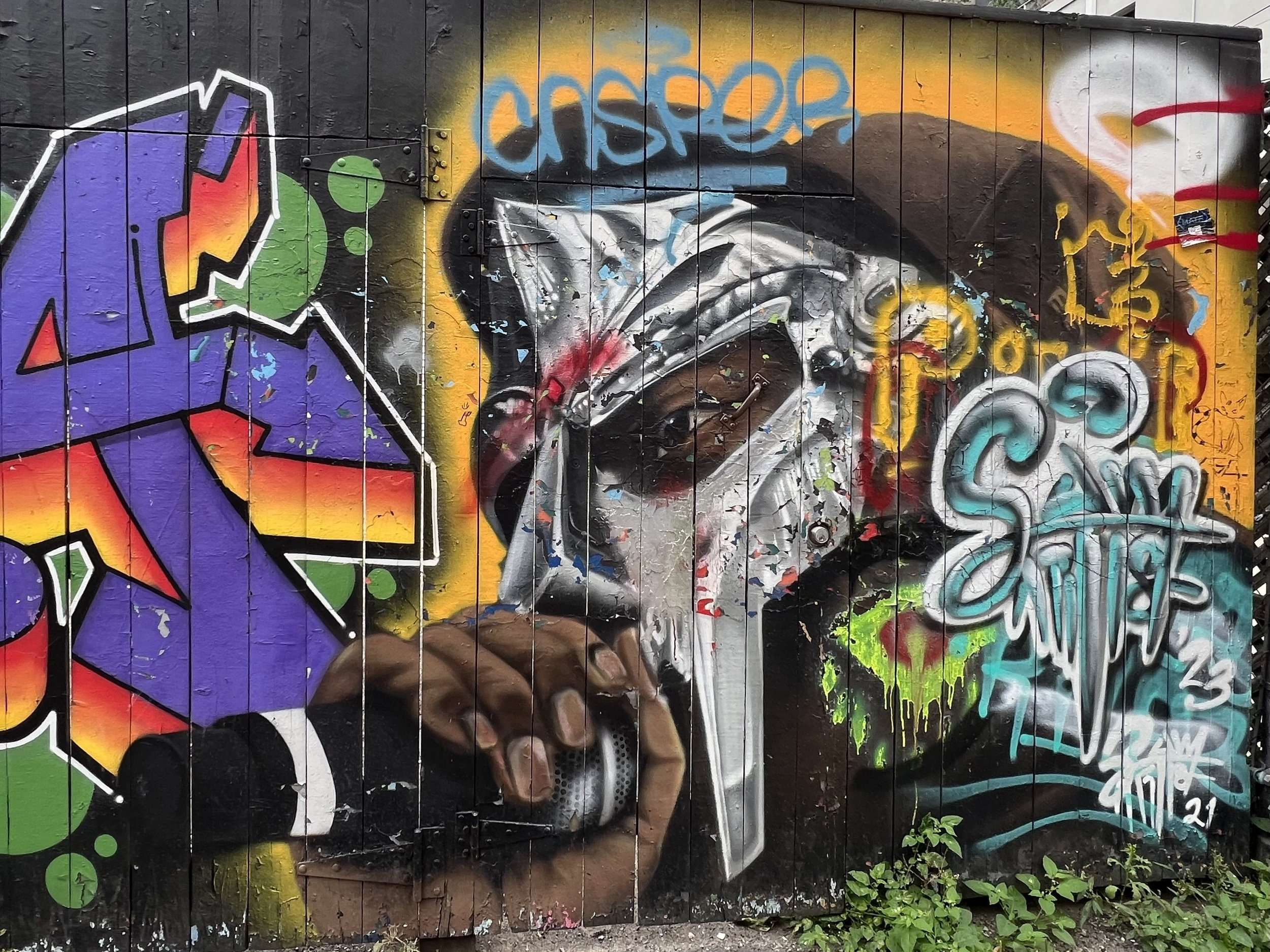
Artist unknown

Artist unknown
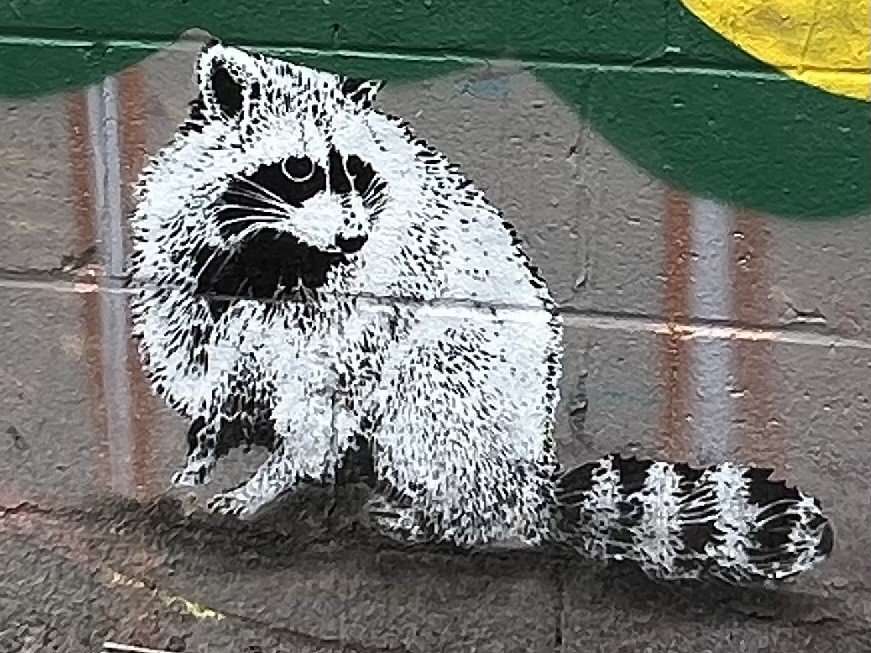
Art by Uber5000

Art by Uber5000


Art by Uber5000
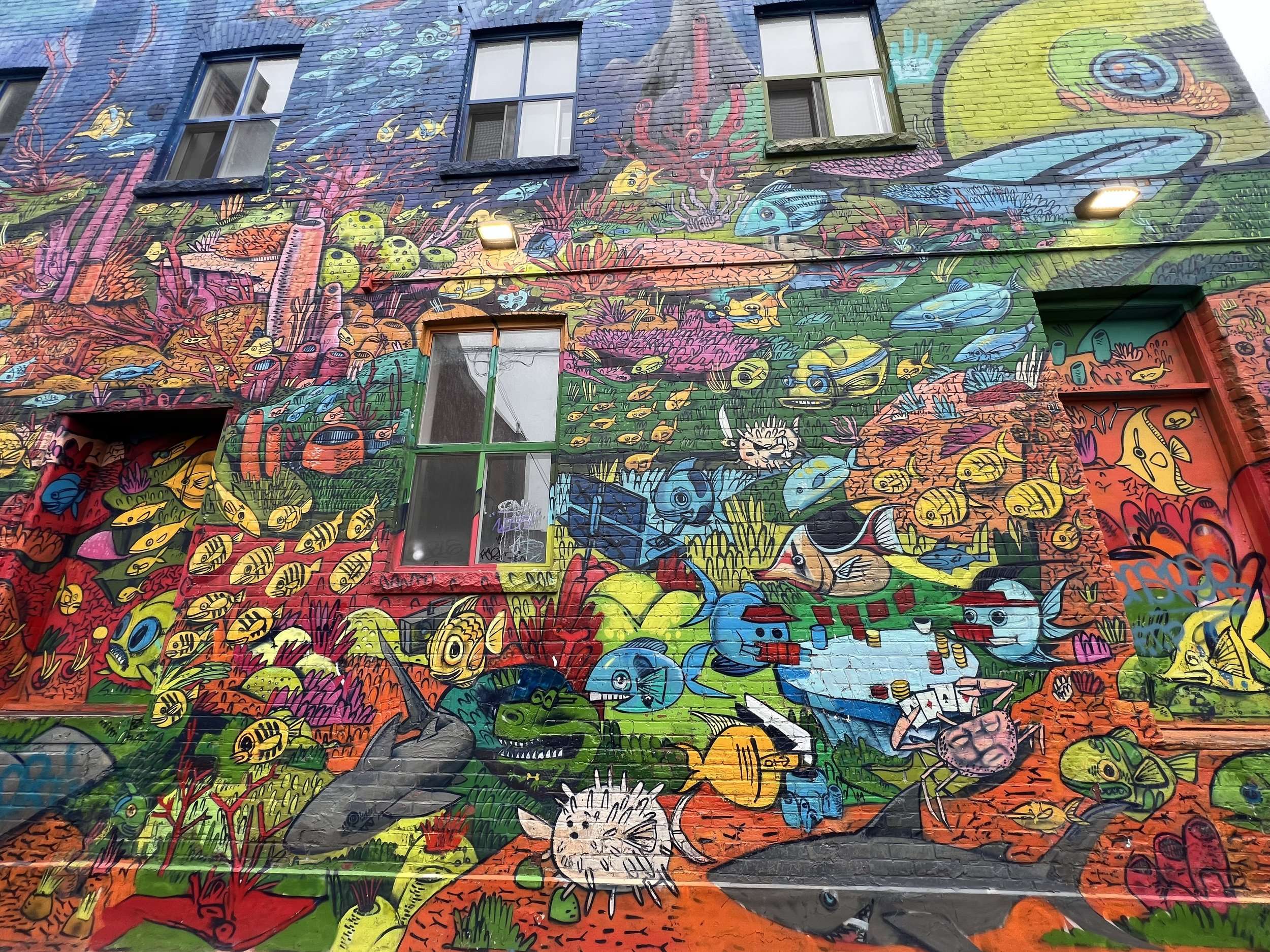
Art by Uber5000
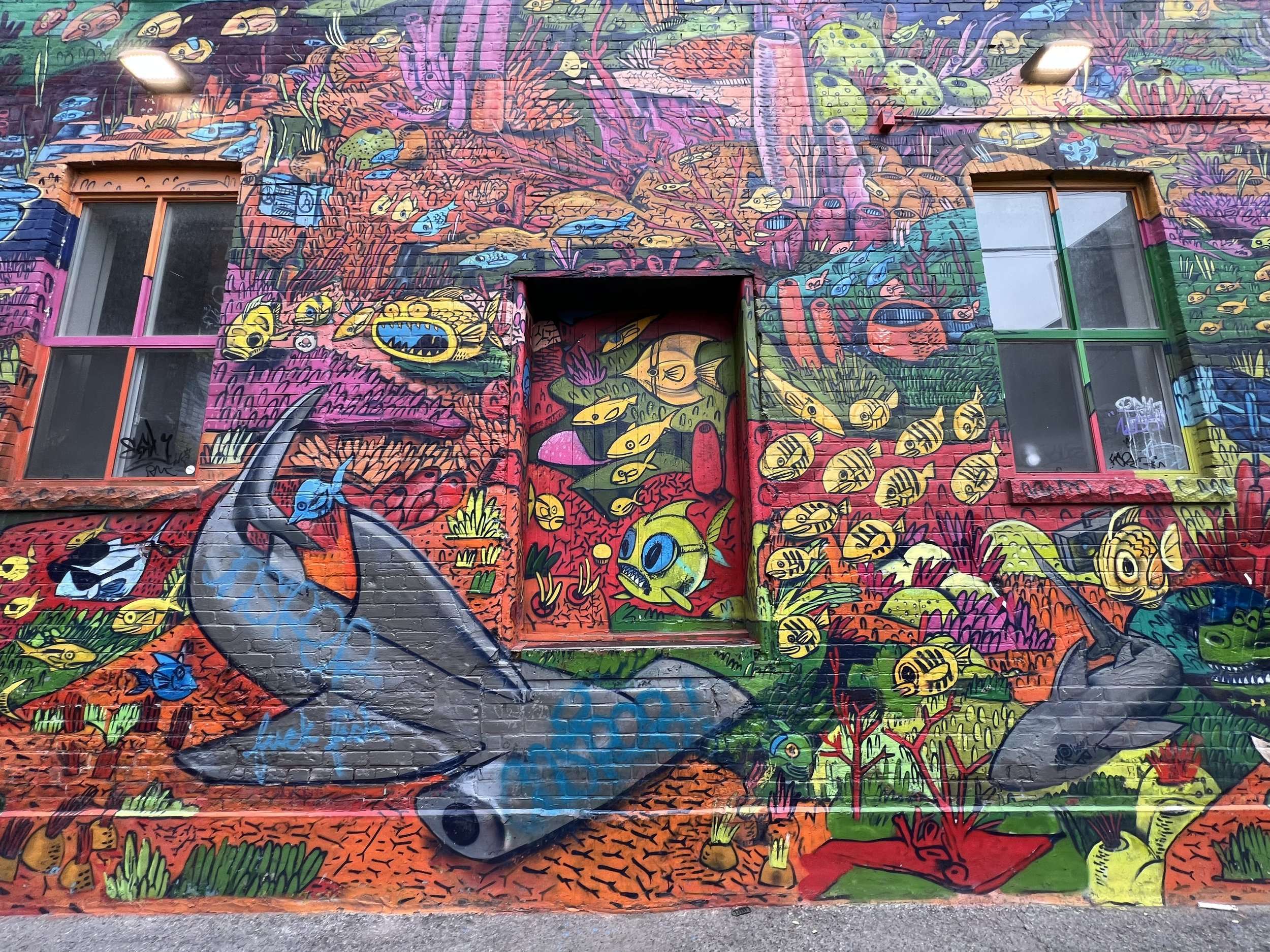
Art by Uber5000
This wall was so magnificent I had to capture it in 3 different photos.

Artist unknown
This phonebook was part of an art installation where a blank journal was left tethered to the bottom with the instructions to write a true confession. The book was filled with people’s stories and later collected. Occasionally, a new journal is placed by the phone.

Artist unknown
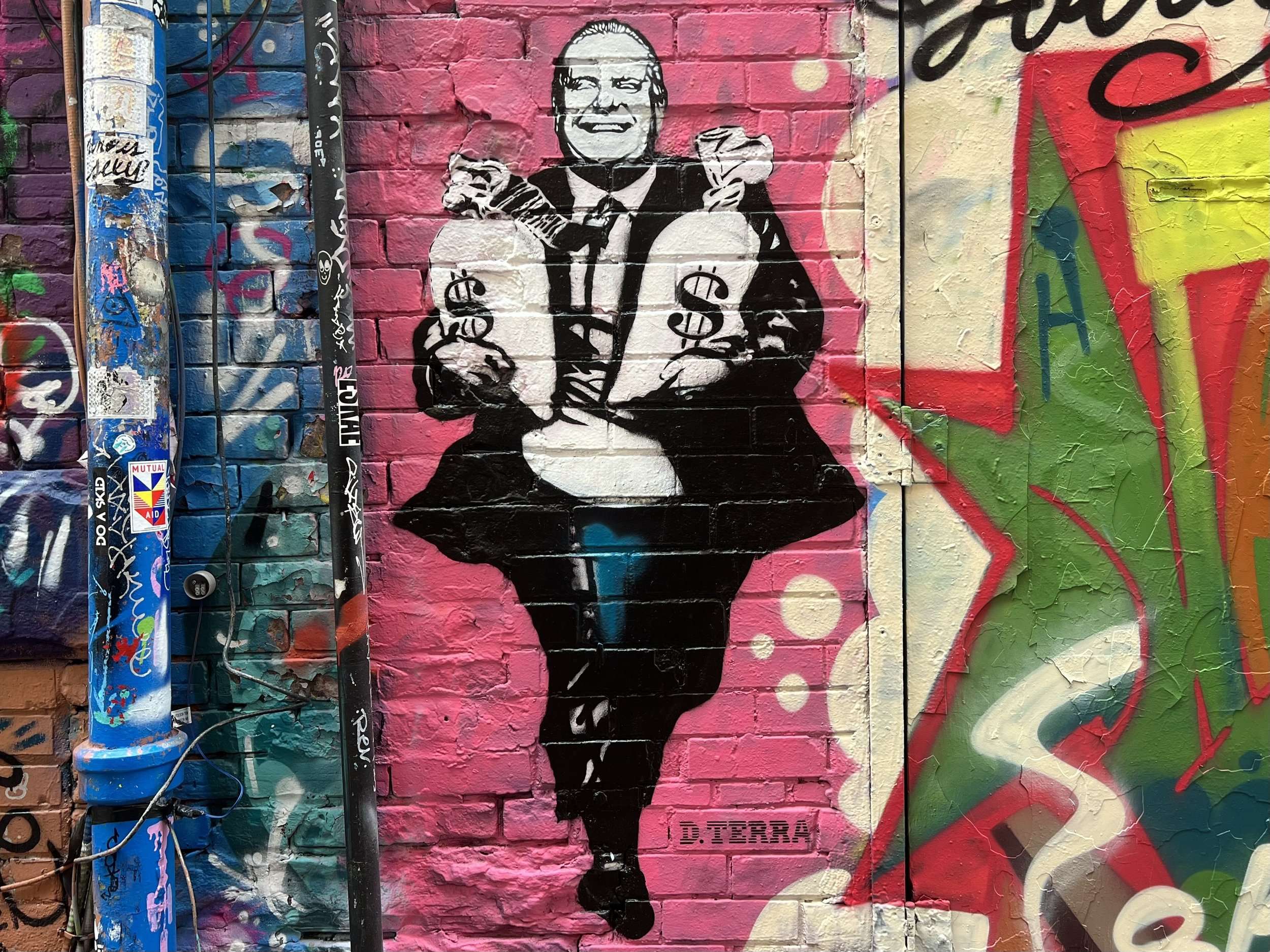
Art by D Terra
Former Toronto Mayor and crack smoker, Rob Ford, running away with bags of cash.

Art by Uber5000


Artist unknown

Artist unknown

Artist unknown

Artist unknown
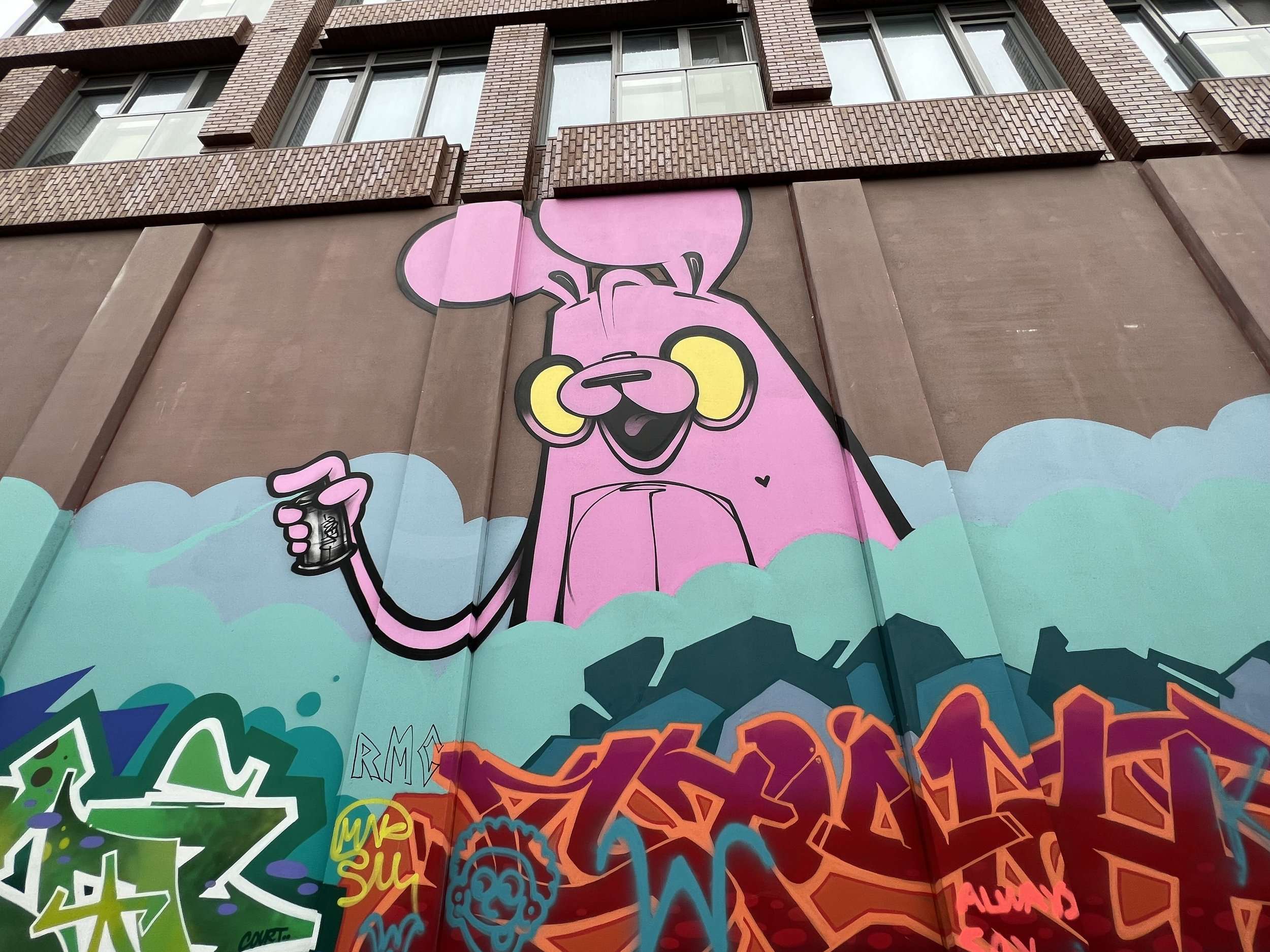
Art by Poser

Art by Uber5000

Art By The Half Decent
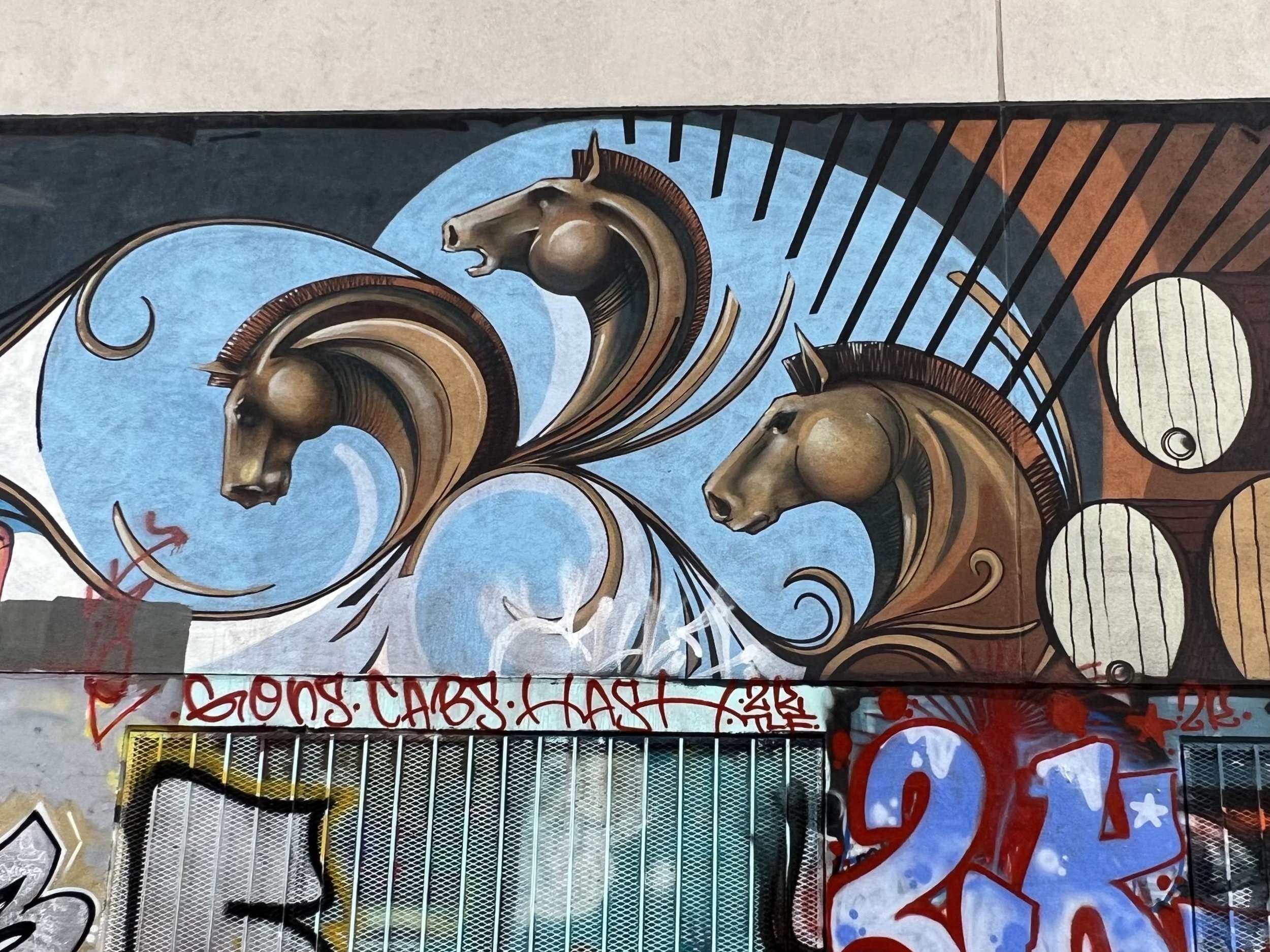
Artist unknown

Artist unknown

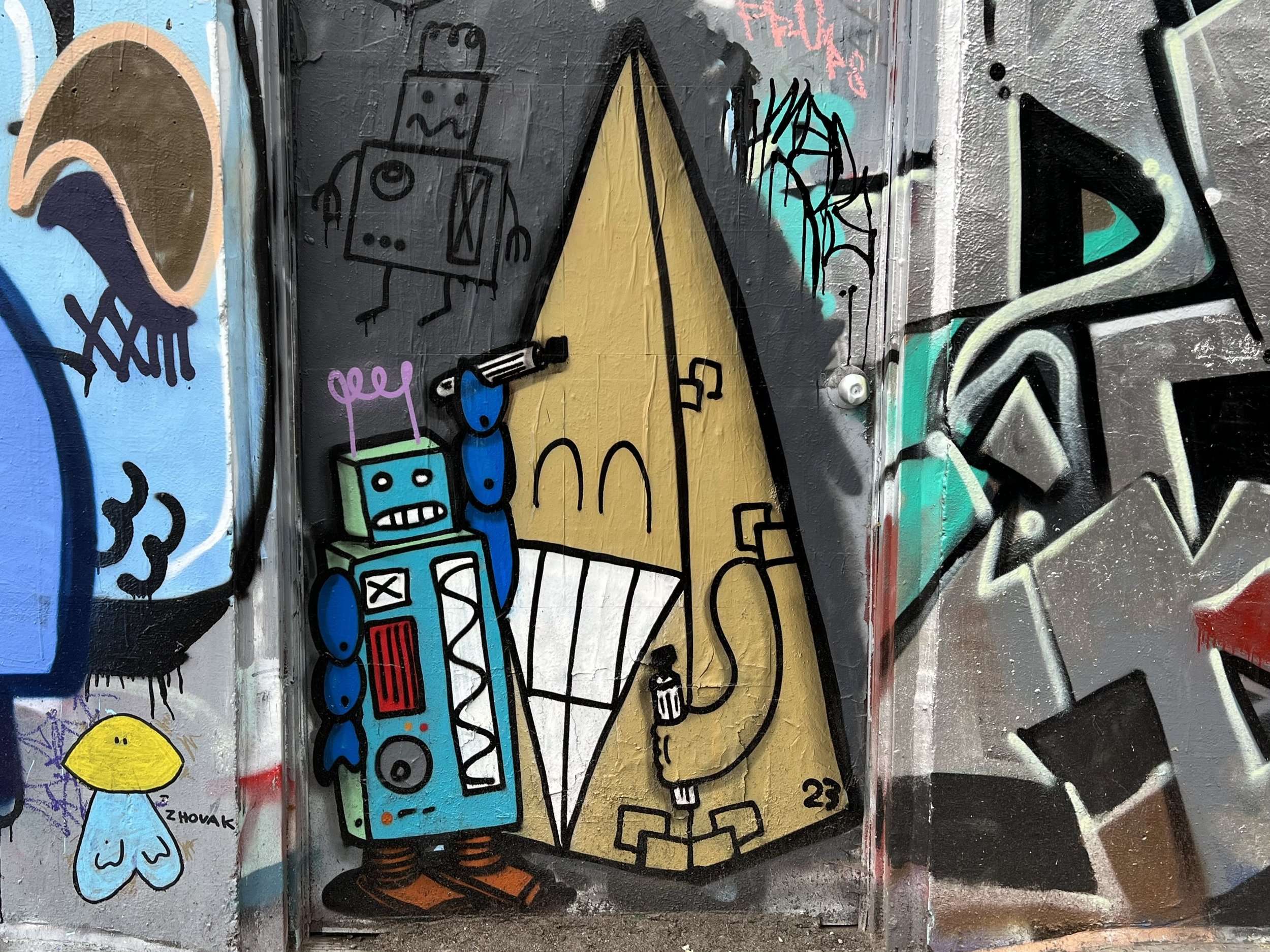
Artsist unknown

Art by Uber5000

Artist unknown
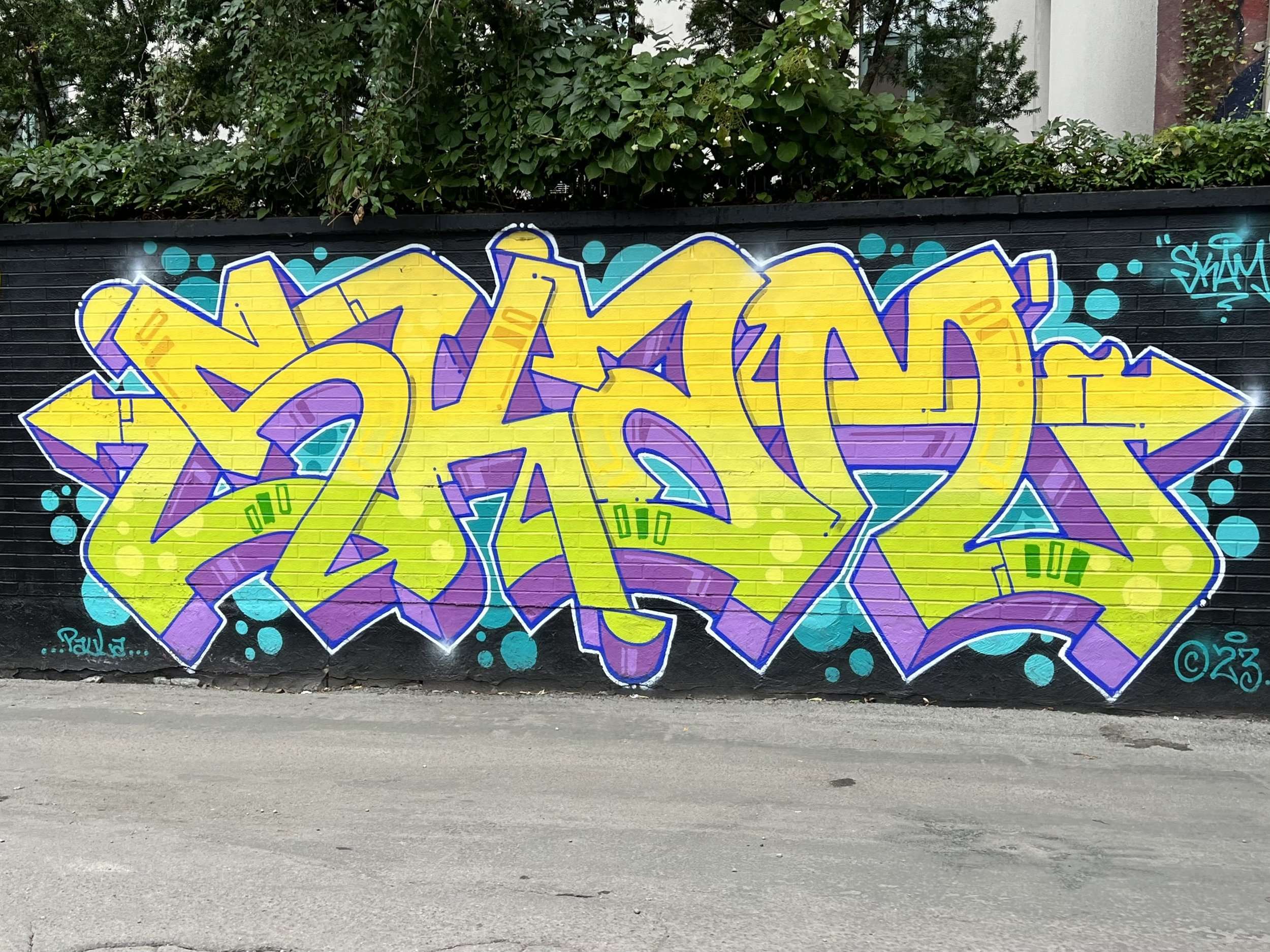
Art by Scam2

Artist unknown
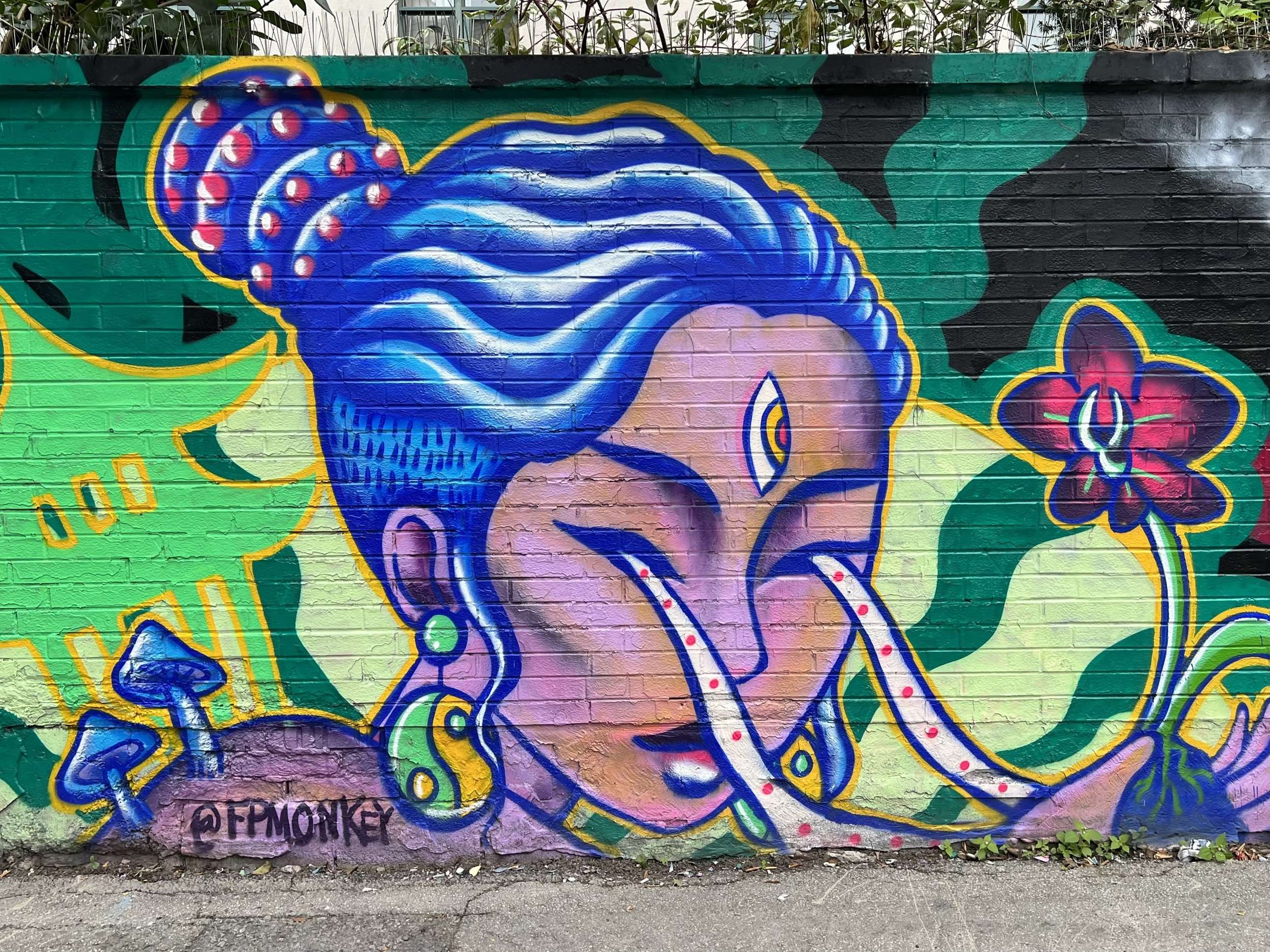
Art by @FPMONKEY

Art by Poser

Art by @FPMONKEY

Art by @FPMONKEY


Artist unknown
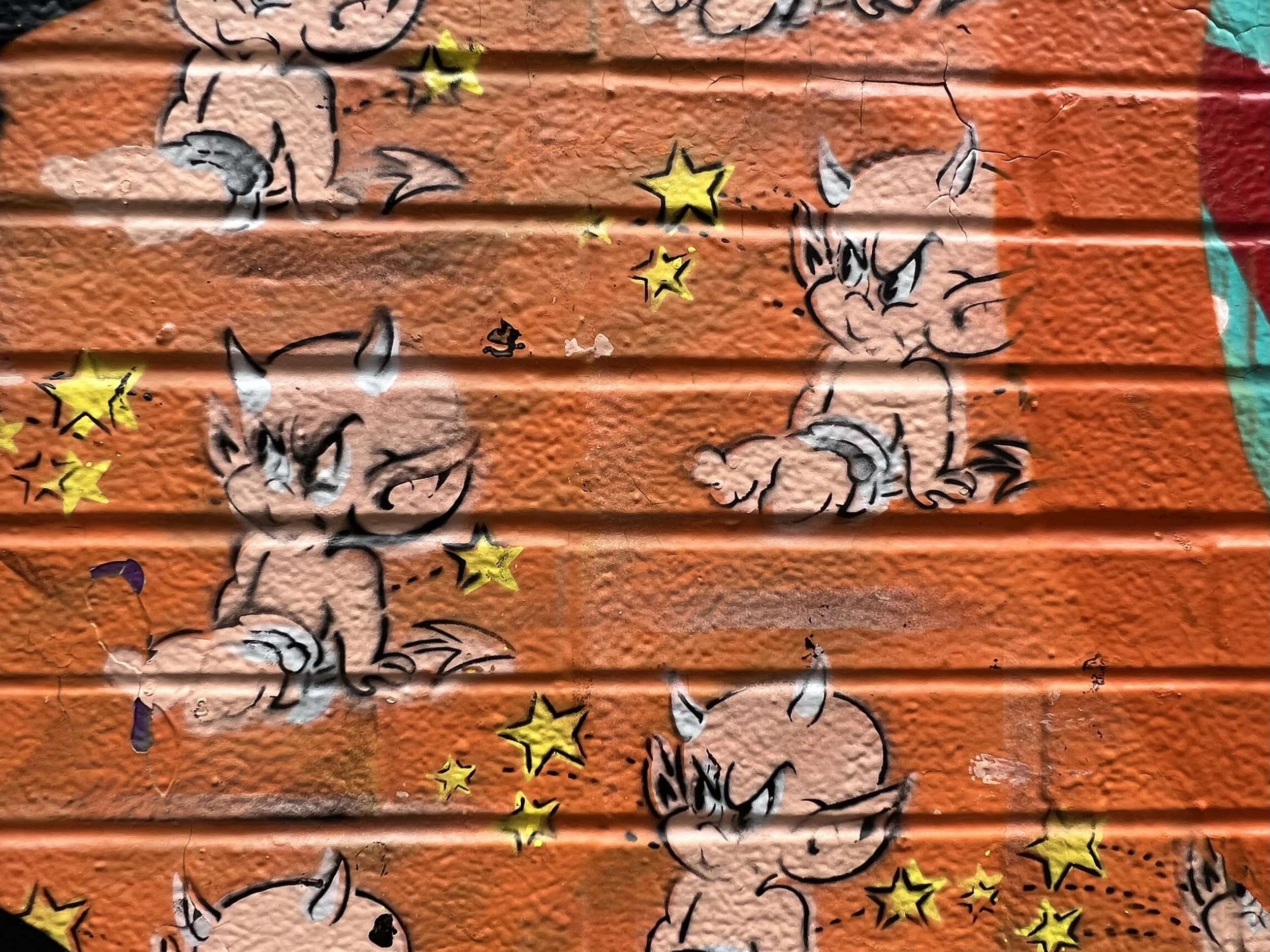
Artist Unknown
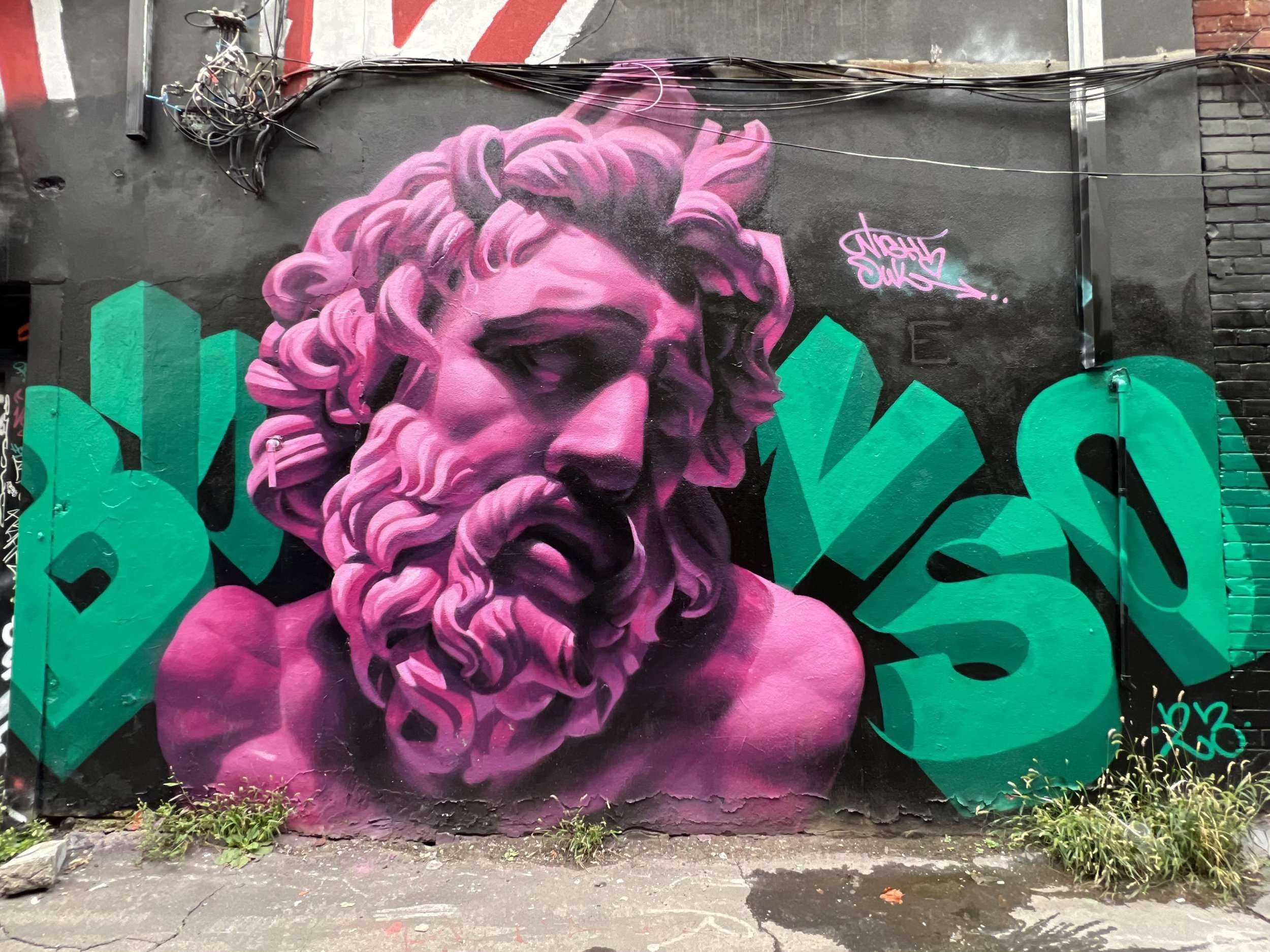
Art by Bunso

Artist unknown
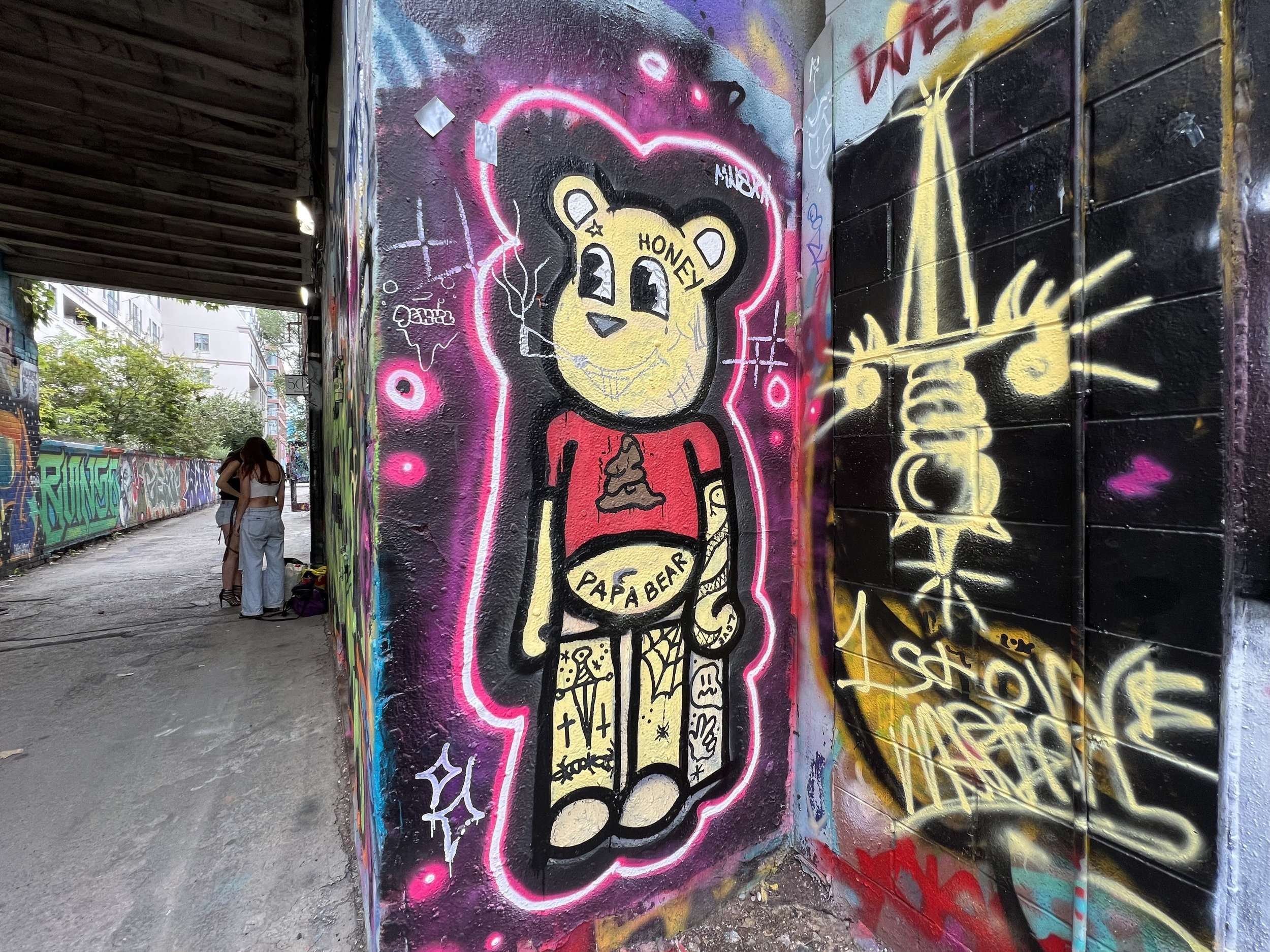
Artist unknown

Artist unknown

Art by @Mnsxm

Artist unknown


Art by Uber5000

Art by Uber5000

Art by Uber5000
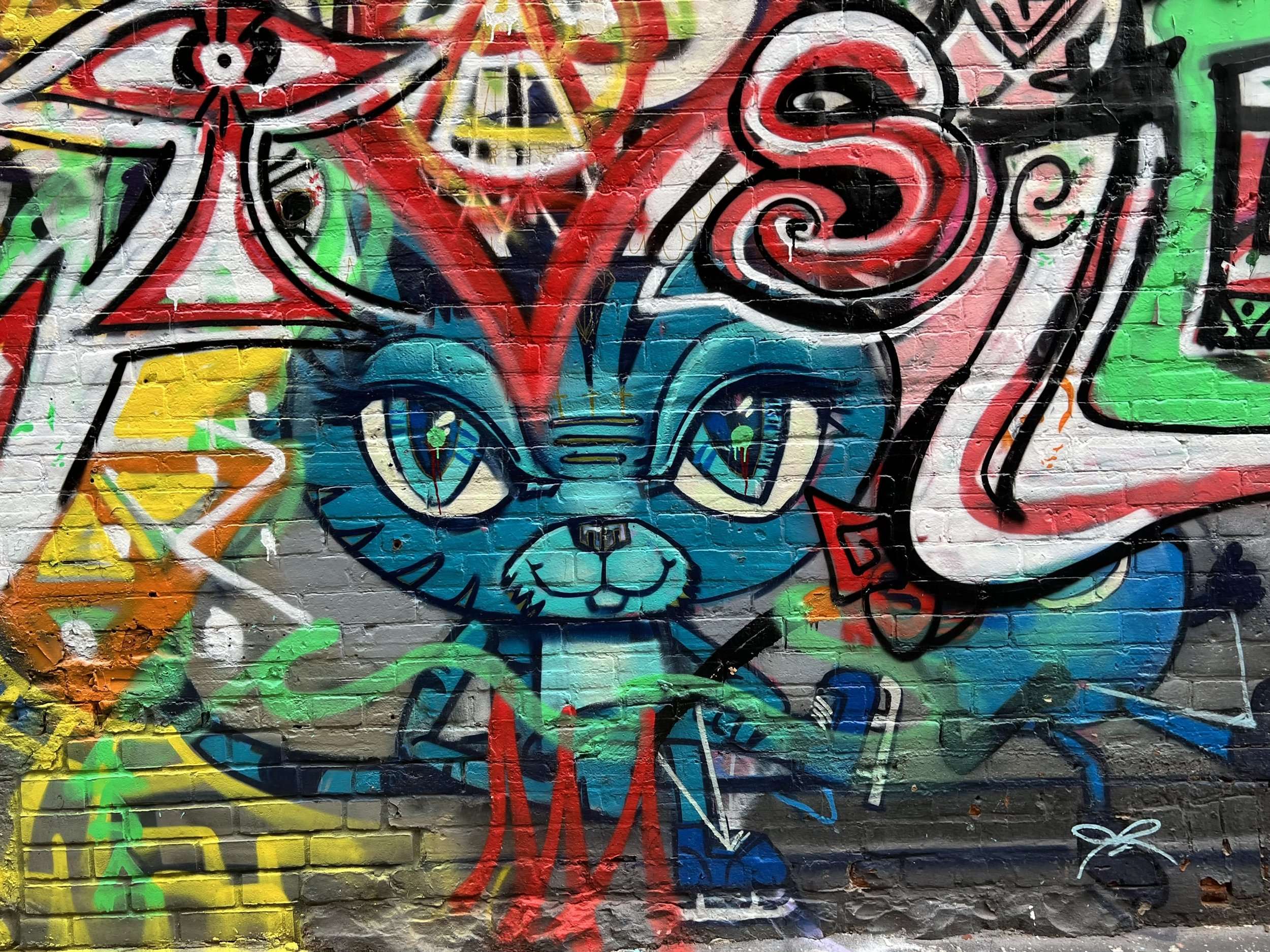
Artist unknown
The Street Art In Toronto Is Incredible
I hope you’ve enjoyed my Street Art Toronto: Graffiti Alley And More guide. It was a little sad to tour all this amazing street art without my faithful doggy companion, Maddie, but alas, she doesn’t travel with me on my international travels. If you’d like to see more street art, most of which features the lovely Maddie, check out my guides to Los Angeles, San Diego, Las Vegas, Portland, Seattle, New York City, San Francisco, Chicago, Athens, and Warsaw.
And if you’d like more helpful Toronto tips, check out my guides to Great Things To Do In Toronto, The St Lawrence Market, and Niagara Falls.
Frequently Asked Questions About Toronto Street Art
Is Toronto a good city for street art?
Yes. Toronto has an enormous collection of murals, graffiti pieces, painted utility boxes and public-art installations created by local and international artists. Its walls reflect the city’s multicultural communities, political history, and apparent refusal to allow concrete to remain emotionally unfulfilled.
Where can you find the best street art in Toronto?
Graffiti Alley and Queen Street West offer the largest concentration of easily accessible artwork. Kensington Market, Ossington Avenue, Underpass Park, The Annex, Parkdale and several East End neighborhoods also contain impressive murals.
What is Toronto’s Graffiti Alley?
Graffiti Alley is a network of laneways covered with murals, graffiti lettering, portraits, characters and smaller installations. It is Toronto’s best-known street-art destination and one of the easiest places to see work by several prominent Canadian artists during a single walk.
Where is Graffiti Alley in Toronto?
Graffiti Alley follows Rush Lane and adjoining alleys south of Queen Street West between Spadina Avenue and Portland Street. You can enter from several points, although beginning near Queen Street West and Spadina Avenue or Portland Street makes the route relatively easy to follow.
How long is Toronto’s Graffiti Alley?
The complete network extends for approximately one kilometer, or a little more than half a mile. Allow at least an hour to explore it without rushing, and considerably longer if you plan to photograph every mural that catches your attention—which will be most of them.
Is Graffiti Alley free?
Yes. Graffiti Alley is a public laneway without an admission charge, ticket booth, or reservation requirement. Guided tours cost extra, but independent visitors can explore the artwork for free.
What are Graffiti Alley’s opening hours?
Graffiti Alley does not have formal opening hours or gates. Visit during daylight for better photographs, improved visibility, and more activity in the surrounding Queen Street West neighborhood.
How do you get to Graffiti Alley using public transportation?
Take the TTC to Queen Street West and Spadina Avenue, then walk south toward Rush Lane. Accessible route options depend on your starting point and the elevators operating that day, so consult the TTC elevator status before traveling.
Do you need a car to explore Toronto street art?
No. Graffiti Alley, Queen Street West, Kensington Market and Ossington are easily reached using public transportation, taxis or rideshares. A car may be helpful for murals in outlying neighborhoods, but downtown parking can introduce an entirely unnecessary subplot.
Is Graffiti Alley wheelchair accessible?
Graffiti Alley is relatively flat and can be explored using a wheelchair or mobility scooter, but it is not a purpose-built accessible attraction. The active laneway may contain cracked pavement, potholes, puddles, garbage bins, parked vehicles, and delivery traffic. Conditions can change after construction, rain, or snow.
What is the most accessible Graffiti Alley route?
Begin from Queen Street West and enter at a point with a manageable curb cut rather than committing to one specific entrance. Follow the sections with the firmest pavement and return to Queen Street whenever an obstruction makes continuing difficult. A companion can help check surfaces ahead, although needing one should never be treated as an admission requirement.
Are accessible restrooms available in Graffiti Alley?
No public restroom is located inside the alley itself. Plan a stop at a nearby café, restaurant, shopping center, or cultural attraction, and confirm that the restroom is step-free before depending on it. “Accessible entrance” and “accessible bathroom” are not always a package deal.
How much walking is involved in a Toronto street-art tour?
The main Graffiti Alley and Queen Street West route can involve approximately one to two miles of walking or rolling. You can shorten the experience by concentrating on Rush Lane or explore the complete area over several hours.
How can I explore Toronto street art with a chronic illness?
Choose one compact neighborhood, visit during the part of the day when your energy is normally highest, and identify indoor places for rest, food, and restrooms. Bring water, medication, and weather protection, and use a taxi or rideshare between mural districts. The murals will not take your decision to sit down personally.
Is a guided Toronto street-art tour worth it?
Yes, particularly if you want to understand the artists, techniques, and social context behind the work. A guide can explain details that are easy to miss and distinguish commissioned murals from unsanctioned graffiti instead of simply pointing toward a wall and announcing that it is colorful.
How much does a Toronto graffiti tour cost?
Tour prices have increased since my original visit, and the former $6 booking price should not be treated as current. Check the live price and availability on the Tour Guys Toronto Graffiti Tour page before booking.
How long is the Tour Guys Toronto graffiti tour?
The current walking tour lasts approximately 90 minutes and covers Graffiti Alley and surrounding streets. Public tours have limited group sizes, and advance booking is recommended.
Are Toronto street-art tours wheelchair accessible?
The principal Queen Street West and Graffiti Alley route is fairly level, but tour accessibility depends on pavement conditions, curb cuts, construction, distance, and the visitor’s mobility device. Contact the tour operator before booking to confirm the exact route, walking distance, pace and availability of seated breaks.
Can you take a self-guided Toronto street-art tour?
Yes. Begin at Queen Street West and Spadina Avenue, explore Graffiti Alley and then continue through Queen Street West or nearby Kensington Market. Save a map before leaving and treat mural addresses as approximate starting points because outdoor artwork frequently changes.
Is there a Toronto street-art map?
Yes. The City-supported StreetARToronto map identifies murals and commissioned projects across the city. The City of Toronto also maintains a broader public-art map, although listed locations are approximate and not every unsanctioned piece appears in an official database.
What is StreetARToronto?
StreetARToronto, commonly called StART, is a City of Toronto program that supports murals and street-art projects in streets, parks, laneways and underpasses. It works with artists, community organizations and property owners to create public artwork and reduce repeated graffiti vandalism.
When did StreetARToronto begin?
The City launched StreetARToronto in 2012 as part of a new approach to graffiti management and public art. The program helped shift Toronto away from treating every painted wall as a municipal emergency and toward supporting authorized murals that strengthen neighborhoods.
What are StreetARToronto’s Outside the Box murals?
Outside the Box commissions artists to paint traffic-signal cabinets throughout Toronto. These small works transform ordinary utility boxes into neighborhood landmarks and provide an excellent alternative for visitors who enjoy street art but cannot complete a long walking route.
Who are some famous Toronto street artists?
Artists frequently associated with Toronto’s street-art scene include Uber5000, Elicser Elliott, Skam, Poser, Birdo, Bacon, Chief Lady Bird and Anser. Look for signatures and artist tags beside each work because styles evolve, collaborations are common, and “the one with the raccoon” may not narrow matters down sufficiently.
Are the murals shown in this guide still there?
Some probably remain, while others may have been altered, covered, or completely replaced since the photographs were taken in 2023. Graffiti Alley is intentionally dynamic, so visitors should expect a different collection rather than trying to recreate every photograph exactly.
How often does the art in Graffiti Alley change?
Some major pieces remain for years, while others disappear quickly beneath new work. Paint jams, commissioned projects, construction, and other artists continually transform the alley. Its impermanence is part of the experience, even when a favorite mural has vanished with no forwarding address.
Is it legal to paint in Graffiti Alley?
No wall should be assumed to be available simply because it already contains graffiti. Artists need authorization from the property owner or participation in an approved program before painting. Visitors should enjoy the work without adding their names, stickers, or personal artistic revelations.
Can you photograph the murals in Graffiti Alley?
Yes. Personal photography is common and one of the main reasons people visit. Remain in public areas, avoid blocking vehicles or business entrances, and do not touch, climb on, or lean equipment against the artwork.
Can Toronto street-art photographs be used commercially?
The artists generally retain copyright in their work, even when a mural appears in a public place. Professional advertising, merchandise, publications and other commercial uses may require permission from the artist or property owner. When in doubt, request permission rather than assuming the wall has entered a complicated business partnership with you.
How should you credit Toronto street artists?
Photograph the artist’s signature, tag, or nearby plaque while visiting. Use the StART map and the artist’s official social-media account to confirm attribution, then include the artist’s name when posting images. Avoid assigning work to someone based solely on a similar color palette or recurring affection for birds.
Is Graffiti Alley safe to visit alone?
Many people explore the area independently, especially during daylight, but it remains an active urban alley. Stay aware of vehicles and your surroundings, protect valuables, and leave if a section feels uncomfortable. Avoid declaring any neighborhood permanently safe or unsafe based on a single visit.
Is Graffiti Alley suitable for children?
Yes, although some murals contain political themes, strong language, or imagery intended for adults. Supervise children around vehicles, broken pavement and debris, and preview the route if particular subject matter concerns you.
Are dogs allowed in Graffiti Alley?
Dogs can accompany visitors because Graffiti Alley is a public laneway. Keep them leashed, watch for vehicles, broken glass, and discarded food, and avoid allowing them to touch painted walls or private property. Maddie would undoubtedly approve of the murals while remaining deeply suspicious of Toronto’s raccoon population.
What is the best time of day to photograph Toronto street art?
Morning generally offers fewer visitors, less vehicle activity, and softer light. Late afternoon can also produce attractive lighting, although shadows from surrounding buildings may fall across certain walls. An overcast day often provides the most even color and proves that clouds occasionally contribute something useful.
What is the best season for a Toronto street-art tour?
Late spring through early fall provides the most comfortable conditions for walking and photography. Summer brings longer daylight hours but also heat and crowds, while fall offers cooler temperatures. Travelers with temperature intolerance should choose the season that best matches their health needs.
Can you visit Graffiti Alley during winter?
Yes, but snow, ice and slush can make the pavement considerably less accessible. Murals may also be partly obscured by snowbanks, parked vehicles or construction equipment. Check the weather and choose a dry day if you use a wheelchair, cane or other mobility aid.
Where else can you see murals near Graffiti Alley?
Continue along Queen Street West, explore the side streets around Kensington Market, or travel west toward Ossington Avenue and Parkdale. These neighborhoods contain a mixture of large commissioned murals, small pieces, painted storefronts, and utility-box artwork.
Is Underpass Park worth visiting for street art?
Yes. Underpass Park uses the space beneath highway overpasses for murals, public art, and recreation. It provides a very different setting from Graffiti Alley, although construction projects may temporarily affect particular artworks or routes.
Can you combine Graffiti Alley with other Toronto attractions?
Yes. Kensington Market, Chinatown, Queen Street West shops, the Art Gallery of Ontario and several restaurants are nearby. Combining the alley with one or two of these attractions creates a comfortable half-day itinerary without turning your street-art walk into a competitive endurance event.
What should you bring on a Toronto street-art tour?
Bring comfortable shoes or your preferred mobility aid, water, sun protection, weather-appropriate layers, and a fully charged phone. A portable battery is useful for photography and navigation, while a small cloth can help if rain has introduced your wheelchair wheels to every puddle in Rush Lane.
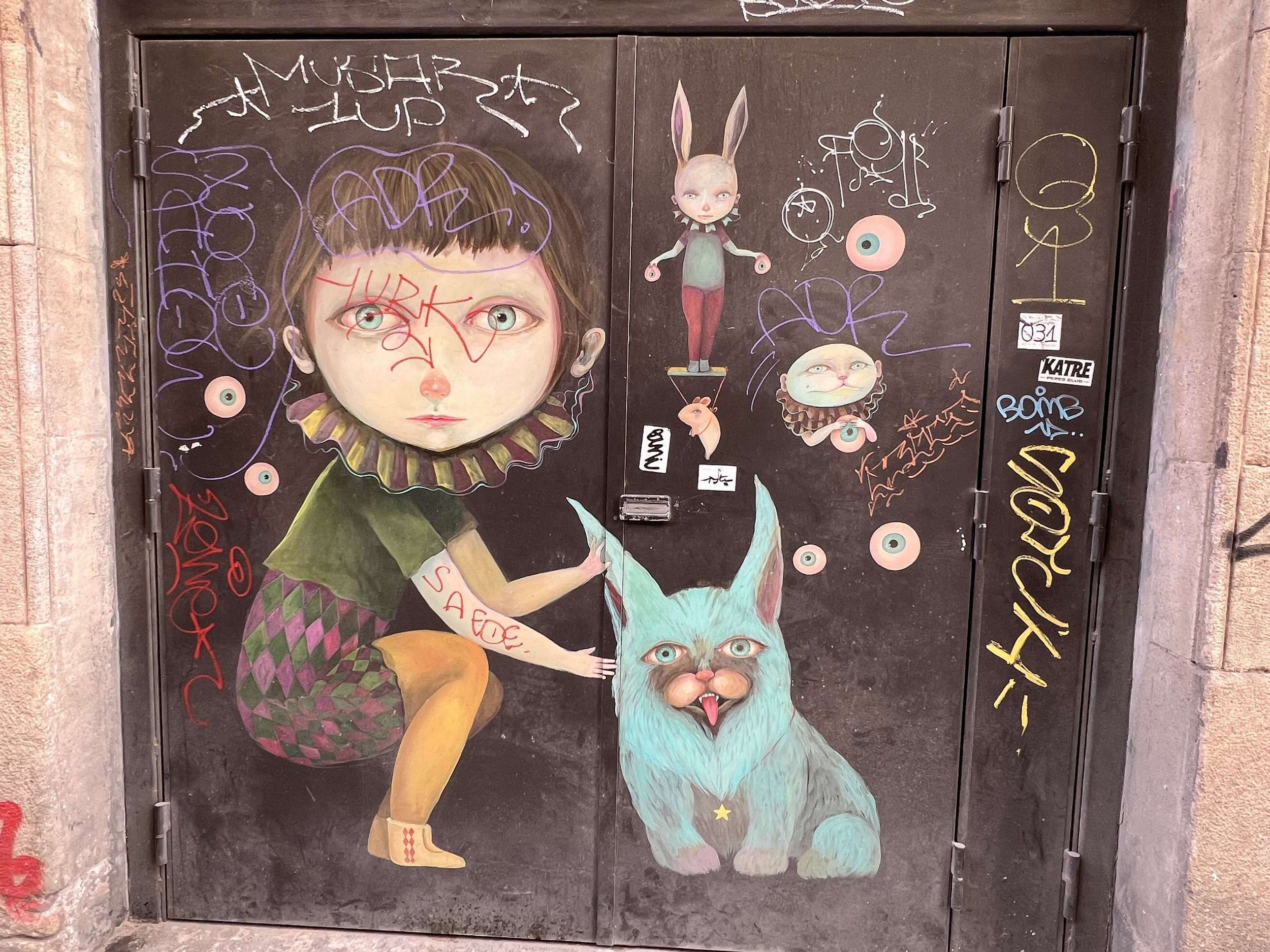


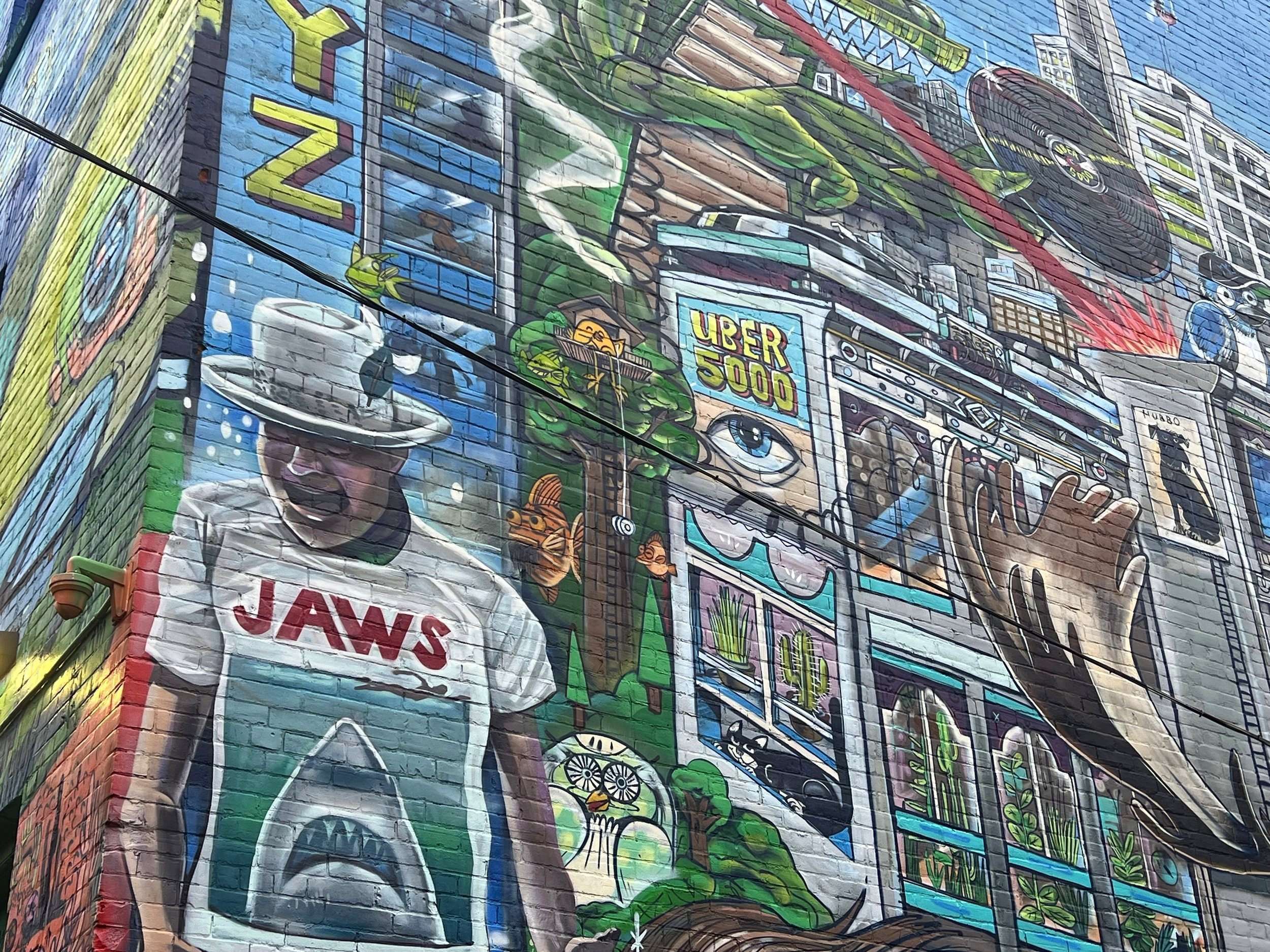





Jenn Lloyd is a disabled travel blogger and television writer based in Los Angeles. After a successful career writing for shows like KC Undercover and The Thundermans, she launched Sick Girl Travels to share her experiences navigating the world with Ehlers-Danlos Syndrome, POTS, and fibromyalgia. Having visited 40 U.S. states, 39 countries, and all 7 continents, Jenn offers inclusive travel guides with accessibility tips for those with mobility challenges. Her work has been featured on CNN, Huffington Post, and Consumer Reports. When not traveling, she enjoys fostering dogs, photographing street art, and spending time with her French bulldog, Miss Madelyn Pew.
Sign Up for Our Newsletter
Sign up with your email address to receive travel news and updates.
Americas, Argentina, Buenos Aires, Street Art, South America
Americas, Argentina, Buenos Aires, Street Art, South America
Americas, Argentina, Buenos Aires, Street Art, South America