Facts About Rome For Disabled Travelers… (and Everyone Else)
Edited on

Basilica Aemilia – Rome, Italy
This post may contain affiliate links, which means I may receive a commission, at no extra cost to you, if you make a purchase through a link. This helps me keep the Sick Girl Travels blog running while providing you with high-quality product recommendations and great travel deals. Please see my full disclosure for further information. Thanks for your support!
Disabled Access, An Important Fact About Rome, Italy:
Approximately 9,000,000 people visit Rome each year. In fact, this Italian capital is the third most visited city in Europe. These are just two interesting facts about Italy. Popular for its ancient ruins, delicious food, world-renowned museums, beautiful fountains, and incredible shopping, Rome regularly attracts millions of tourists from around the world. But is Rome accessible?
The answer is sort of. Disabled travelers may have some difficulty getting around the “Eternal City.” Rome poses a few issues for wheelchair users and those with mobility issues, including cobblestone streets, uneven ground in the Roman ruins and other attractions, and limited accessible transportation options. But don’t let that stop you from checking off your Rome bucket list. There has been some work in recent years to make Rome wheelchair accessible. Restaurants, hotels, and many attractions actually provide excellent accessibility. It’s also one of the safest Italian cities for solo female travelers. With a little planning and the help of my Rome travel tips, the streets in Rome, Italy, are about to become a lot more accessible!
One great thing to do when planning your trip is to take a virtual tour of Rome. It can help you get the lay of the land and help you to get a better idea of what it takes to get around town. As a solo traveler, I also find that taking a virtual tour can make me feel a little bit more confident when it comes to navigating a city.

Bird’s Eye View of Rome
> “All roads lead to Rome.”
> “Unfortunately, they’re made of cobblestone.”
How To Get to Rome
Most travelers will fly to Rome using one of two airports, Fiumicino or Ciampino, with the former being the most popular. Fiumicino is located about 30 km west of Rome, but it’s easy enough to get to the city center from the airport by bus, train, or rideshare. If you properly plan, you can get from Fiumicino FCO to Rome City Center in 30 minutes.

Cobblestone Streets in Rome, Italy outside the Colosseum at Night
Where To Stay In Rome
When looking for the best place to stay in Rome, you have to first decide on the best area for you. Here are a few popular neighborhoods to consider:
1. Historic Center (Centro Storico): This area puts you in the heart of Rome, with easy access to iconic attractions like the Colosseum, Pantheon, and Trevi Fountain. You’ll find charming yet not ankle-friendly cobblestone streets lined with cafes, restaurants, and shops.
2. Trastevere: Known for its bohemian atmosphere, Trastevere offers a more laid-back vibe compared to the busy city center. Explore narrow winding streets, colorful buildings, and a variety of trendy bars and eateries.
3. Prati: If you’re interested in exploring the Vatican Museums, St. Peter’s Basilica, and the Sistine Chapel, staying near Vatican City can be convenient. The area is well-connected by public transportation to the rest of Rome.
4. Monti: This hip neighborhood is perfect for those looking to immerse themselves in local life. Monti is filled with artisan boutiques, vintage shops, and cozy cafes. It’s also within walking distance to major attractions like the Colosseum and Roman Forum.
Each of these areas offers a unique experience, so consider what activities you prioritize and choose the neighborhood that best suits your travel style.

Getting Around Rome:
The 7 hills of Rome can be difficult to navigate for many visitors, particularly if you’re a wheelchair user. Heck, they were aggravating for me as a cane user with chronic back pain. The narrow Rome streets, copious cobblestones, and scarce sidewalks can be particularly troublesome. This, coupled with limited accessible bus routes and taxi options, can be stressful for those seeking disabled travel options. But there are a few wheelchair-accessible Rome tips that every disabled traveler should know about:
Big Bus Tours Rome
This is my favorite option for getting around Rome. Most of the Big Bus buses are wheelchair accessible. The company’s sightseeing tours offer 8+ stops, all located close to major landmarks and attractions. Purchasing a multi-day pass allows you to explore the city at your own pace and set your own itinerary. Sit back, relax, and enjoy a sightseeing tour of Rome’s landmarks or hop-on hop-off and tour these locations up close.
The full circuit takes about an hour and a half. Buses stop at stations every 25 minutes. By downloading their free app, you can even see where the bus is along the route, meaning with a little planning you’ll never be waiting too long for pickup. All buses offer free onboard wi-fi, pre-recorded commentary in 9 languages, and free digital walking tours. Adult tickets start at $33.70 for a 1-day pass and go up to $42.60 for a 3-day pass. This is a bargain when you consider the average taxi ride between attractions will cost you $10 – $15 USD.
Taxi
If you’re looking to do something at night after the Big Bus stops running, or need transportation to something other than a major landmark, your best bet is calling a cab. The largest taxi company in Rome, 06 3570, has a fleet of accessible cabs and vans outfitted for people with disabilities. When you place your call, the dispatcher will ask for the measurements of your wheelchair, so they can send a cab that’s big enough to accommodate it, since not all their vehicles are uniform.
You can also arrange for an accessible taxi through your hotel concierge, as the language barrier can sometimes be difficult.
Metro
Metro A: Metro A provides extremely limited access for disabled tourists. Only the Valle Aurelia and Cipro Musei Vaticani stations provide disabled access.
Metro B: All stations provide disabled access except for Circo Massimo, Colosseo, and Cavour.
The Best Time to Visit Rome:
The best time to visit Rome is in spring and fall when the weather is most pleasant. However, this is also peak travel season, and prices can be high. Also, crowds can be excessive. That said, summer in Italy is a stunning time, especially Italy in June, and there’s a reason tourists flock to the country in warmer weather. It’s also a great time to experience some of the iconic rooftop bars in Rome and check out those stunning views of the city.
I visited in winter for the New Year celebration and found the weather and lack of crowds to be sublime. If you’d like to visit in the cooler months, there are plenty of magical things to do in Rome in winter.
Ideally, you need at least a week to explore Rome, but you could put together an abbreviated 3-day itinerary in Rome, a 4-day Rome Itinerary, or, if you only have a layover in Rome, you can still plan a tour of the highlights of Rome in 1 day.

View of Rome from the Tiber River
Famous Places In Rome:
Rome is filled with historic landmarks, delicious tastes, and a rich history many of us learned about back in middle school and have sadly long since forgotten. …Something about Romulus and Remus? Luckily, after about 3 days in Rome, a lot of it will come flooding back to you.
Below you’ll find a list of Rome’s must-see attractions, some background info, and information on access for disabled travelers. These are just a few of the things you should add to your Rome Bucket List.
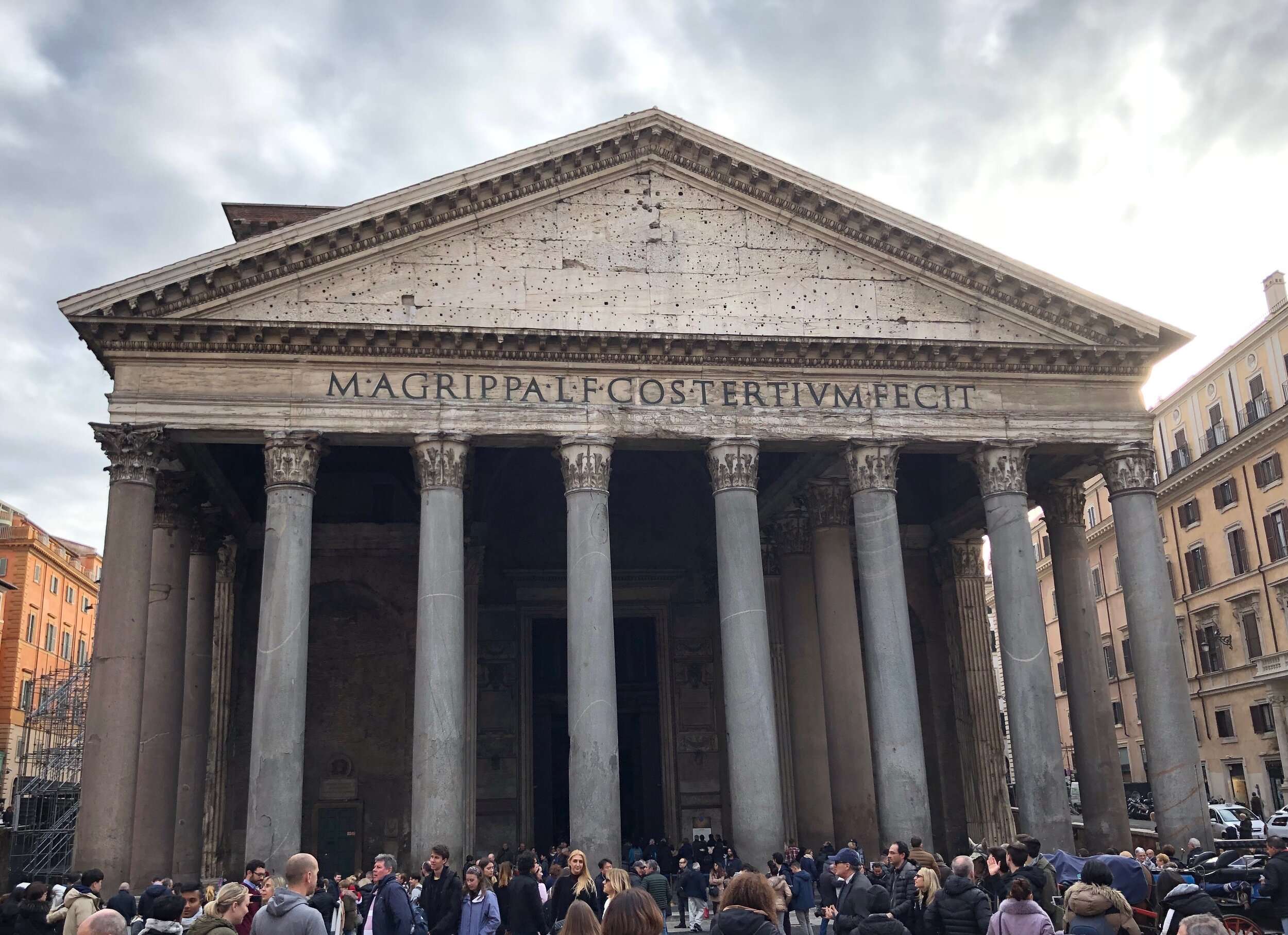
The Pantheon, Rome, Italy
The Pantheon
Despite being 2,000 years old, the Pantheon is one of the most accessible landmarks in Rome, which makes it a great place to start.
Pantheon is a Greek word meaning “honor all gods.” This makes sense as it was originally built as a temple to all gods. The Pantheon was built in 120 AD by Roman Emperor Hadrian and designed by famous Greek architect Apollodorus of Damascus. Unfortunately, Emperor Hadrian later had Apollodorus killed over a design dispute because this was ancient Rome, and murder was a totally acceptable way of dealing with a contracting dispute.

Fontana del Pantheon
The most interesting structural part of the Pantheon is its giant dome, complete with its opening to the outside, or oculus. It is the largest unsupported dome in the world. This stunning architectural achievement is also the building’s only source of light. Something any visitor will marvel at in person.
The Pantheon contains the tombs of several Italian Kings and famous artists, including Raphael and Annibale Carracci. Located near Piazza Navona, this incredible feat of architecture attracted over 7 million visitors in 2016. If you’d like to avoid these crowds, it’s best to visit close to opening at 9:00 am or after 5:00 pm when there are fewer visitors.
Pantheon Tickets: Since the Pantheon is now a Roman church, admission is free, and tickets are not required. Audio guides and guided tours are available through the Pantheon website. You can also opt to take a Guided Tour of the Pantheon.
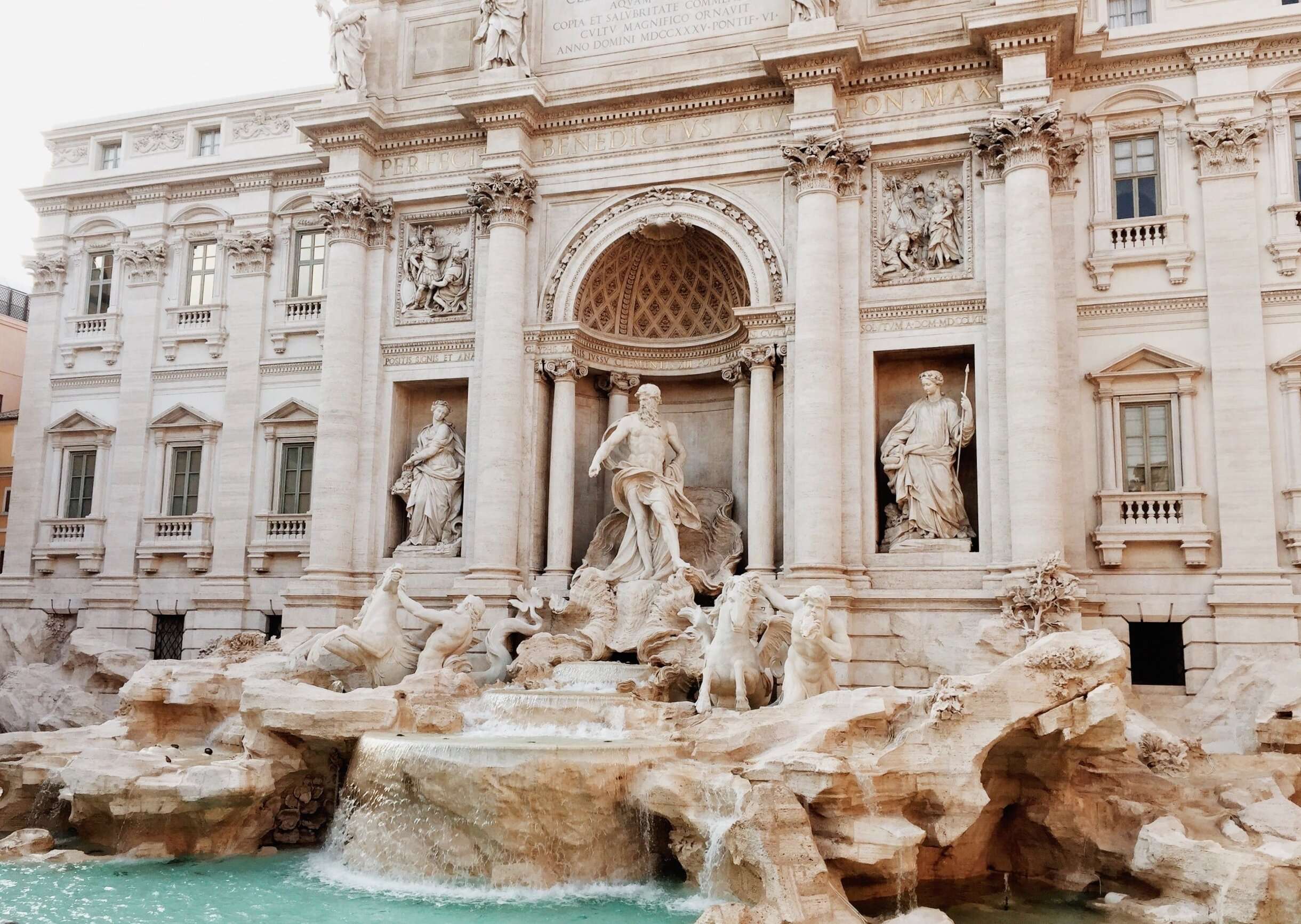
Trevi Fountain – Rome, Italy
Trevi Fountain
Another fabulous, free, and accessible Rome attraction, this massive Baroque fountain is the most famous fountain in Rome, and quite possibly the most famous fountain in the world, as evidenced by the equally massive crowds it draws on a daily basis. Commissioned in 1629, this Travertine treasure was finally finished in 1762. A work model I sadly ascribe to when blogging.
While there are many fountains in Rome, Italy, Trevi Fountain is the only one to be featured in Roman Holiday, La Dolce Vita, AND The Lizzie McGuire Movie. Take that, Fiumi Fountain.
According to legend, if you toss a coin with your right hand over your left shoulder into the Trevi Fountain and make a wish, you’ll someday return to Rome. Throw two coins, and you’ll fall in love. Tossing three coins means you’ll marry. I threw my whole purse, but unlike the Trevi Fountain, there’s no change in my marital status.
While Trevi Fountain is accessible to wheelchair users, it’s important to note that the crowds make navigating the space around the fountain a bit difficult. Trevi Fountain is most crowded between 12 pm and 5 pm. Those wishing to visit in the morning should also note that the fountain is cleaned once every 2 weeks between 6 am and 10 am, and I have it on good authority that the cleaning crew does not appreciate coins being lobbed in their general direction.

Trevi Fountain Steps with Crowd
Another important thing to note is that wheelchair users and those unable to climb stairs will not be able to get a close-up view of the fountain due to the steps leading down to the basin in front. But fear not, there’s still a great view of Trevi Fountain from the top of the stairs. I mention this because many visitors are unaware of the steps, as they are usually blocked by the crowds or cropped out in photos.
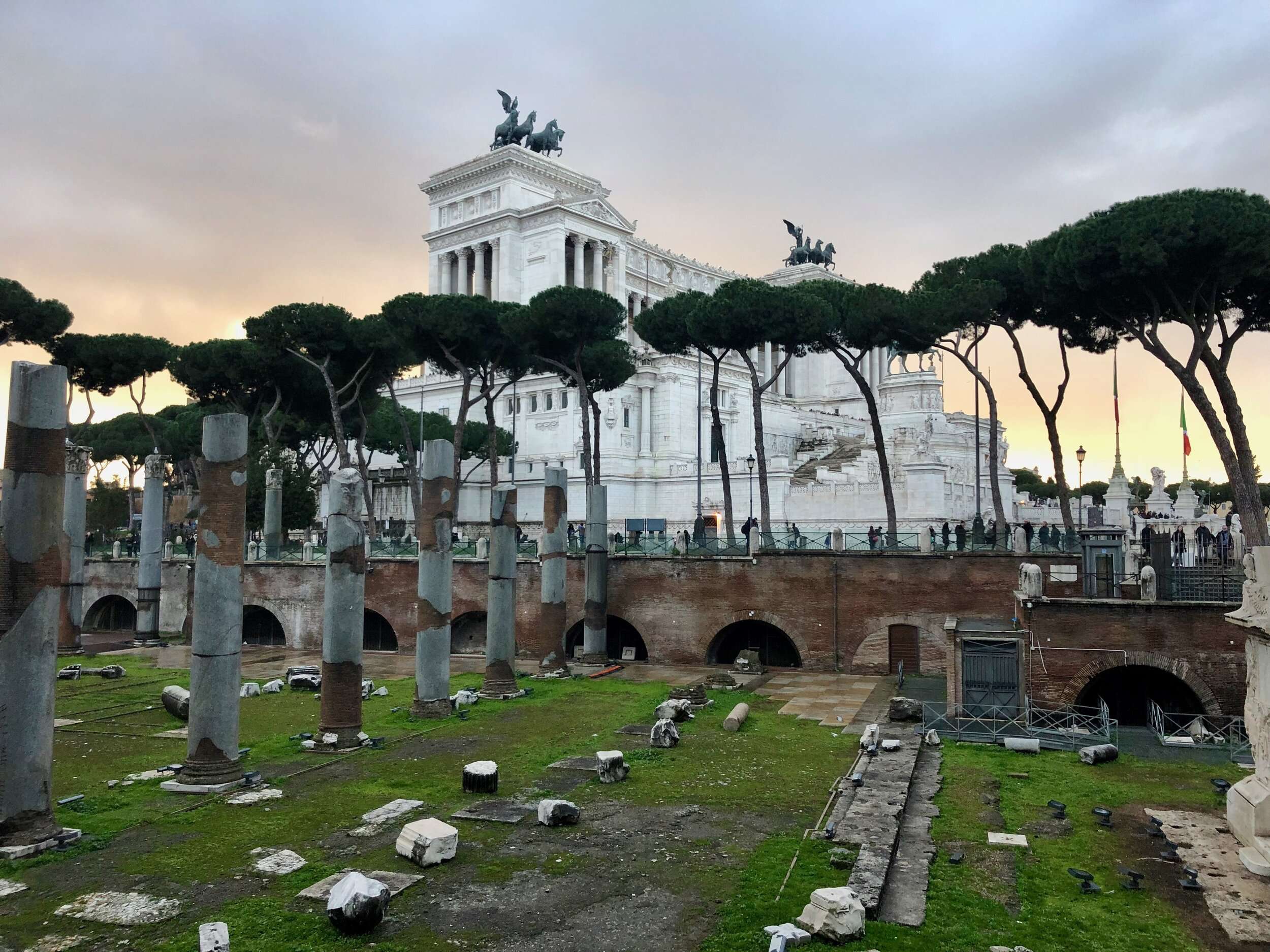
Roman Forum
Roman Forum
The former center of day-to-day life in ancient Rome, the Roman Forum was the site of elections, public speeches, processions, criminal trials, and gladiator matches, as well as a hub for commercial affairs and site of the first shopping mall in Rome. The area is now loaded with architectural fragments unearthed over years of careful excavation.
Sadly, if you’re disabled, access at the Roman Forum is not great. Approximately 20 percent of the forum is wheelchair accessible, but these ancient Rome ruins are so spectacular they’re definitely worth checking out and getting as close as possible.

Roman Ruins Street View
There’s an elevator at the entrance which takes you from street level down to the Forum. Once inside, you’ll find the grounds can be uneven and somewhat challenging to walk or roll on if you have a mobility impairment. Visitors also have the option to view the ruins from the Via Dei Fori Imperiali Street on the north end of the Forum.
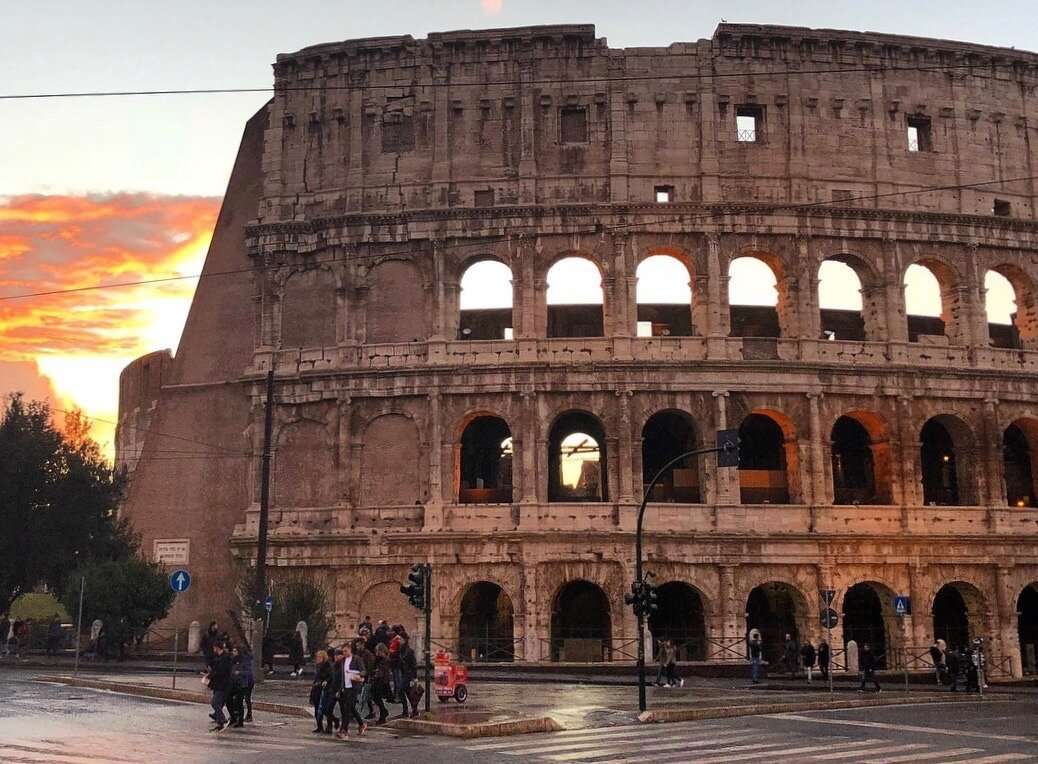
The Colosseum
The Colosseum
Visiting the Colosseum is part of everyone’s must-see Rome itinerary. The unique architecture of the Colosseum makes it the most iconic site in Rome and one of the most jaw-dropping places to visit in the world. This large oval amphitheater was built in 80 AD and is still the largest standing amphitheater in the world. Located in the center of the city, it once accommodated an estimated 50,000 to 80,000 spectators who enjoyed gladiator fights, battle re-enactments, dramas based on Roman mythology, and public executions.

No public executions, but still very exciting,
The Colosseum is one of the new 7 Wonders of the World and one of Rome’s most popular tourist attractions. As such, I highly recommend purchasing tickets for a Rome Colosseum tour in advance, or you could spend hours outside waiting in line.
Choosing a Colosseum tour can be difficult. Fortunately, there is a wheelchair-accessible tour of the Roman Forum and Colosseum. The tour also highlights the Temple of Antonius and Faustina, the Arch of Titus, the Arch of Septimius Severus, the Basilica of Maxentius, the Roman Senate, the Temple of the Vestal Virgins, the Temple of Saturn, the Temple of the Divine Julius, and the Arch of Constantine. So your Colosseum tickets will actually allow you to see a lot of Roman history.

Arch of Constantine
Despite the ancient, crumbling Colosseum architecture on the exterior, the interior offers smooth, flat pavement with an elevator leading up to the second floor for an amazing Rome view. There is also pavement connecting the Colosseum and Roman Forum, making it accessible for wheelchair users. The entire Colosseum guided tour takes about 3 hours and is jam-packed with facts about the Colosseum, the ancient Roman Empire, and ancient Rome ruins.

Colosseum Floor
Colosseum hours are 9:00 am – 7:15 pm. The best Wheelchair-Accessible Tour of the Colosseum includes the Colosseum, Pantheon, Trevi Fountain, and other Rome Highlights. There are multiple tour options for visitors who do not require a wheelchair. I highly recommend the “skip-the-line at the Colosseum” ticket option so you can cruise right to the Colosseum entrance and skip the lengthy wait. Other tours include the Colosseum Night Tour and Guided Tour in the Colosseum Undergrounds. I also recommend this Wheelchair-Accessible Entry Ticket to the Colosseum, Roman Forum, and Palatine Hill. It’s a great option if you want to do it yourself and still get fast-track entrance to the Colosseum and beat the lines.
If you can’t make it to Rome, you can always enjoy a pretty cool Colosseum virtual tour.
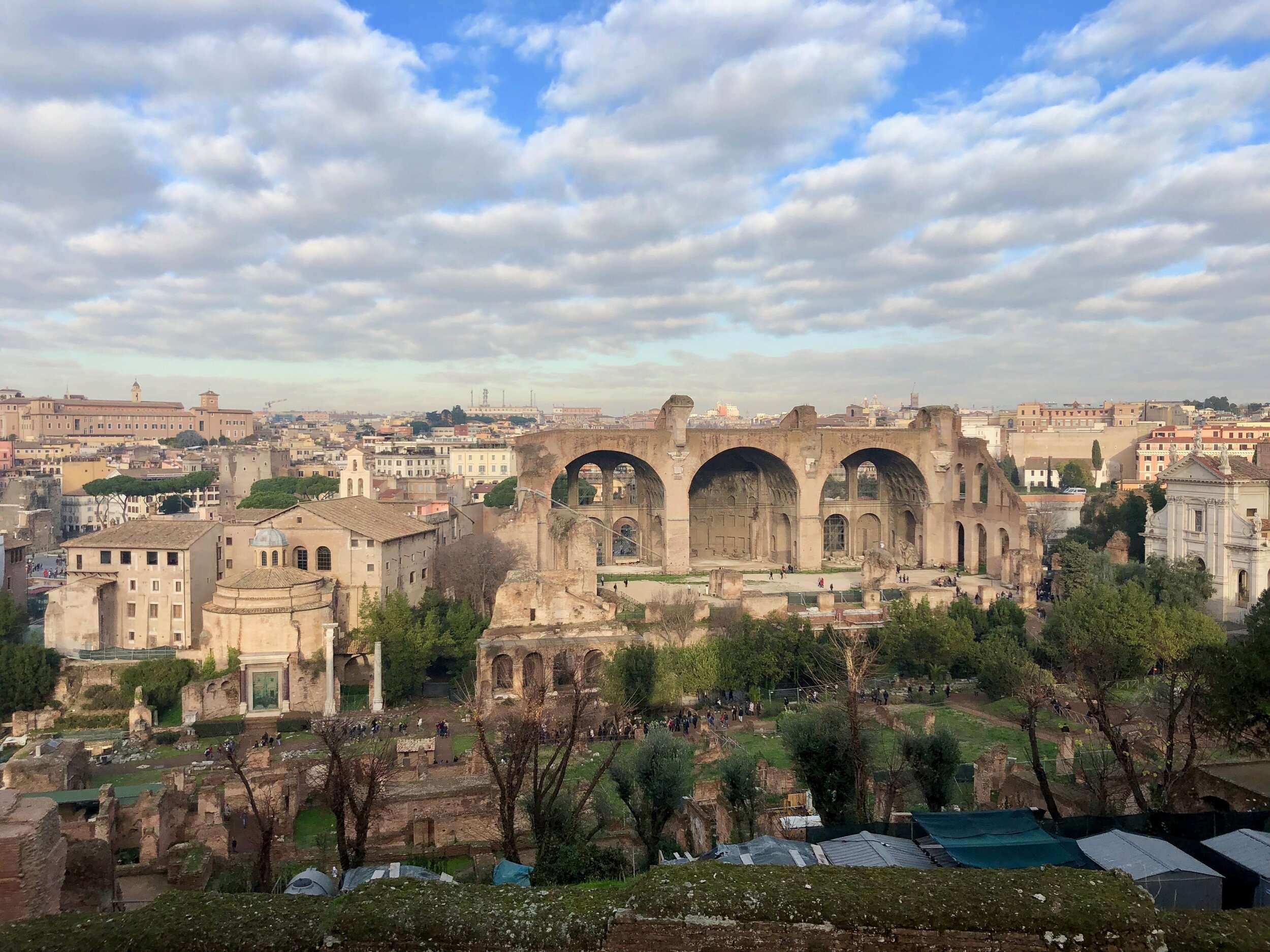
Palatine Hill
Palatine Hill
If you purchase tickets for the Colosseum, you’ll also get a tour of Palatine Hill, the centermost of the Seven Hills of Rome and nucleus of the Roman Empire in ancient times. Before imperial times, the hill was used to build the many houses of Rome’s rich. Starting with Augustus, it became home to Rome’s Imperial palaces. Roman myth says the hill is also the location where Romulus and Remus were found by the she-wolf Lupa, who kept them alive.
Word of caution: this is one of the least accessible areas of Rome. Disabled travelers will have some difficulty navigating the area. It was an exhausting day for me walking the grounds with my cane and hypermobile ankles. It was fascinating to get a glimpse of how the ancient Romans lived, but it definitely took a toll on my body.
There is a ramp for wheelchairs leading to the top of the hill, but the rest of the grounds are made up of stairs, broken tiles, and bumpy dirt and stone roads.
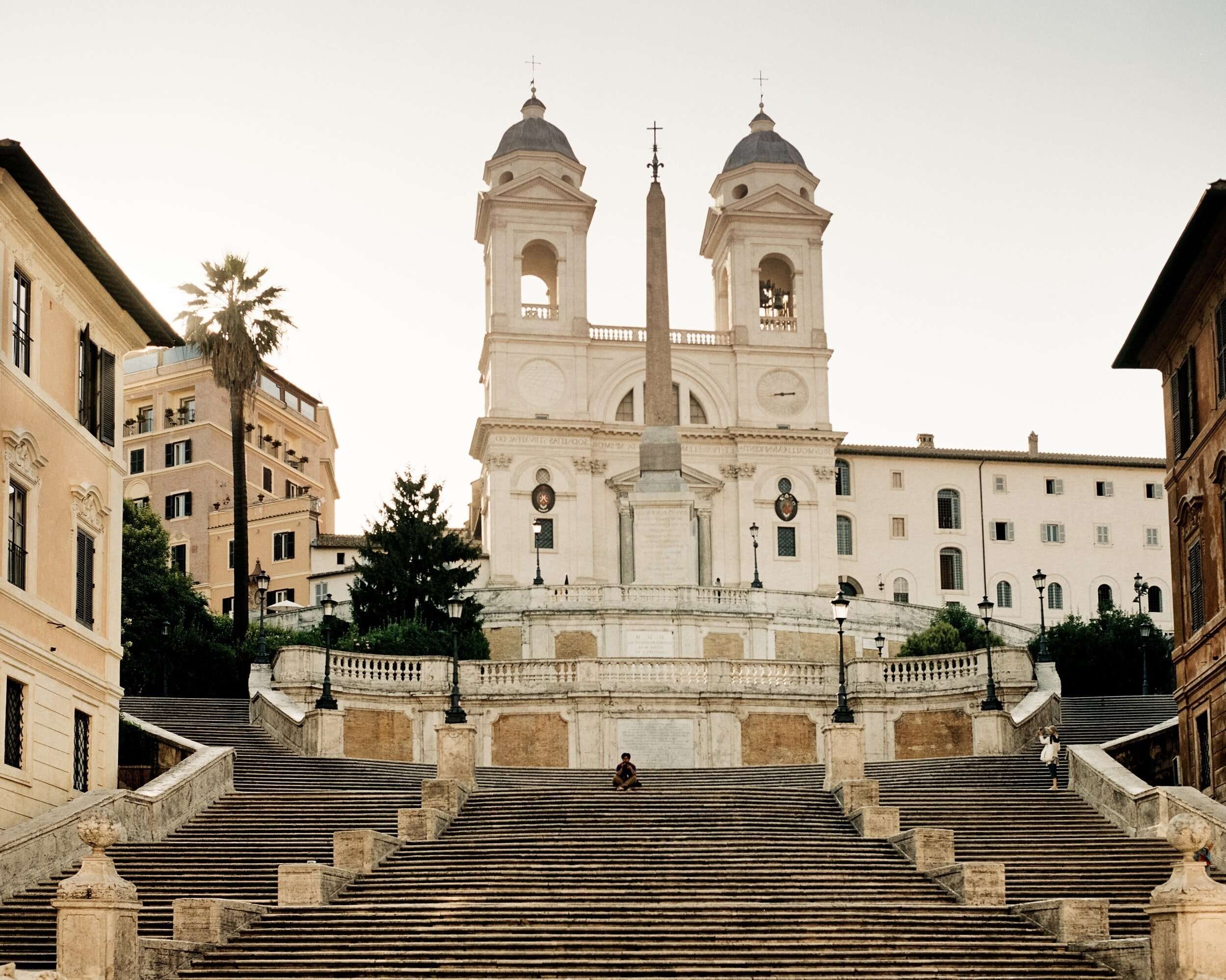
Spanish Steps
Spanish Steps
I know, it’s a bit strange to include a set of steps that climb a steep slope on a list of accessible facts about Rome, but these are the most famous steps in Rome, and there’s definitely zero need to climb them. The area outside the steps is a large, paved, even ground where visitors can get up close and admire the view.
The 135 Spanish Steps traverse the area between the Piazza di Spagna and Piazza Trinità dei Monti and are a popular location for tourists looking to capture that perfect Roman photo.

St. Peter’s Square – Vatican City
Vatican City
Vatican City is its own country within the city of Rome. Governed by the Holy See, the Vatican officially became independent from Rome in 1929. With a population of 825 and an area of only 121 acres, it’s the smallest state in the world in terms of both population and area. Even with my cane, I could easily walk “cross-country” in about a half-hour.
It’s well worth a trip to Vatican City, even if you’re not Catholic or particularly religious, especially if you’re an art lover or history buff. Vatican City is a UNESCO World Heritage Site and the only one in the world to consist of an entire state. It’s home to some of the most famous paintings, sculptures, and other works of art in the world. St. Peter’s Basilica is an impressive example of Renaissance architecture. The Sistine Chapel is decorated with world-famous frescoes painted by Perugino, Botticelli, Raphael, and Domenico Ghirlandaio. And of course, there’s the world-famous Sistine Chapel ceiling featuring The Creation of Adam and Last Judgement painted by Michelangelo.
I have a whole separate post on Vatican City, Saint Peter’s Basilica, the Sistine Chapel, and the Vatican Museums and Vatican Gardens, as Vatican City has so much to see that it really warrants its own day trip. (Maybe more.) But rest assured, there are Wheelchair-Accessible Vatican tours and plenty of things to see and do.

Ceiling of the Sistine Chapel – The Creation of Adam
Disabled visitors who meet requirements are given free entry for themselves and a companion by visiting the Special Permits/Reception desks in the hall of museums. They are also guaranteed skip-the-line entry. For more information, you can visit the Vatican Museums website.
Visitors with mobility impairments may also choose to access free wheelchair hire from the cloakroom with a valid ID and deposit. The museums are for the most part accessible to mobility scooters and electric wheelchairs. However, some areas require visitors to transfer to a free, provided traditional wheelchair due to space limitations.
Disabled visitors wishing to take a guided tour of the Vatican Gardens should sign up for the Vatican Gardens without Barriers tour, as the regular tour routes are not accessible for wheelchair users and can be difficult to navigate for those with mobility issues.
Since I visited over the New Year’s holiday, I was able to get tickets for the Pope’s first Mass of the new year. As a lapsed catholic, I hadn’t been to Mass in over 20 years, but even I have to admit, there’s an incredible feeling being in a room full of believers, seeing the Pope in person.

Piazza Venezia
Piazza Venezia
Another popular piazza, Rome’s Piazza Venezia sits in the center of the city, surrounding the Vittoriano Memorial, which honors the first king of a united Italy, Vittorio Emanuele II. Mussolini famously made his speeches to crowds below from the balcony of this building.
Naturally, this piazza is free and accessible, offering a large open area to gather and snap beautiful sunset photos.
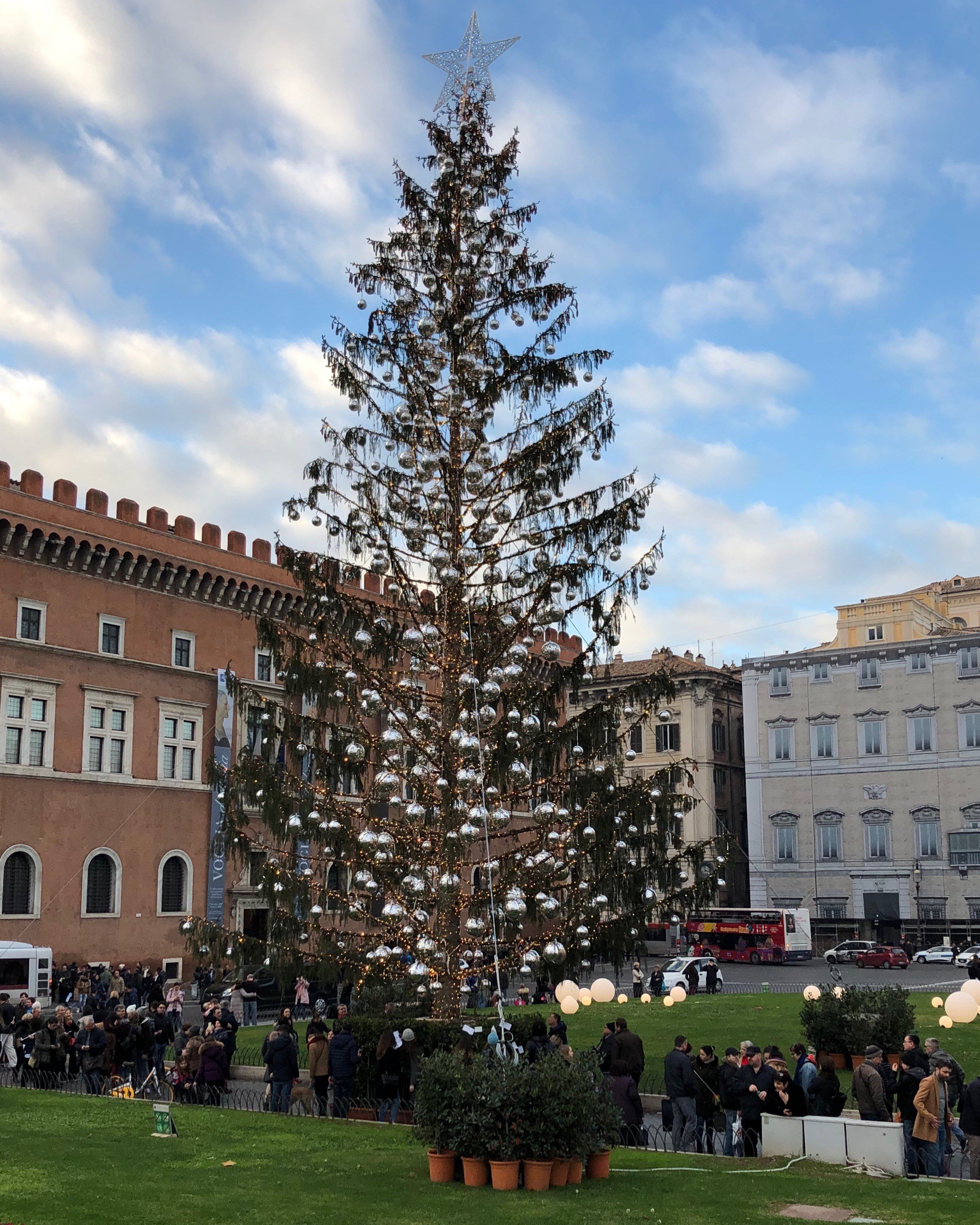
Rome’s Saddest Christmas Tree
We visited over Christmas and New Year’s when this unique Christmas tree was the talk of the world. Costing $57,000 USD, this sad tree was nicknamed “toilet brush” by Romans. Brought in from the Dolomites, an area in the Italian Alps in Northern Italy, the tree was originally full and luxurious, but quickly began to lose its needles after being placed in the piazza. It was later discovered that the tree was completely rootless and beyond saving. It quickly became a metaphor for the decay and dysfunction in Rome’s government.

Roman Catacombs
Rome Catacombs and Crypt of Capuchins
The Catacombs of Rome are ancient underground burial places tunneling under the streets of Rome along the Appian Way. The most famous of these are the Catacombs of San Callisto and the Catacombs of Domitilla. There are at least 40 of these mostly Christian catacombs, though some do include Jewish and pagan burial sites. The Roman catacombs contain a variety of frescoes, sculptures, and gold glass medallions.
Rome’s Catacomb tours involve quite a bit of walking, dark enclosed spaces, and stairs. Because of this, the Rome Catacombs tour is not wheelchair accessible and may not be appropriate for those with mobility issues or heart conditions. However, there is a wheelchair-accessible tour of the Museum and Crypt of Capuchins which should satisfy those curious about bone art, ancient Christian worship sites, and burial customs.
The Crypt of Capuchins is located beneath the church of Santa Maria della Concezione dei Cappucci on Via Veneto. The first floor offers a museum explaining the history of the monks leading to the construction of the crypt. Beneath the museum are the artfully arranged skeletal remains of 3,700 Capuchin friars. A truly eerie display of art.
There are a total of 6 rooms within the crypt, including the Crypt of Skulls, the Crypt of Pelvises, and the Crypt of the Resurrection, which features a picture of Jesus raising Lazarus from the dead, framed by many skeletal remains.
Please note: You are NOT allowed to take photos within the crypt.

Villa Borghese Gardens
Villa Borghese
Villa Borghese is a massive complex including the Villa Borghese Gardens, Villa Borghese Gallery, and several other attractions. It’s the third-largest park in Rome. The sprawling complex was built by Flaminio Ponzio and developed from the sketches of Scipione Borghese, who used the property for parties and to house his impressive art collection.
One of the most impressive gardens in Italy, Borghese also contains a replica of Shakespeare’s Globe Theater, the Exposition Zoo, and a hydrochonometer, or water clock.
Disabled visitors should pick up their tickets through the side entrance to the right of the external stairs leading to the facade of the Galleria Borghese. The property is wheelchair accessible and offers an elevator to get to the upper floor.
Click here for Wheelchair-Accessible Skip-The-Line Tickets to Villa Borghese.

Circus Maximus
Circus Maximus
Circo Massimo, or Circus Maximus, is an ancient Roman chariot-racing stadium and entertainment venue. Back in its glory days, Romans used this venue for religious festivals, public games, and celebrations, which could frequently pack in more than 300,000 audience members. It now functions as a public park. When I visited Rome during New Year’s Eve, Circus Maximus held a massive party with DJs, food trucks, and various performances. This isn’t too far off from the festivals it used to hold back in ancient times.
Unfortunately, due to years of decay, there’s not much left standing from the once majestic stadium and track. However, in 2019 a new virtual reality experience called Circo Maximo Experience opened on the grounds, taking visitors through the site and its history. Admission to the Circo Maximo Experience is free for disabled persons.
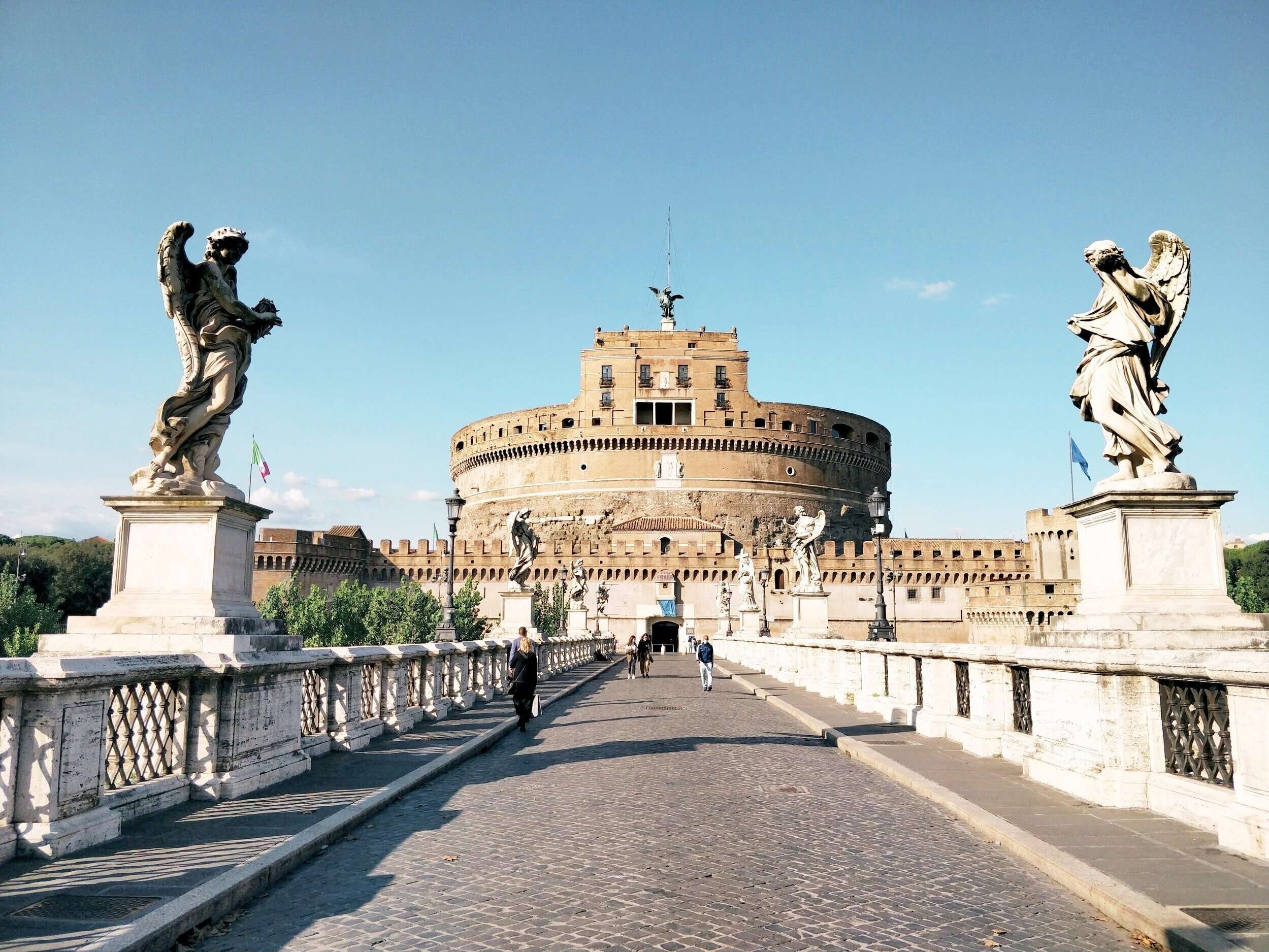
Castel Sant’Angelo
Castel Sant’Angelo
Also known as the Mausoleum of Hadrian, Castel Sant’Angelo (or Castel San Angelo) is a massive cylindrical castle commissioned by Roman Emperor Hadrian as a mausoleum for himself and his family. For many years, the building was used by Popes as a military fortress and castle that connected to Vatican City via a fortified corridor. During the sieges on Rome in 1527, Pope Clement VII used the fortress as a refuge. In 1901, Castel Sant’Angelo was decommissioned and later converted into the Museo Nazionale di Castel Sant’Angelo, which stands today.
Full disclosure, while the building has some impressive architecture and is one of the more recognizable buildings in Rome, many people say it’s not worth touring inside as there are far more impressive museums in Rome. After looking at the narrow hallways, copious stairs, and uneven grounds, I decided to pass on touring the inside and conserve my energy for my upcoming day trip to Pompeii.
Wheelchair travel tips: Castel Sant’Angelo is not accessible to regular manual or electric wheelchairs or mobility scooters. However, guests can rent a special wheelchair to tour the inaccessible sites. You can find info on the Access Travels site.
Skip-The-Line Tickets to Castel Sant’Angelo are available here.


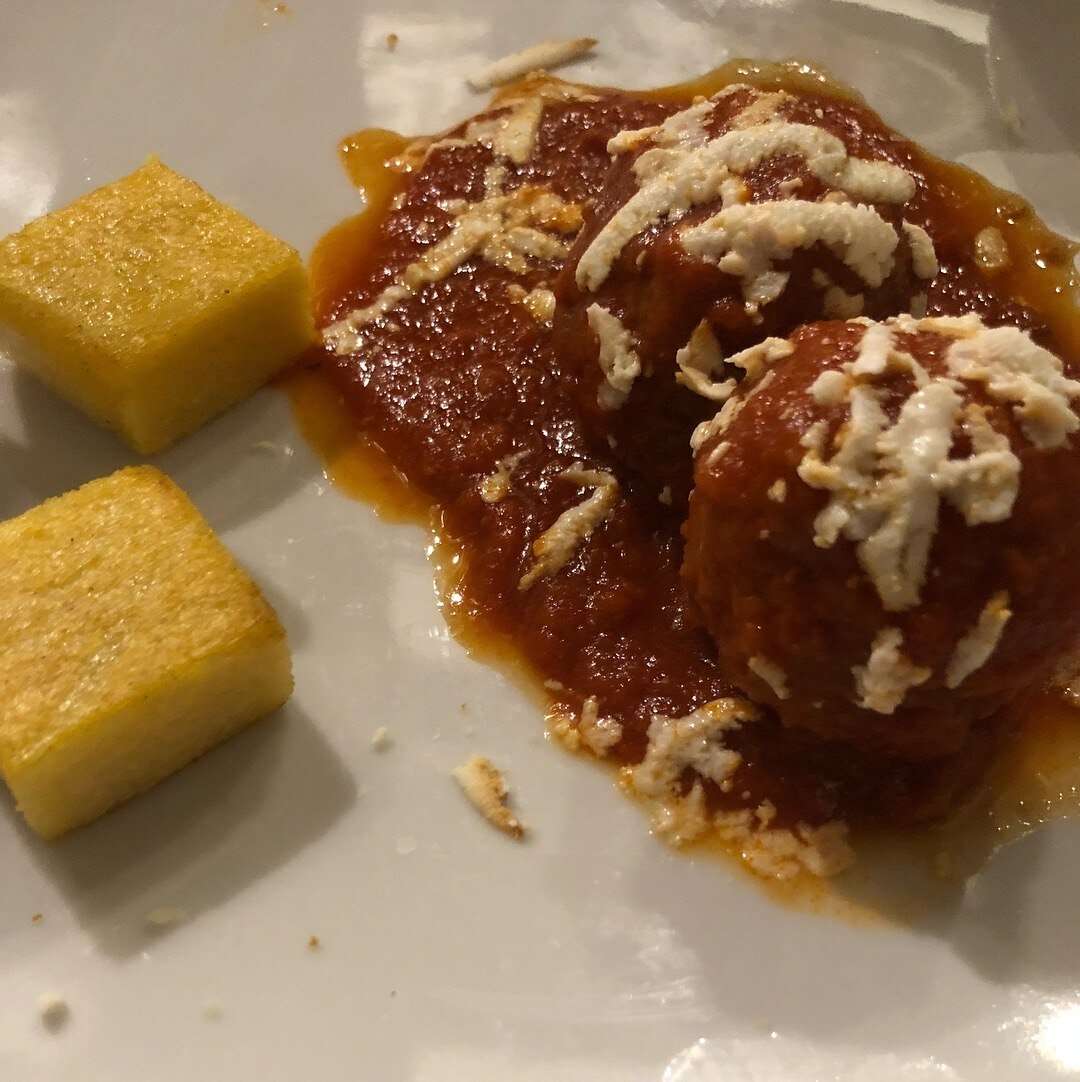


Foods in Rome, Italy:
The foods in Rome, Italy, are world-renowned. Rome is famous for its pasta, artichokes, pizza, gelato, porchetta, suppli, and some of the best cheeses in Italy. Breads in Italy are equally amazing; however, I’m allergic to wheat, so bread is off-limits, and my pasta and pizza experiences were limited to photographing my fiancé’s plate. Thankfully, he’s an excellent judge of food and was more than happy to sample all the wheat-related products and bread in Italy.
My recommendations:
Check out the best Pizza Places in Rome, Italy.
For an amazing traditional trattoria located conveniently next to the Pantheon, try Armando al Pantheon.
For what was hands down my favorite food-related experience in Italy, try Rimessa Roscioli. Their food and wine experience may very well be the best meal I’ve had in my life. The staff took us on a genuine cultural experience where we learned about wines, Italian culture, and philosophy, and served up a mind-blowing feast we still talk about today. We literally closed the place down and ended up chatting with our sommelier in the street afterward. When I dream about returning to Italy, I dream about going back to Rimessa Roscioli.
For the best pizza in Rome, Italy, try Pizzarium in the Prati neighborhood near Vatican City. Baker Gabriele Bonci is known as the Michelangelo of pizza. Sadly, there are no gluten-free pizza options, but his bakery does offer several celiac-friendly offerings.
If like me, you have to avoid wheat and/or gluten, you can check out this site with the best gluten-free Rome offerings.

The view from Palatine Hill
Interesting Facts About Rome, Italy:
I’ll leave you with a few Rome fun facts and general info.
Rome Was Founded: April 21, 753 BC
Currency of Italy: Euro
Nickname: The Eternal City
Rome Interesting Facts:
Rome has 280 fountains and more than 900 churches. Within the ancient walls of Rome, there are 300 churches, but that number triples when you include the extended city area outside the walls.
Cats are free to roam the capital city of Rome. There’s a law that allows cats to live where they are born without disturbance. Consequently, it’s not uncommon to see cats wandering the Colosseum and ruins of the forum.
Rome has a museum dedicated entirely to pasta. The Museo Nazionale della Pasta Alimentari teaches visitors about the history of pasta with tons of Rome fun facts surrounding the development, production, and preparation of the city’s favorite food staple.
Women in ancient Rome dyed their hair red and blonde with goat fat and beech wood ashes.
3,000 Euros are collected from the bottom of the Trevi Fountain each night. The money is donated to Caritas, a catholic charity.
The most visited sites in Rome are the Pantheon, the Colosseum and Trevi Fountain.
The emblematic phrase Senatus Populusque Romanus, which appears in the abbreviated form SPQR on the municipal coat of arms of Rome, is often humorously interpreted by Italians as “Sono Pazzi Questi Romani” or “They’re crazy these Romans.”
In ancient Rome, Flamingo tongues were considered a delicacy.
The Roman Emperor Gaius Caligula did some very odd things indeed, including making his horse a senator, feeding prisoners to wild animals, and regularly having conversations with the moon.
Rome was the first city in the world to reach a population of 1 million people.
The Appian Way was the first paved highway in Europe. It was constructed in 312 BC.
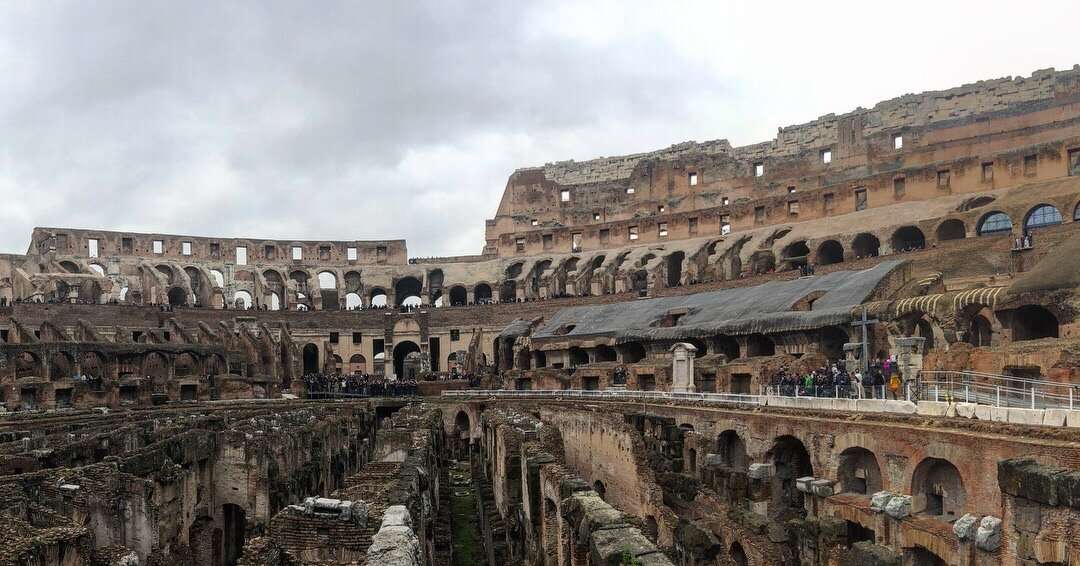
Inside the Colosseum
Arrivederci
I hope you’ve enjoyed this guide to Rome. As you can see, accessible travel within Rome is possible, though it can be frustrating at times. My recommendation is to take it slow. We spent 6 days in Rome and were able to take in the sites at a relaxed pace, which helped keep my chronic pain at manageable levels. Though I’m not generally a wheelchair user myself, I did research the most up-to-date wheelchair-accessible travel info for as many attractions as possible. Compared to cities like London and Paris, Rome’s disabled access isn’t as great, but with these accessible travel tips and Roman facts, any traveler can enjoy the ancient Roman environment, beautiful modern aspects of the city, and have an amazing holiday in Rome, Italy.
What to Pack For Rome


FAQs About Visiting Rome for Disabled Travelers
Is Rome wheelchair accessible?
Rome is partially wheelchair accessible, with accessible entrances and facilities at many major attractions. Getting between them can be more challenging because of cobblestones, hills, uneven sidewalks, and missing curb cuts. Plan your routes around your mobility needs, allow extra travel time, and remember that a short distance on a map doesn’t always mean an easy journey.
How many days do disabled travelers need in Rome?
I recommend allowing about a week if you want to explore Rome at a comfortable pace. You can see selected highlights in three or four days, but extra time makes room for rest breaks and shorter outings. Give major attractions their own space in your itinerary instead of squeezing the Vatican and ancient Rome into one exhausting day.
What is the best way to get around Rome with limited mobility?
Combine transportation with short sightseeing routes tailored to your energy and mobility needs. ATAC provides accessibility information for its buses and rail services, but check your specific journey before leaving. If you need a taxi that accommodates you seated in your wheelchair, arrange it ahead of time and confirm the vehicle’s dimensions and boarding equipment. ATAC accessibility information
Is the Rome Metro wheelchair accessible?
Accessibility varies by station and depends on working lifts or other boarding assistance. Check both your departure and arrival stations, along with any interchange stations. ATAC publishes information about lifting equipment and assistance; leave extra time because the accessible route may use a different entrance from the one your navigation app suggests. Rome Metro accessibility information
Can wheelchair users visit the Colosseum?
Yes. The Colosseum has a step-free entrance and an elevator serving the main visitor levels. However, accessibility differs between the standard visit and tours of additional areas. Confirm exactly which spaces your ticket or tour includes, and allow time for security checks and navigating the uneven paving outside. Colosseum wheelchair access guide
Are the Roman Forum and Palatine Hill wheelchair accessible?
Parts are accessible, but these sites require more planning than the Colosseum. Ancient paving, slopes, uneven surfaces, and long distances can make exploring tiring even when a route avoids stairs. Ask about the current accessible entrances and routes before visiting, and choose a manageable section rather than trying to cover everything. Archaeological Park accessibility services
Can wheelchair users visit the Vatican Museums?
Yes. Most museum spaces accommodate visitors with mobility disabilities, and staff can help visitors follow the designated accessible itinerary. Some areas have restrictions for mobility scooters and electric wheelchairs that may require transferring to a manual wheelchair. If transferring isn’t possible for you, confirm your route with the museums beforehand. Vatican Museums accessibility information
Do disabled visitors receive free admission to attractions in Rome?
Some attractions offer free admission for eligible disabled visitors and, in certain cases, a companion. Requirements vary, so check each venue’s documentation and ticket-collection process before booking. For example, qualifying Vatican Museums tickets are issued in person after reviewing disability documentation and cannot be booked online. Vatican Museums admission policies
Can you enjoy the Spanish Steps without climbing them?
Absolutely. You can admire the staircase from Piazza di Spagna at its base without tackling the steps. Make this a shorter sightseeing stop, especially if crowds are tiring. Check your route to the square, since the surrounding streets can still involve uneven paving and busy pedestrian areas.
Is visiting the Trevi Fountain free?
You can view the fountain from the surrounding square without entering the ticketed basin area. Since February 2026, access to the area closest to the fountain generally costs €2, with free admission for disabled visitors and their caregivers. A ticket exemption does not establish step-free access, so confirm arrangements if you want to approach the lower area. Current Trevi Fountain visitor information
Where should disabled travelers stay in Rome?
Choose accommodation near the sights you most want to visit, then check the exact building and street. Ask for photographs and measurements of the entrance, elevator, bedroom, and bathroom. Confirm shower access and transfer space if needed. A central address is useful, but a room that meets your needs and a manageable route outside matter just as much.
How can you enjoy Rome with chronic pain or limited energy?
Plan one main attraction each day, group nearby stops together, and schedule seated breaks before you feel exhausted. Check restroom locations and transport options in advance so you can shorten an outing when needed. Leave room for an unhurried meal or gelato stop—enjoying Rome doesn’t require covering every cobblestone.
Jenn Lloyd is a disabled travel blogger and television writer based in Los Angeles. After a successful career writing for shows like KC Undercover and The Thundermans, she launched Sick Girl Travels to share her experiences navigating the world with Ehlers-Danlos Syndrome, POTS, and fibromyalgia. Having visited 40 U.S. states, 39 countries, and all 7 continents, Jenn offers inclusive travel guides with accessibility tips for those with mobility challenges. Her work has been featured on CNN, Huffington Post, and Consumer Reports. When not traveling, she enjoys fostering dogs, photographing street art, and spending time with her French bulldog, Miss Madelyn Pew.
Sign Up for Our Newsletter
Sign up with your email address to receive travel news and updates.